Yin Lu, Zhang Xia, Gao Aihong, Cao Meng, Yang Dongdong, An Kexin, Guo Shanli, Yin Haibo
College of Life Sciences, Yantai University, Yantai 264005, China.
College of Grassland Sciences, Qingdao Agricultural University, Qingdao 266109, China.
Plants (Basel). 2023 Nov 29;12(23):4021. doi: 10.3390/plants12234021.
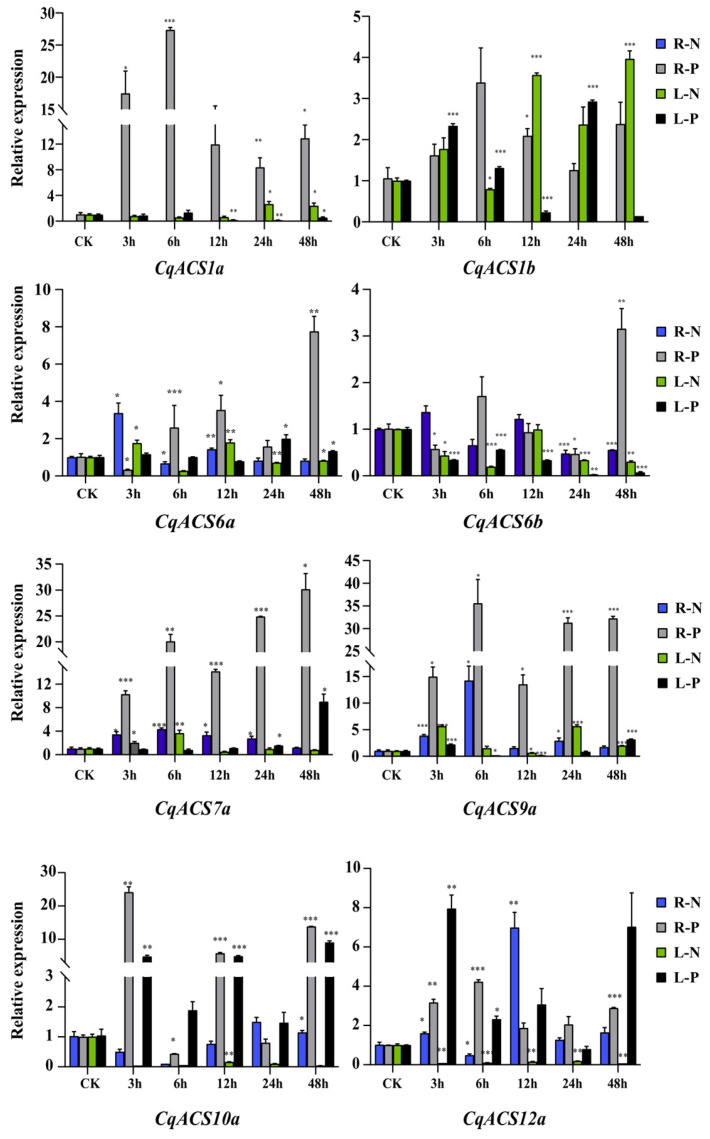
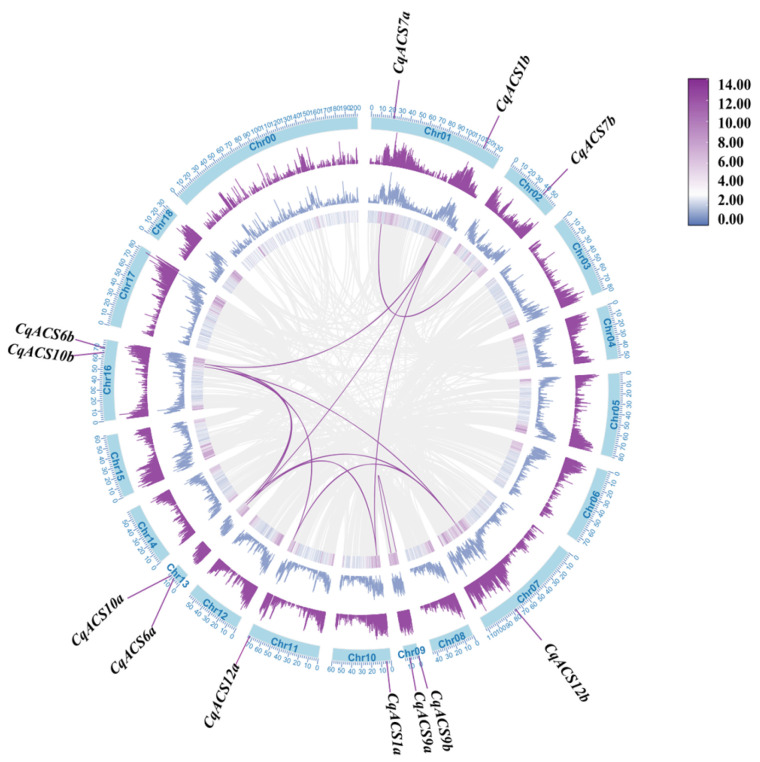
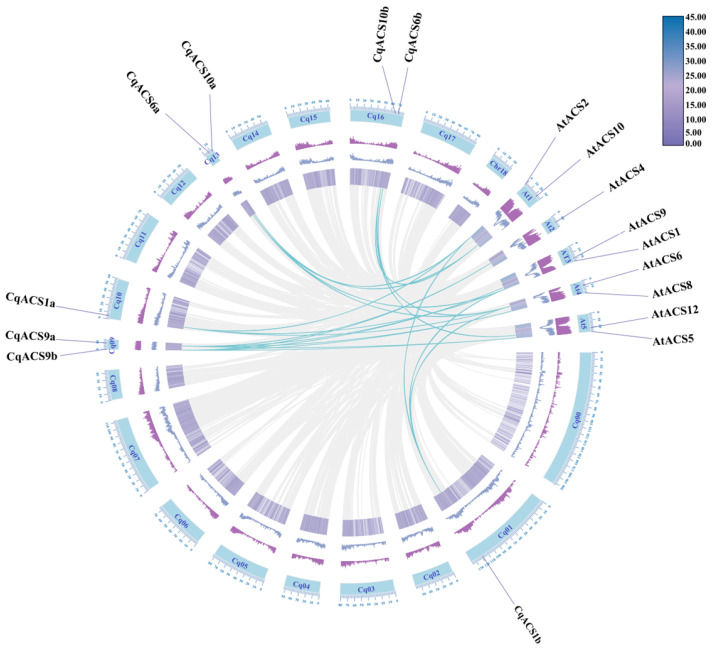
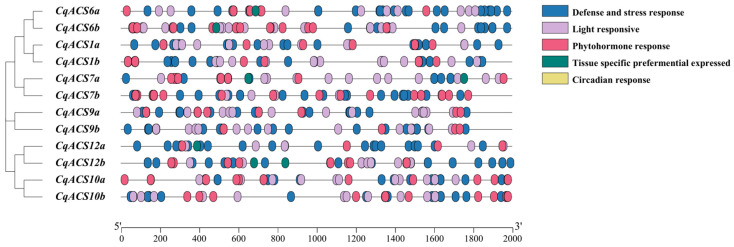
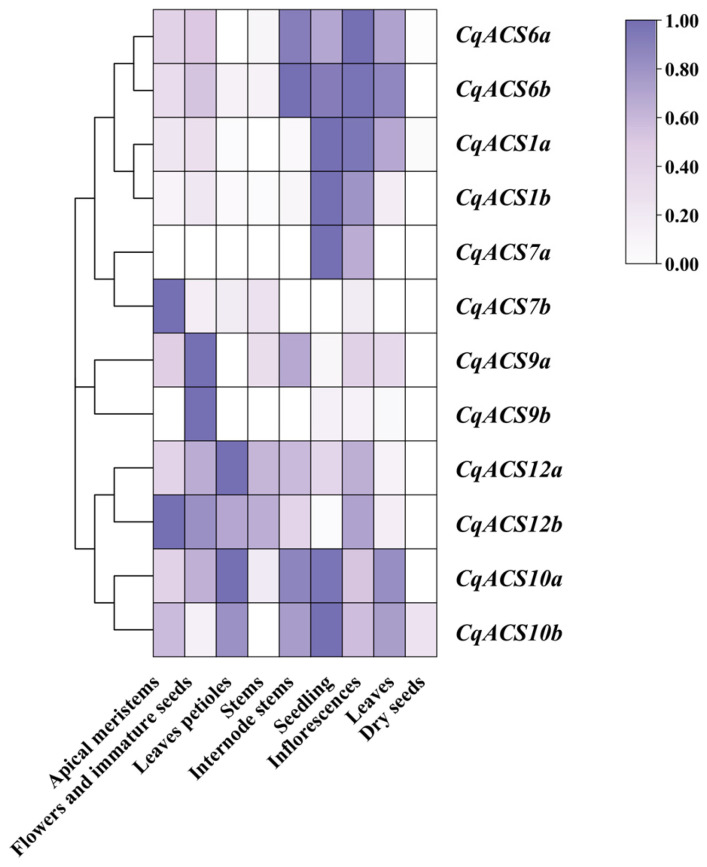
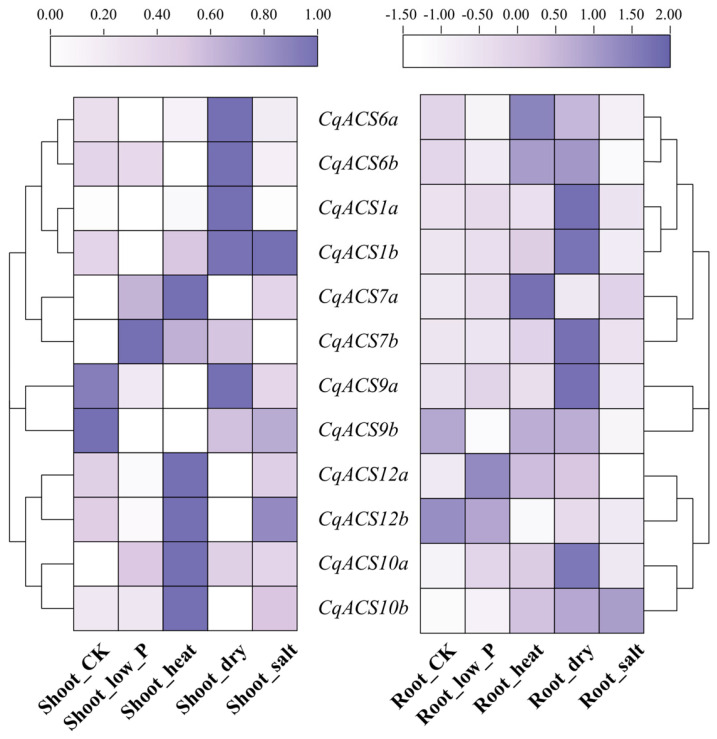
Ethylene plays an important role in plant development and stress resistance. The rate-limiting enzyme in ethylene biosynthesis is 1-aminocyclopropane-1-carboxylic acid synthase (ACS). () is an important food crop known for its strong tolerance to abiotic stresses. However, knowledge regarding the gene family in remains restricted. In this study, we successfully identified 12 genes () from the genome. Through thorough analysis of their sequences and phylogenetic relationships, it was verified that 8 out of these 12 CqACS isozymes exhibited substantial resemblance to ACS isozymes possessing ACS activity. Furthermore, these eight isozymes could be categorized into three distinct groups. The four remaining genes grouped under category IV displayed notable similarities with and , known as amido transferases lacking ACS activity. The CqACS proteins bore resemblance to the AtACS proteins and had the characteristic structural features typically observed in plant ACS enzymes. Twelve genes were distributed across 8 out of the 18 chromosomes of . The genes were expanded from segment duplication. Many cis-regulatory elements related with various abiotic stresses, phytohormones, and light were found. The expression patterns of genes varied across different tissues of . Furthermore, the analysis of gene expression patterns under abiotic stress showed that genes can be responsive to various stresses, implying their potential functions in adapting to various abiotic stresses. The findings from this research serve as a foundation for delving deeper into the functional roles of genes.
乙烯在植物发育和抗逆性中发挥着重要作用。乙烯生物合成中的限速酶是1-氨基环丙烷-1-羧酸合酶(ACS)。()是一种以对非生物胁迫具有强耐受性而闻名的重要粮食作物。然而,关于()中该基因家族的知识仍然有限。在本研究中,我们成功地从()基因组中鉴定出12个()基因()。通过对它们的序列和系统发育关系进行深入分析,证实这12个CqACS同工酶中有8个与具有ACS活性的ACS同工酶表现出显著相似性。此外,这8个同工酶可分为三个不同的组。其余归类为IV类的4个()基因与()和()显示出显著相似性,()和()被称为缺乏ACS活性的酰胺转移酶。CqACS蛋白与AtACS蛋白相似,具有植物ACS酶通常观察到的特征性结构特征。12个()基因分布在()的18条染色体中的8条上。()基因通过片段重复而扩增。发现了许多与各种非生物胁迫、植物激素和光相关的顺式调控元件。()基因的表达模式在()的不同组织中有所不同。此外,对非生物胁迫下基因表达模式的分析表明,()基因可对各种胁迫作出反应,这意味着它们在适应各种非生物胁迫方面具有潜在功能。本研究结果为深入研究()基因的功能作用奠定了基础。