Collaborative Innovation Center for Diagnosis and Treatment of Infectious Diseases, State Key Laboratory for Diagnosis and Treatment of Infectious Diseases, National Clinical Research Center for Infectious Diseases, the First Affiliated Hospital, School of Medicine, Zhejiang University, 310003, Hangzhou, Zhejiang, China.
Jinan Microecological Biomedicine Shandong Laboratory, 250000, Jinan, Shandong, China.
Transl Psychiatry. 2023 Dec 9;13(1):383. doi: 10.1038/s41398-023-02682-1.
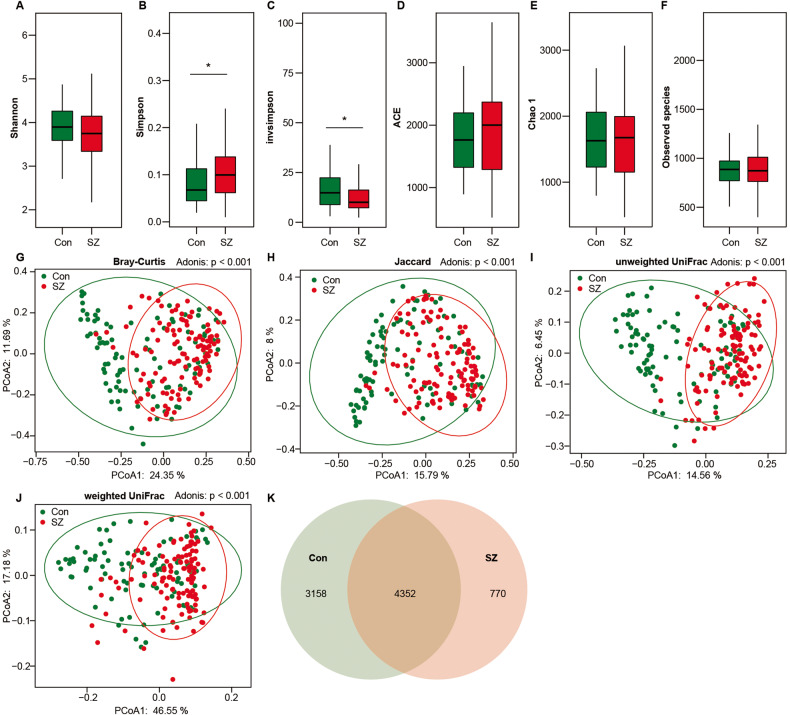
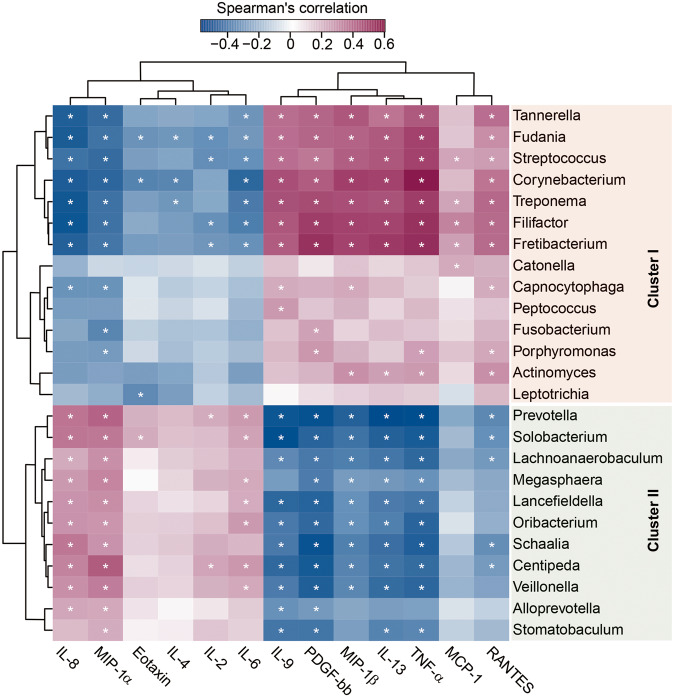
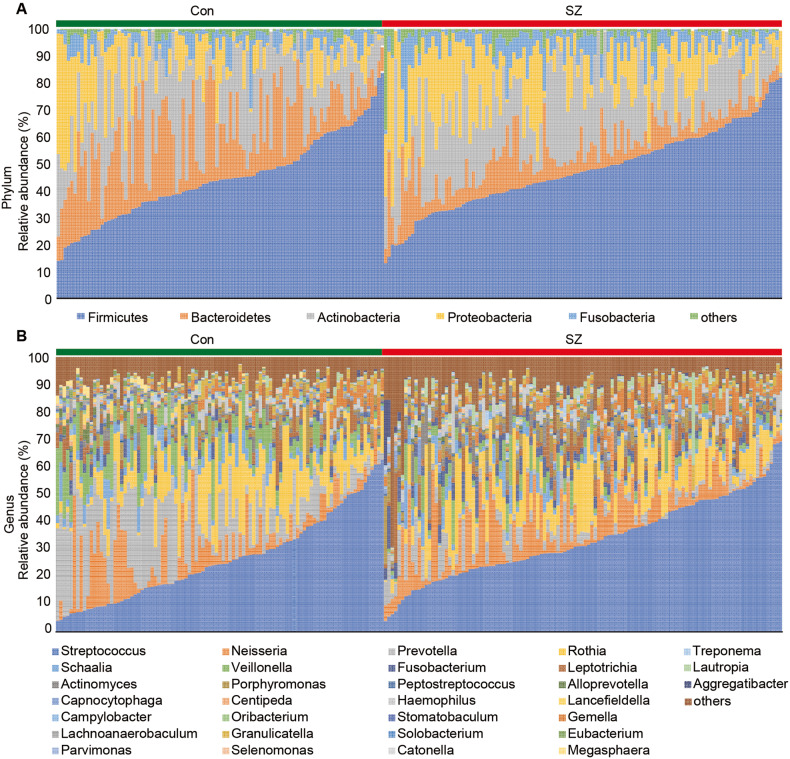
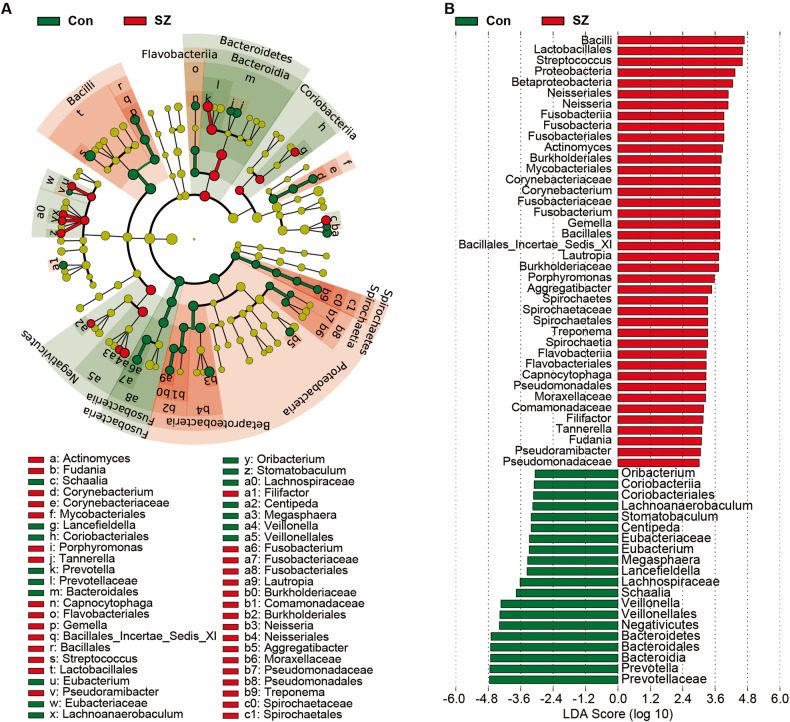
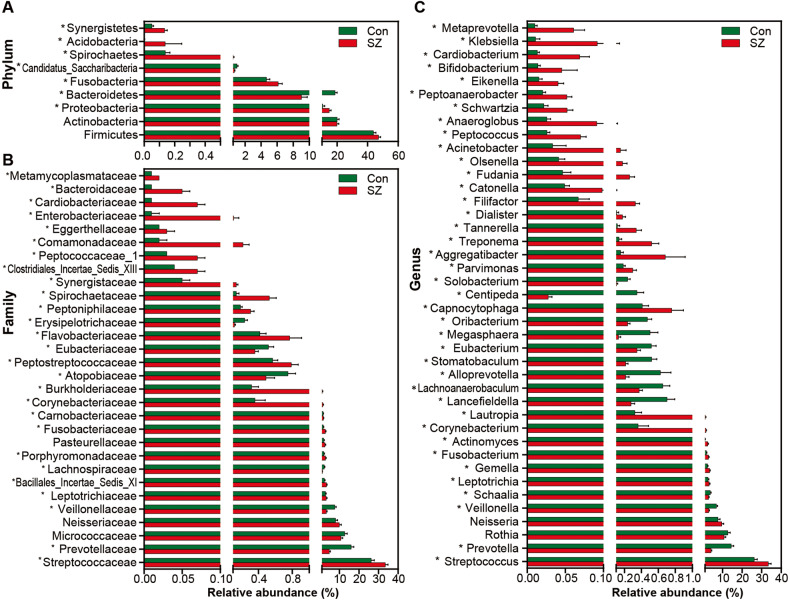
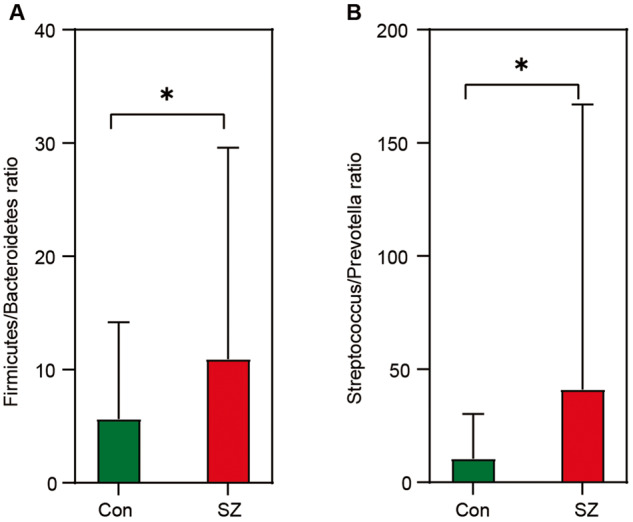
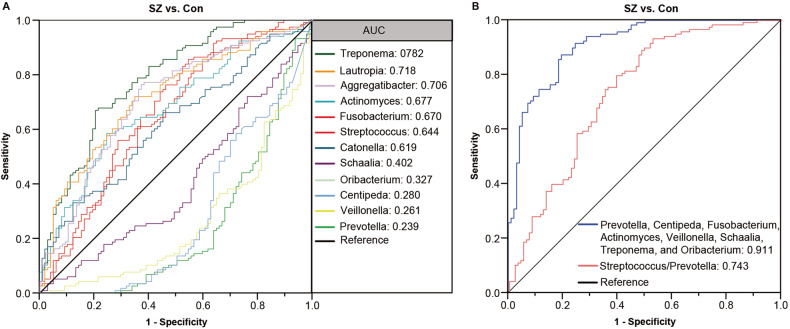
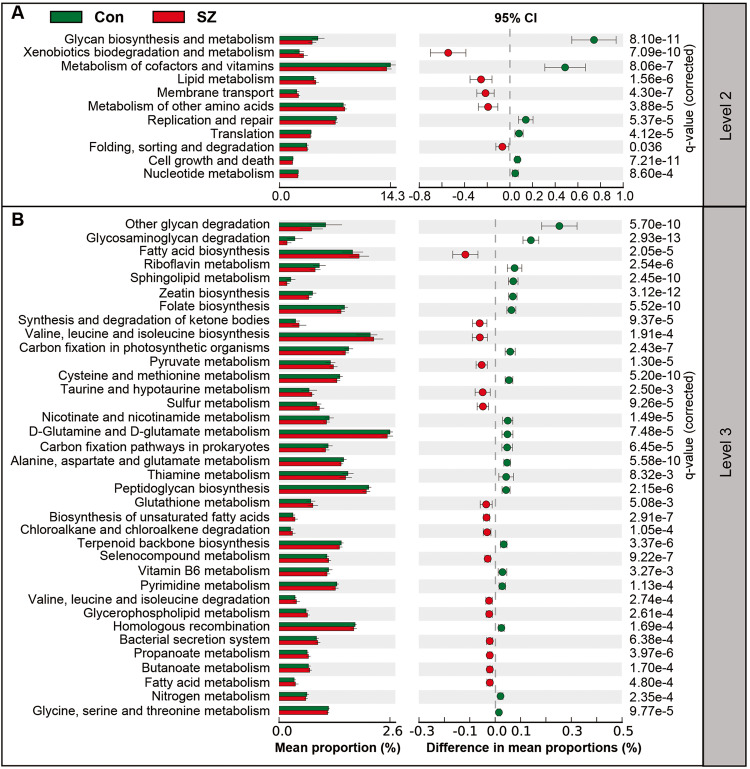
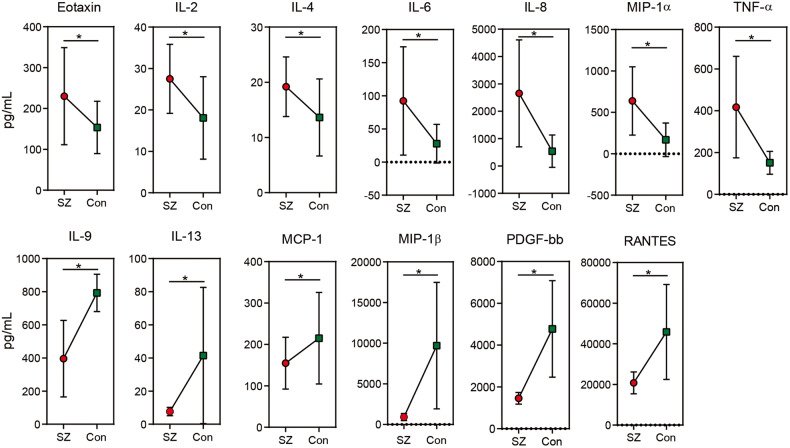
Schizophrenia (SZ) is a complex psychiatric neurodevelopmental disorder with uncertain etiology and pathogenesis. Increasing evidence has recognized the key role of the gut microbiota in SZ. However, few studies have investigated the potential link between oral microbiota and SZ. We studied the tongue coating microbiota and inflammatory profiles of 118 elderly SZ patients and 97 age-matched healthy controls using Illumina MiSeq sequencing and multiplex immunoassays, respectively. Reduced α-diversity, along with a significant difference in β-diversity, were observed in patients with SZ. We have identified SZ-associated oral dysbiosis, characterized by increased Streptococcus and Fusobacterium, as well as decreased Prevotella and Veillonella. These differential genera could potentially serve as biomarkers for SZ, either alone or in combination. Additionally, an elevated Streptococcus/Prevotella ratio could indicate oral dysbiosis. These differential genera formed two distinct clusters: Streptococcus-dominated and Prevotella-dominated, which exhibited different correlations with the altered immunological profiles. Furthermore, we also observed disruptions in the inferred microbiota functions in SZ-associated microbiota, particularly in lipid and amino acid metabolism. Our study provides novel insights into the characteristics of tongue coating microbiota and its associations with immunological disturbances in elderly SZ patients, which offer new targets for the diagnosis and treatment of SZ in the elderly.
精神分裂症(SZ)是一种复杂的精神神经发育障碍,病因和发病机制尚不确定。越来越多的证据表明,肠道微生物群在 SZ 中起着关键作用。然而,很少有研究调查口腔微生物群与 SZ 之间的潜在联系。我们使用 Illumina MiSeq 测序和多重免疫分析分别研究了 118 名老年 SZ 患者和 97 名年龄匹配的健康对照者的舌涂层微生物群和炎症谱。我们观察到 SZ 患者的 α多样性降低,β多样性差异显著。我们已经确定了与 SZ 相关的口腔失调,其特征是链球菌和梭杆菌增加,而普雷沃氏菌和韦荣氏菌减少。这些差异产生菌可能单独或组合作为 SZ 的生物标志物。此外,链球菌/普雷沃氏菌比值升高可能表明口腔失调。这些差异产生菌形成了两个不同的聚类:以链球菌为主和以普雷沃氏菌为主,它们与改变的免疫谱表现出不同的相关性。此外,我们还观察到 SZ 相关微生物群中的推断微生物群功能出现中断,特别是在脂质和氨基酸代谢中。我们的研究为老年 SZ 患者舌涂层微生物群的特征及其与免疫紊乱的关系提供了新的见解,为老年 SZ 的诊断和治疗提供了新的靶点。