Addictions Division, CAMH, Toronto, ON, Canada.
Department of Psychiatry, Temerty Faculty of Medicine, University of Toronto, Toronto, ON, Canada.
Neuropsychopharmacology. 2024 Mar;49(4):649-680. doi: 10.1038/s41386-023-01776-0. Epub 2023 Dec 12.
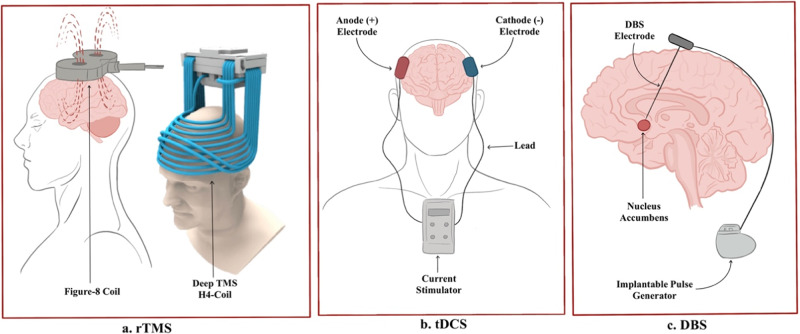
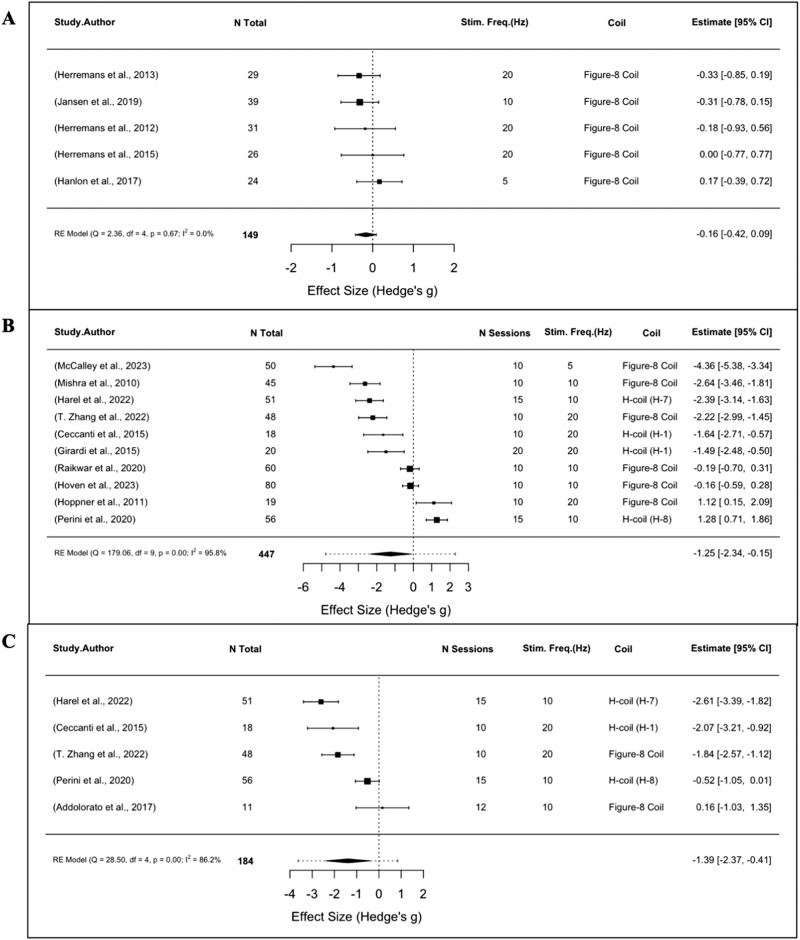
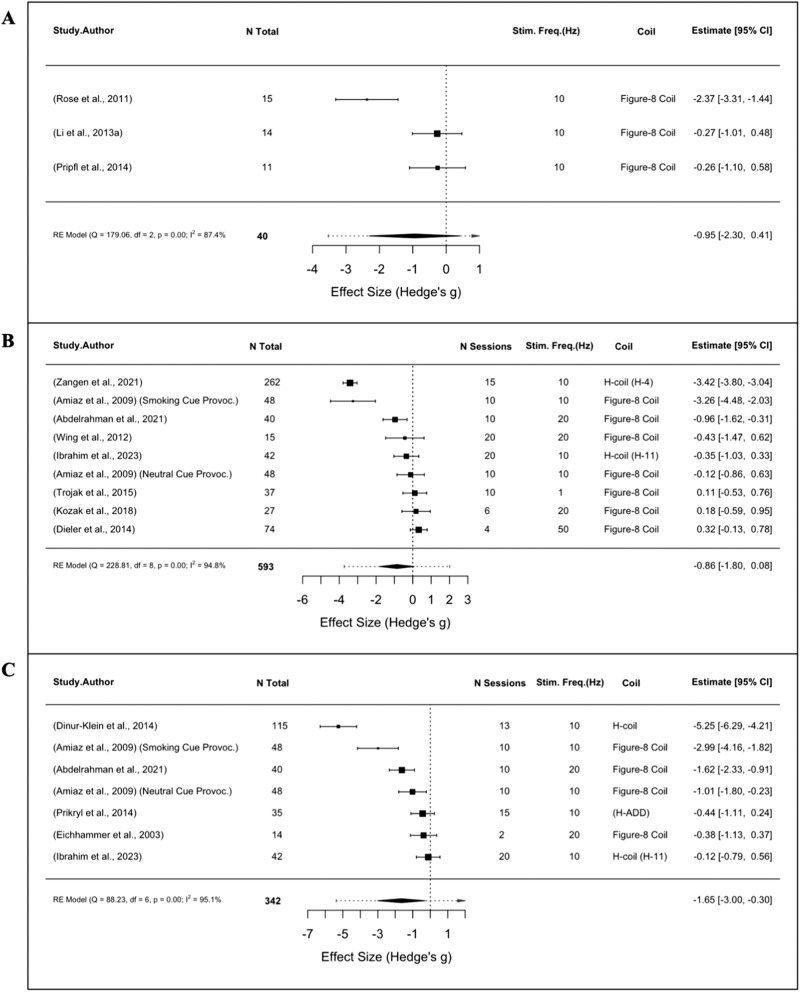
While pharmacological, behavioral and psychosocial treatments are available for substance use disorders (SUDs), they are not always effective or well-tolerated. Neuromodulation (NM) methods, including repetitive transcranial magnetic stimulation (rTMS), transcranial direct current stimulation (tDCS) and deep brain stimulation (DBS) may address SUDs by targeting addiction neurocircuitry. We evaluated the efficacy of NM to improve behavioral outcomes in SUDs. A systematic literature search was performed on MEDLINE, PsychINFO, and PubMed databases and a list of search terms for four key concepts (SUD, rTMS, tDCS, DBS) was applied. Ninety-four studies were identified that examined the effects of rTMS, tDCS, and DBS on substance use outcomes (e.g., craving, consumption, and relapse) amongst individuals with SUDs including alcohol, tobacco, cannabis, stimulants, and opioids. Meta-analyses were performed for alcohol and tobacco studies using rTMS and tDCS. We found that rTMS reduced substance use and craving, as indicated by medium to large effect sizes (Hedge's g > 0.5). Results were most encouraging when multiple stimulation sessions were applied, and the left dorsolateral prefrontal cortex (DLPFC) was targeted. tDCS also produced medium effect sizes for drug use and craving, though they were highly variable and less robust than rTMS; right anodal DLPFC stimulation appeared to be most efficacious. DBS studies were typically small, uncontrolled studies, but showed promise in reducing misuse of multiple substances. NM may be promising for the treatment of SUDs. Future studies should determine underlying neural mechanisms of NM, and further evaluate extended treatment durations, accelerated administration protocols and long-term outcomes with biochemical verification of substance use.
虽然有药物治疗、行为治疗和心理社会治疗等方法可用于治疗物质使用障碍(SUD),但这些方法并非总是有效或耐受良好。神经调节(NM)方法,包括重复经颅磁刺激(rTMS)、经颅直流电刺激(tDCS)和深部脑刺激(DBS),可以通过靶向成瘾神经回路来治疗 SUD。我们评估了 NM 改善 SUD 行为结果的疗效。我们在 MEDLINE、PsychINFO 和 PubMed 数据库中进行了系统文献检索,并应用了四个关键概念(SUD、rTMS、tDCS、DBS)的搜索词列表。确定了 94 项研究,这些研究检查了 rTMS、tDCS 和 DBS 对包括酒精、烟草、大麻、兴奋剂和阿片类药物在内的 SUD 个体的物质使用结果(如渴望、消费和复发)的影响。使用 rTMS 和 tDCS 对酒精和烟草研究进行了荟萃分析。我们发现 rTMS 减少了物质使用和渴望,表明具有中等至较大的效应量(Hedge's g > 0.5)。当应用多次刺激治疗时,结果最为令人鼓舞,且刺激的目标是左背外侧前额叶皮层(DLPFC)。tDCS 也对药物使用和渴望产生了中等效应量,但它们的变异性很大,且不如 rTMS 稳健;右阳极 DLPFC 刺激似乎最有效。DBS 研究通常是小规模、非对照研究,但显示出减少多种物质滥用的潜力。NM 可能是治疗 SUD 的有前途的方法。未来的研究应确定 NM 的潜在神经机制,并进一步评估延长治疗时间、加速给药方案以及通过生化验证物质使用来评估长期结果。