Bastos de Araújo Daniella, Gurgel do Amaral Anthony Lucas, Maia da Fonseca Suzane, Rodrigues de Souza Keyla, Santos da Paz Allane Patrícia, Jóia de Mello Vanessa, Barbosa Gabriela Brito, Otake Hamoy Maria Klara, Hamoy Moisés
Laboratory of Pharmacology and Toxicology of Natural Products, Institute of Biological Science, Federal University of Pará, Belém, Brazil.
Front Pharmacol. 2023 Nov 28;14:1289336. doi: 10.3389/fphar.2023.1289336. eCollection 2023.
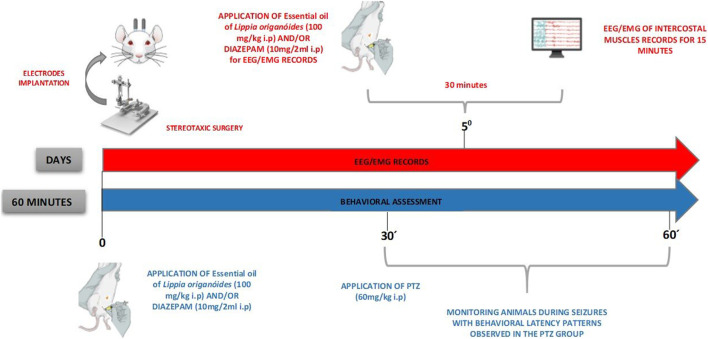
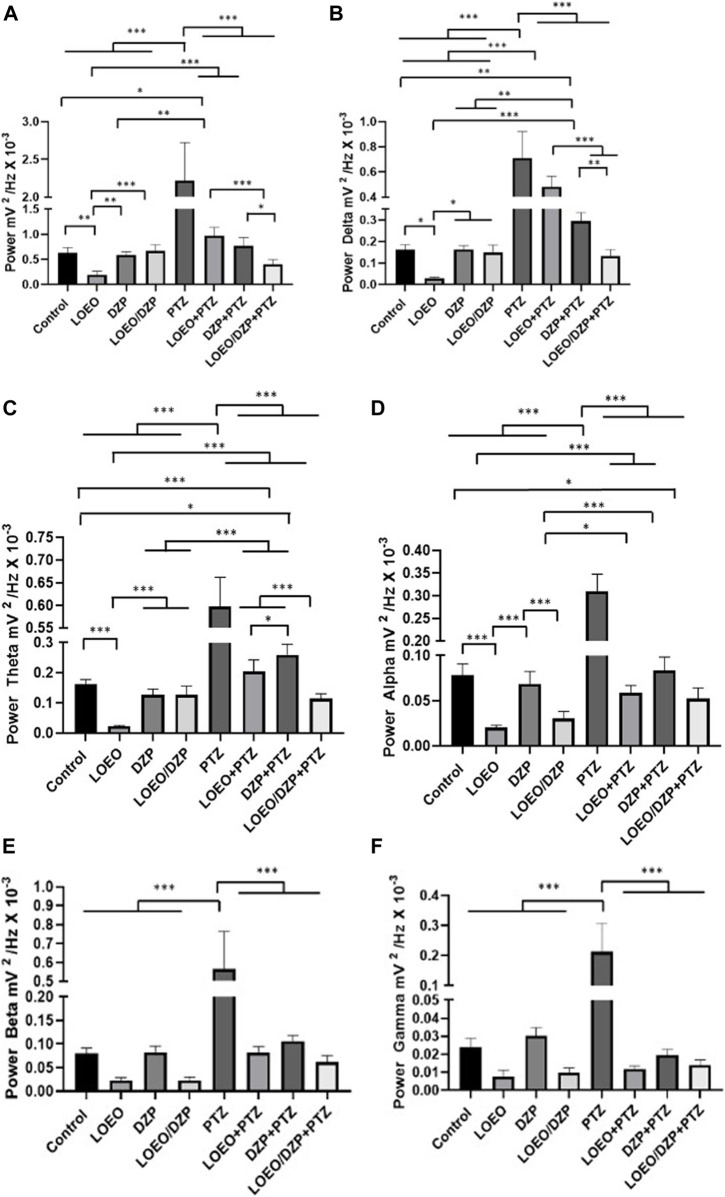
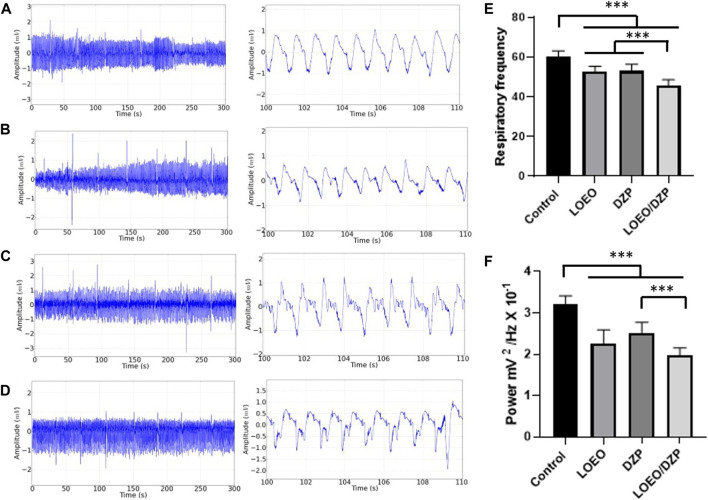
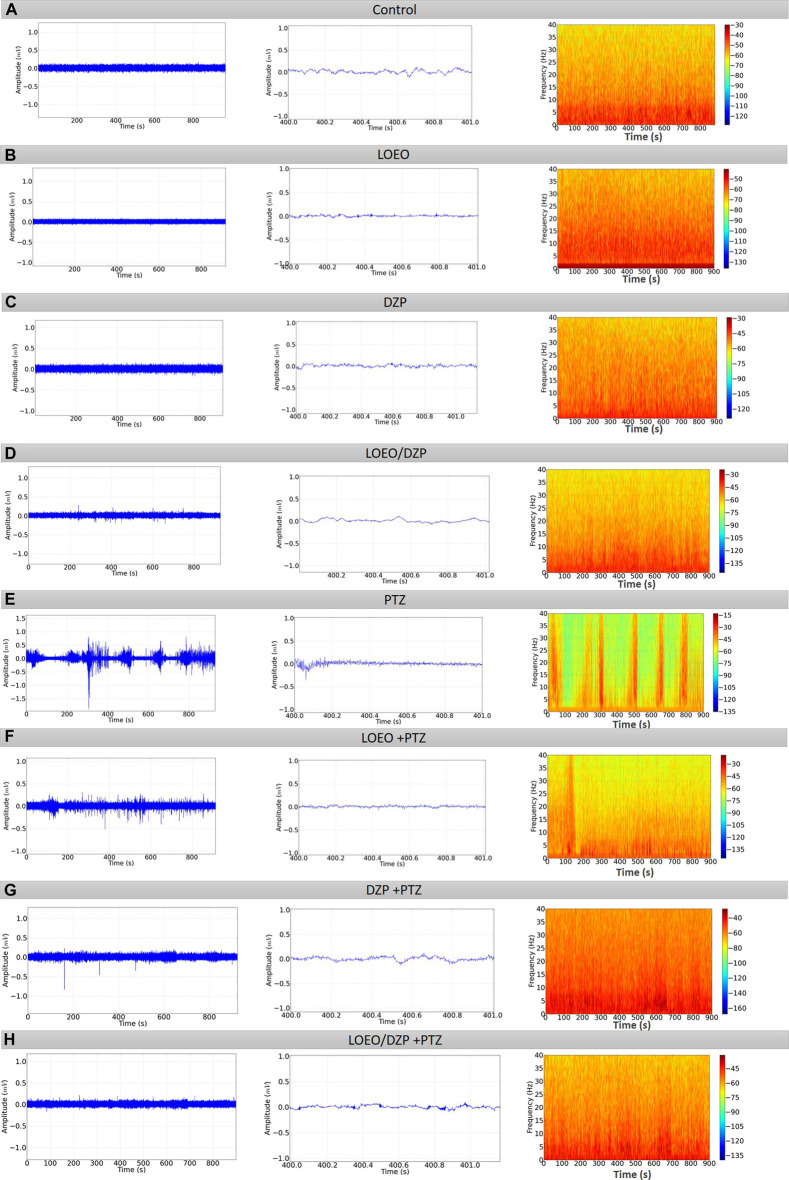
Epilepsy is a neuronal disorder characterized by abnormal excitability of the brain, leading to seizures. Only around 66% of the epileptic patients respond adequately to treatment with existing conventional anticonvulsants, making it necessary to investigate new antiepileptic drugs. The growing research into natural products and their pharmacological properties has become increasingly promising, particularly in the study of essential oils, which are already widely used in popular culture for treating various diseases. The present study evaluated the anticonvulsant effects of Lippia origanoides essential oil (LOEO) (100 mg/kg i. p.) compared to diazepam (DZP) (5 mg/kg i. p.), and the combined administration of these two substances to control convulsions induced by pentylenetetrazol (PTZ) (60 mg/kg i. p.). This evaluation was carried out using 108 male Wistar rats, which were divided into two experiments. Experiment 1-Behavioral assessment: The animals were divided into 4 groups ( = 9): (I) saline solution + PTZ, (II) DZP + PTZ, (III) LOEO + PTZ, (IV) LOEO + DZP + PTZ. The convulsive behavior was induced 30 min after the administration of the tested anticonvulsant drugs, and the observation period lasted 30 min. Experiment 2- Electrocorticographic evaluation: The animals were divided into 8 groups ( = 9): (I) saline solution; (II) LOEO; (III) DZP; (IV) LOEO + DZP; (V) saline + PTZ, (VI) DZP + PTZ (VII) LOEO + PTZ, (VIII) LOEO + DZP + PTZ. PTZ was administered 30 min after LOEO and DZP treatments and electrocorticographic activity was assessed for 15 min. For the control groups, electromyographic recordings were performed in the 10th intercostal space to assess respiratory rate. The results demonstrated that Lippia origanoides essential oil increased the latency time for the appearance of isolated clonic seizures without loss of the postural reflex. The animals had a more intense decrease in respiratory rate when combined with LOEO + DZP. EEG recordings showed a reduction in firing amplitude in the LOEO-treated groups. The combining treatment with diazepam resulted in increased anticonvulsant effects. Therefore, treatment with Lippia origanoides essential oil was effective in controlling seizures, and its combination with diazepam may represent a future option for the treatment of difficult-to-control seizures.
癫痫是一种以大脑异常兴奋性为特征的神经元疾病,可导致癫痫发作。只有约66%的癫痫患者对现有的传统抗惊厥药物治疗有充分反应,因此有必要研究新型抗癫痫药物。对天然产物及其药理特性的研究日益深入,前景愈发广阔,尤其是在精油研究方面,精油在大众文化中已被广泛用于治疗各种疾病。本研究评估了牛至叶过江藤精油(LOEO)(腹腔注射100mg/kg)与地西泮(DZP)(腹腔注射5mg/kg)相比的抗惊厥作用,以及这两种物质联合给药对戊四氮(PTZ)(腹腔注射60mg/kg)诱导惊厥的控制效果。该评估使用了108只雄性Wistar大鼠,分为两个实验。实验1 - 行为评估:将动物分为4组(每组 = 9只):(I)生理盐水 + PTZ,(II)DZP + PTZ,(III)LOEO + PTZ,(IV)LOEO + DZP + PTZ。在给予受试抗惊厥药物30分钟后诱导惊厥行为,观察期持续30分钟。实验2 - 脑电图评估:将动物分为8组(每组 = 9只):(I)生理盐水;(II)LOEO;(III)DZP;(IV)LOEO + DZP;(V)生理盐水 + PTZ,(VI)DZP + PTZ,(VII)LOEO + PTZ,(VIII)LOEO + DZP + PTZ。在LOEO和DZP治疗30分钟后给予PTZ,并评估15分钟的脑电图活动。对于对照组,在第10肋间空间进行肌电图记录以评估呼吸频率。结果表明,牛至叶过江藤精油增加了孤立阵挛性发作出现的潜伏期,且姿势反射未丧失。当与LOEO + DZP联合使用时,动物的呼吸频率下降更为明显。脑电图记录显示,LOEO治疗组的放电幅度降低。与地西泮联合治疗可增强抗惊厥作用。因此,牛至叶过江藤精油治疗在控制癫痫发作方面有效,其与地西泮联合使用可能是未来治疗难治性癫痫发作的一种选择。