Department of Gastroenterology, The First Affiliated Hospital of Zhejiang Chinese Medical University, Hangzhou, China.
PLoS One. 2023 Dec 19;18(12):e0294930. doi: 10.1371/journal.pone.0294930. eCollection 2023.
Endocytoscopy (EC) is a nuclei and micro-vessels visualization in real-time and can facilitate "optical biopsy" and "virtual histology" of colorectal lesions. This study aimed to investigate the significance of employing artificial intelligence (AI) in the field of endoscopy, specifically in diagnosing colorectal lesions. The research was conducted under the supervision of experienced professionals and trainees.
EMBASE, PubMed, Cochrane Library, Web of Science, Chinese National Knowledge Infrastructure (CNKI) database, and other potential databases were surveyed for articles related to the EC with AI published before September 2023. RevMan (5.40), Stata (14.0), and R software (4.1.0) were used for statistical assessment. Studies that measured the accuracy of EC using AI for colorectal lesions were included. Two authors independently assessed the selected studies and their extracted data. This included information such as the country, literature, total study population, study design, characteristics of the fundamental study and control groups, sensitivity, number of samples, assay methodology, specificity, true positives or negatives, and false positives or negatives. The diagnostic accuracy of EC by AI was determined by a bivariate random-effects model, avoiding a high heterogeneity effect. The ANOVA model was employed to determine the more effective approach.
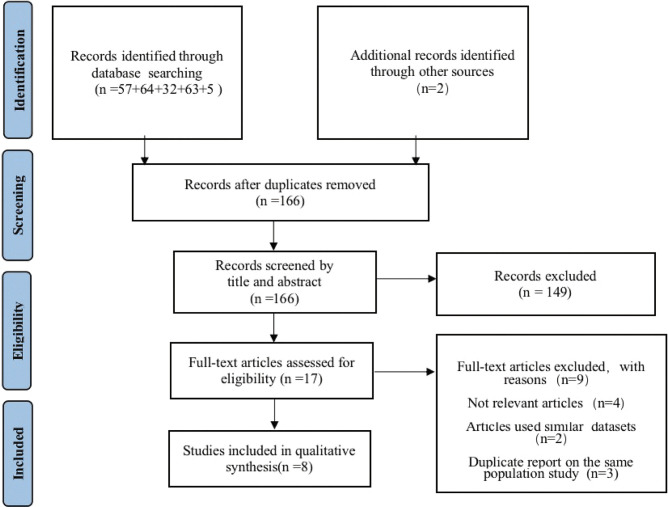
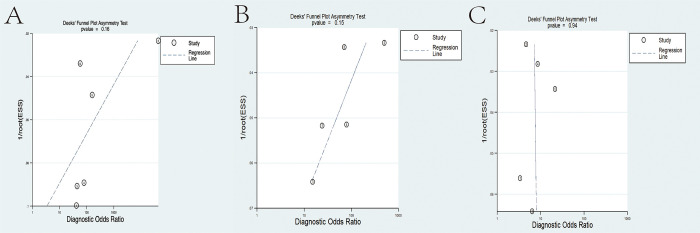
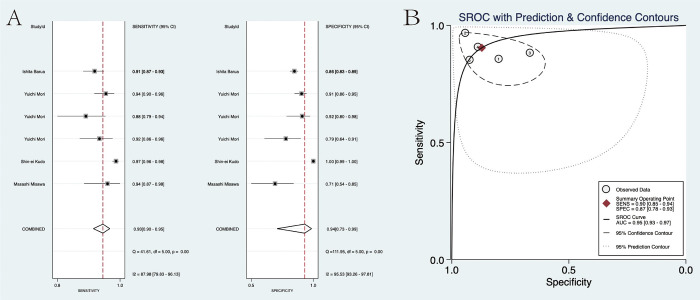
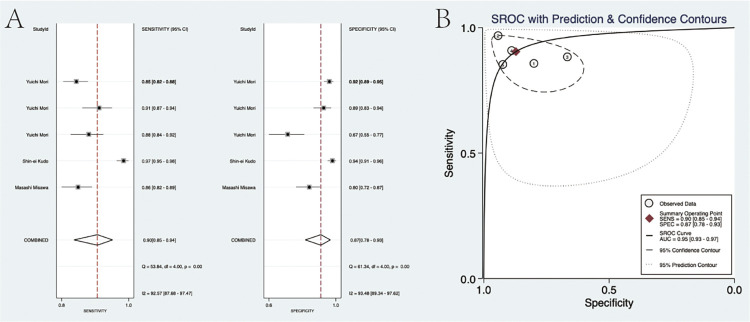
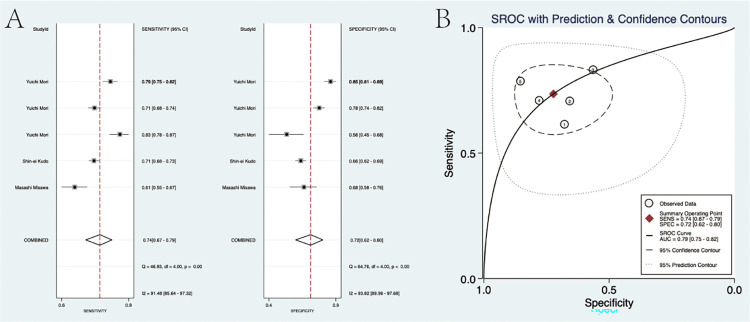
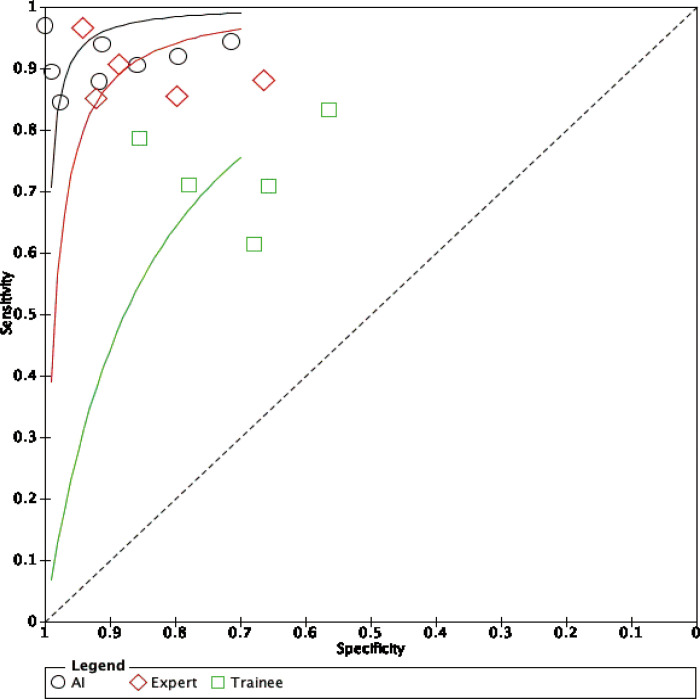
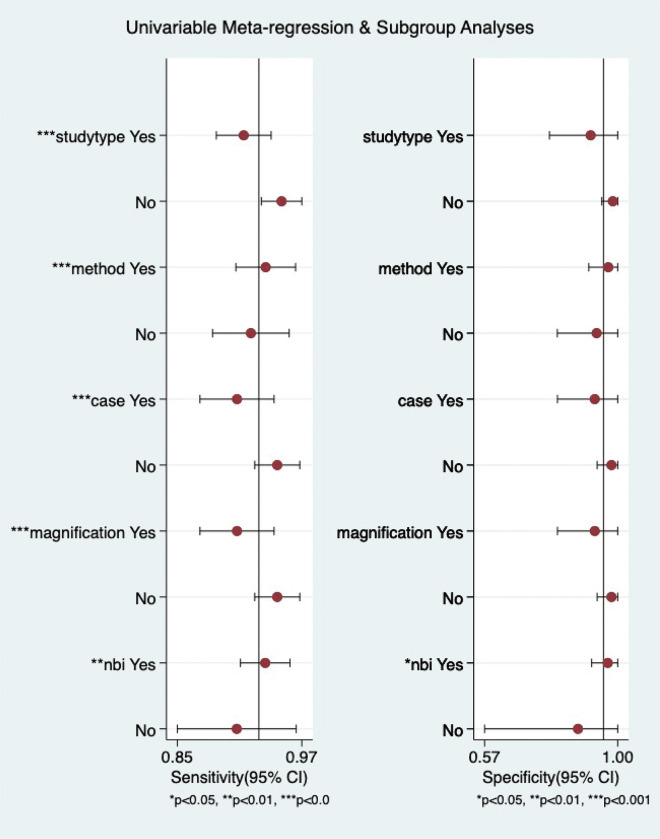
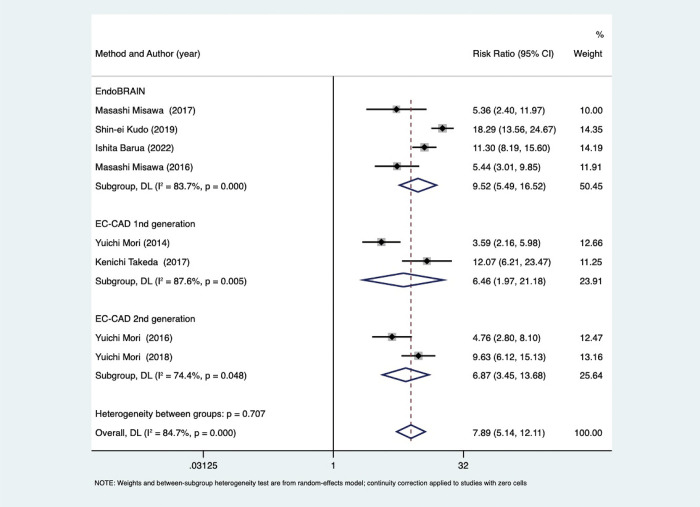
A total of 223 studies were reviewed; 8 articles were selected that included 2984 patients (4241 lesions) for systematic review and meta-analysis. AI assessed 4069 lesions; experts diagnosed 3165 and 5014 by trainees. AI demonstrated high accuracy, sensitivity, and specificity levels in detecting colorectal lesions, with values of 0.93 (95% CI: 0.90, 0.95) and 0.94 (95% CI: 0.73, 0.99). Expert diagnosis was 0.90 (95% CI: 0.85, 0.94), 0.87 (95% CI: 0.78, 0.93), and trainee diagnosis was 0.74 (95% CI: 0.67, 0.79), 0.72 (95% CI: 0.62, 0.80). With the EC by AI, the AUC from SROC was 0.95 (95% CI: 0.93, 0.97), therefore classified as excellent category, expert showed 0.95 (95% CI: 0.93, 0.97), and the trainee had 0.79 (95% CI: 0.75, 0.82). The superior index from the ANOVA model was 4.00 (1.15,5.00), 2.00 (1.15,5.00), and 0.20 (0.20,0.20), respectively. The examiners conducted meta-regression and subgroup analyses to evaluate the presence of heterogeneity. The findings of these investigations suggest that the utilization of NBI technology was correlated with variability in sensitivity and specificity. There was a lack of solid evidence indicating the presence of publishing bias.
The present findings indicate that using AI in EC can potentially enhance the efficiency of diagnosing colorectal abnormalities. As a valuable instrument, it can enhance prognostic outcomes in ordinary EC procedures, exhibiting superior diagnostic accuracy compared to trainee-level endoscopists and demonstrating comparability to expert endoscopists. The research is subject to certain constraints, namely a limited number of clinical investigations and variations in the methodologies used for identification. Consequently, it is imperative to conduct comprehensive and extensive research to enhance the precision of diagnostic procedures.
内镜下细胞学检查(EC)能够实时可视化细胞核和微血管,有助于实现结直肠病变的“光学活检”和“虚拟组织学”。本研究旨在探讨人工智能(AI)在结直肠内镜领域的应用意义,具体是在诊断结直肠病变方面的应用。研究由经验丰富的专业人员和学员监督进行。
检索了截至 2023 年 9 月发表的与使用 AI 的 EC 相关的文章,包括 EMBASE、PubMed、Cochrane 图书馆、Web of Science、中国国家知识基础设施(CNKI)数据库和其他潜在数据库。使用 RevMan(5.40)、Stata(14.0)和 R 软件(4.1.0)进行统计评估。包括使用 AI 测量 EC 对结直肠病变的准确性的研究。两名作者独立评估了选定的研究及其提取的数据。这些数据包括国家、文献、总研究人群、研究设计、基础研究和对照组的特征、敏感性、样本量、检测方法、特异性、真阳性或阴性、假阳性或阴性。使用双变量随机效应模型确定 AI 进行 EC 的诊断准确性,避免了高异质性效应。使用 ANOVA 模型确定更有效的方法。
共综述了 223 项研究,选择了 8 项包含 2984 名患者(4241 个病变)的研究进行系统评价和荟萃分析。AI 评估了 4069 个病变;专家诊断了 3165 个病变,学员诊断了 5014 个病变。AI 在检测结直肠病变方面具有较高的准确性、敏感性和特异性,其值分别为 0.93(95%CI:0.90,0.95)和 0.94(95%CI:0.73,0.99)。专家诊断的准确性为 0.90(95%CI:0.85,0.94),0.87(95%CI:0.78,0.93),学员诊断的准确性为 0.74(95%CI:0.67,0.79),0.72(95%CI:0.62,0.80)。使用 AI 的 EC,SROC 的 AUC 为 0.95(95%CI:0.93,0.97),因此被归类为优秀类别,专家为 0.95(95%CI:0.93,0.97),学员为 0.79(95%CI:0.75,0.82)。ANOVA 模型的优势指标分别为 4.00(1.15,5.00)、2.00(1.15,5.00)和 0.20(0.20,0.20)。检查人员进行了荟萃回归和亚组分析,以评估异质性的存在。这些研究结果表明,NBI 技术的使用与敏感性和特异性的变化有关。没有确凿的证据表明存在发表偏倚。
本研究结果表明,在 EC 中使用 AI 可能会提高诊断结直肠异常的效率。作为一种有价值的工具,它可以增强普通 EC 程序的预后结果,与学员级别的内镜医生相比具有更高的诊断准确性,与专家内镜医生相比具有可比性。该研究受到了一些限制,即临床研究数量有限,以及用于识别的方法存在差异。因此,有必要进行全面广泛的研究,以提高诊断程序的准确性。