Department of Medicine, King Edward Medical University, Lahore, Pakistan.
Department of Medicine, Dow Medical College, Dow University of Health Sciences, Karachi, Pakistan.
Medicine (Baltimore). 2023 Dec 15;102(50):e36592. doi: 10.1097/MD.0000000000036592.
Menopause causes a variety of symptoms such as hot flashes and night sweats. While menopausal hormonal therapy has been used for managing postmenopausal vasomotor symptoms (VMS) for quite a while, it has a considerably poor safety profile.
To review and analyze existing data to evaluate the efficacy of the neurokinin-3 antagonist, fezolinetant, in treating postmenopausal VMS and to assess its safety profile.
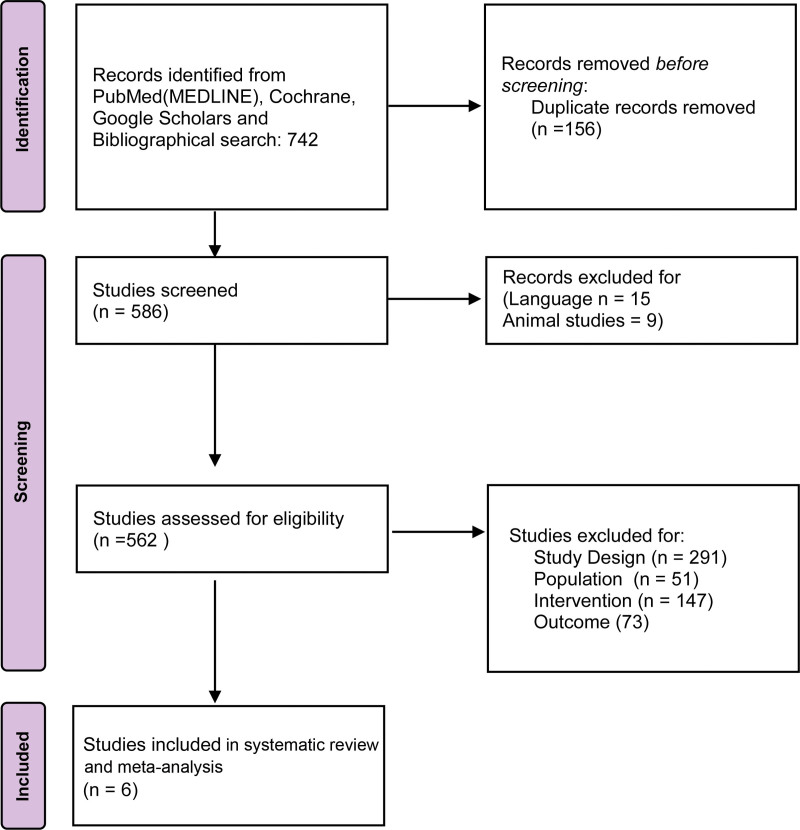
A thorough literature search was performed on PubMed, Cochrane Library, and Google Scholar in compliance with Preferred Reporting Items for Systematic Reviews and Meta-Analysis 2020, to find publications on the efficacy of fezolinetant for postmenopausal VMS. Changes in the frequency and severity scores of moderate/severe VMS and changes in the Hot Flash-Related Daily Interference Scale (HFRDIS), Greene Climacteric Scale (GCS), and Menopause-Specific Quality of Life (MENQoL) were the efficacy outcomes. Adverse events, drug-related treatment-emergent adverse effects (TEAEs), drug-related dropouts, hepatotoxicity, endometrial hyperplasia or tumor, and uterine bleeding were all safety outcomes. We used Review Manager 5.4 for pooling risk ratios (RRs) and mean differences (MDs) for dichotomous and continuous outcomes, respectively. A P value of < .05 was considered significant.
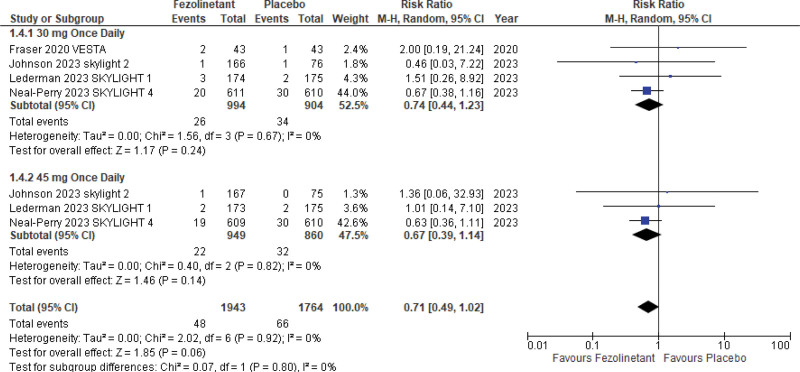
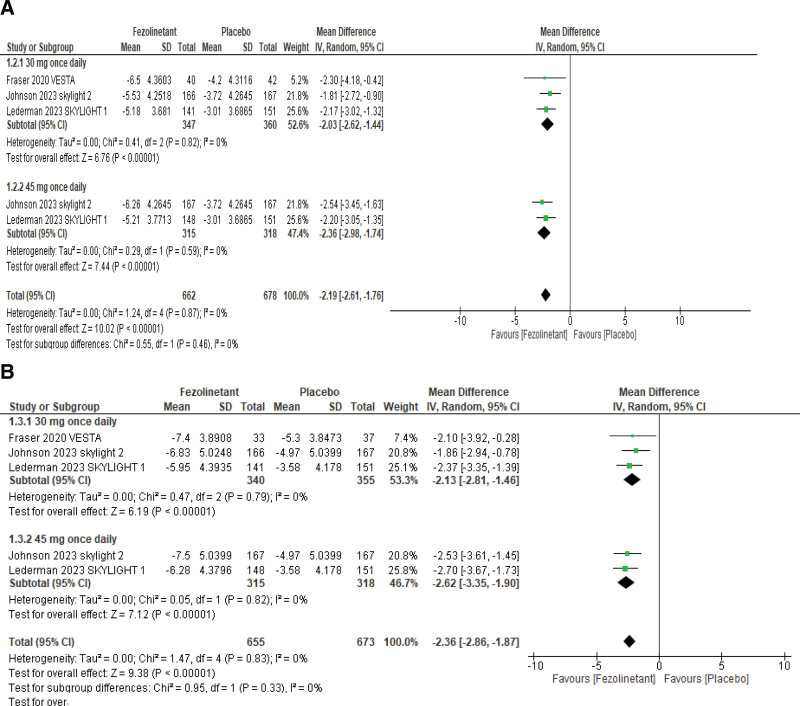
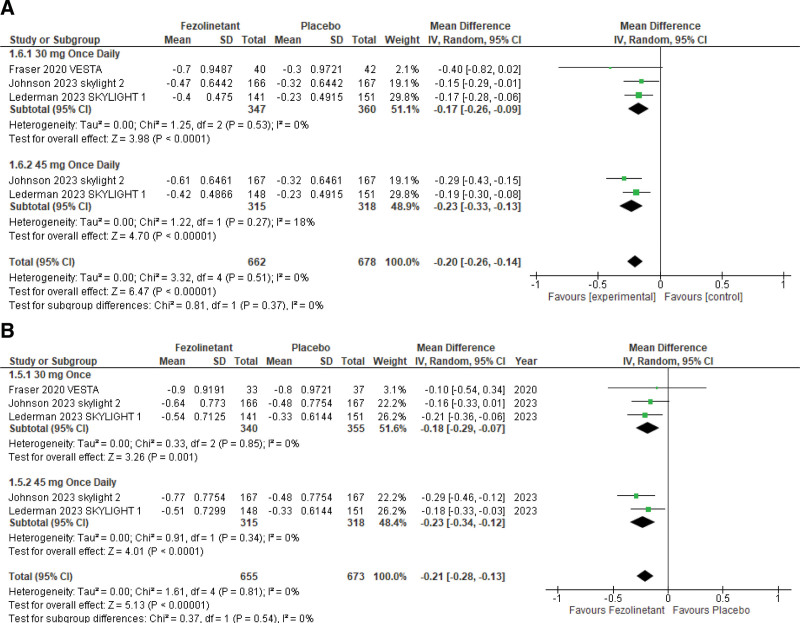
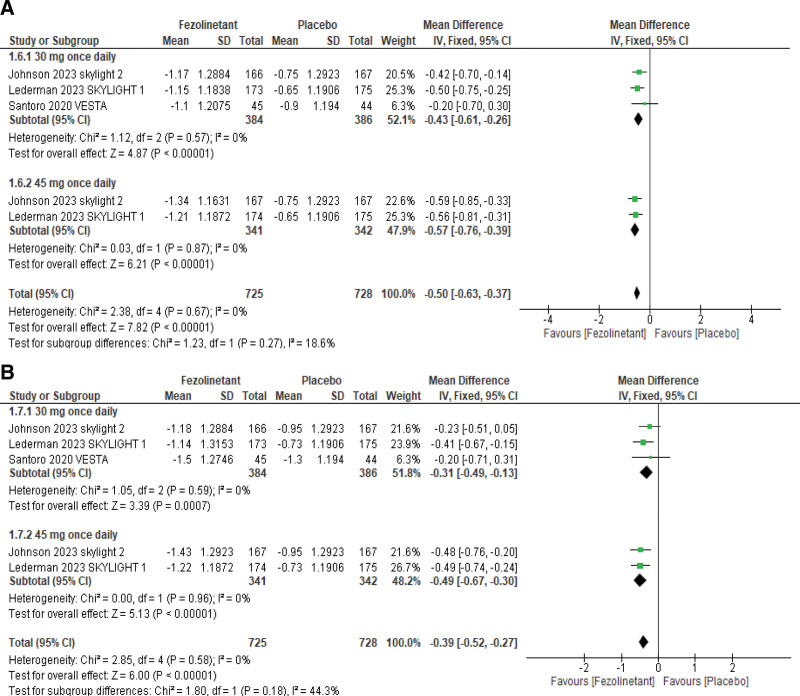
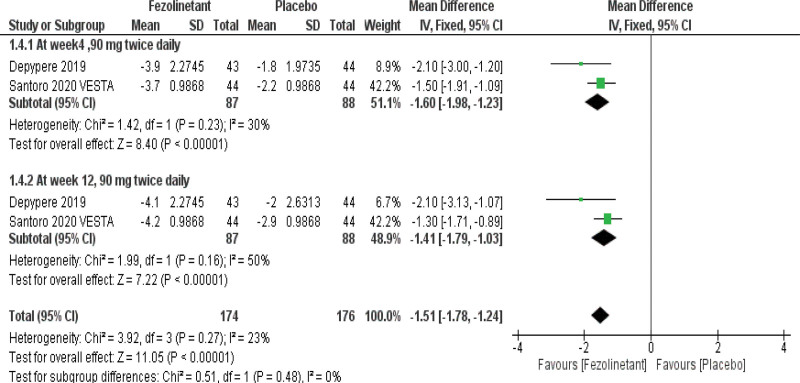
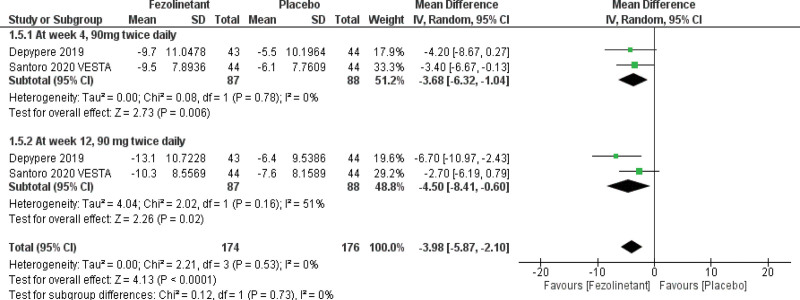
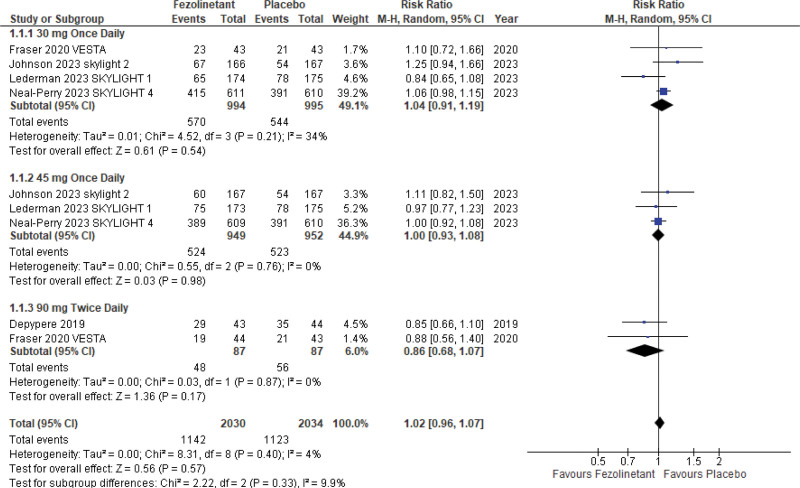
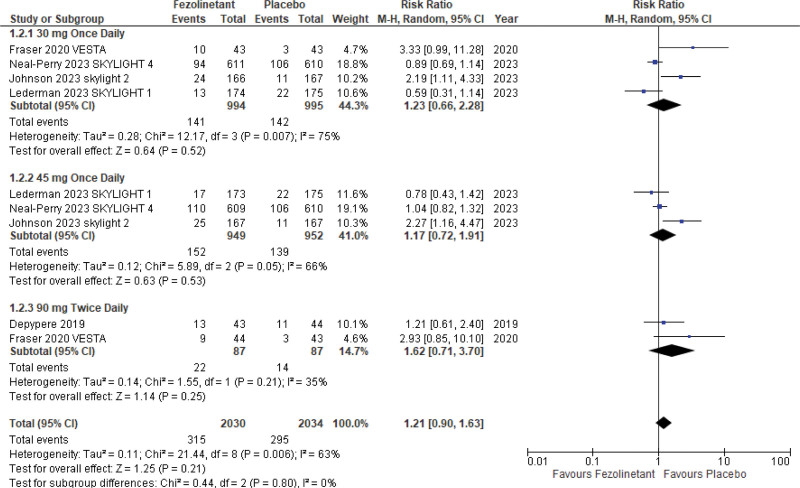
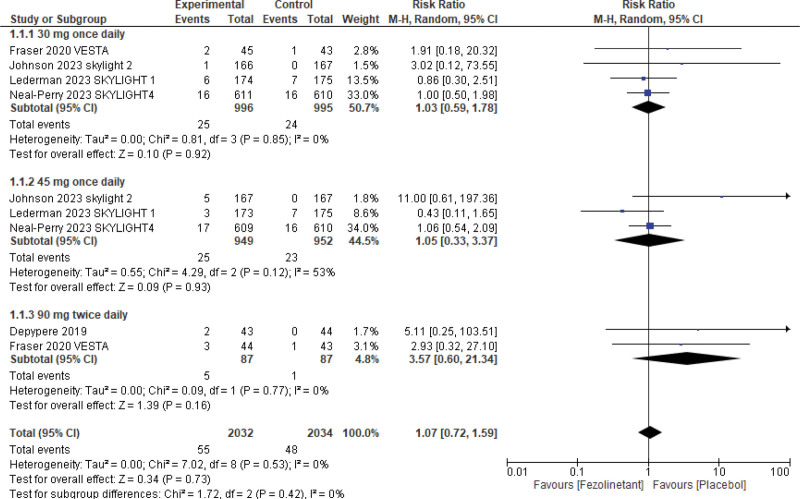
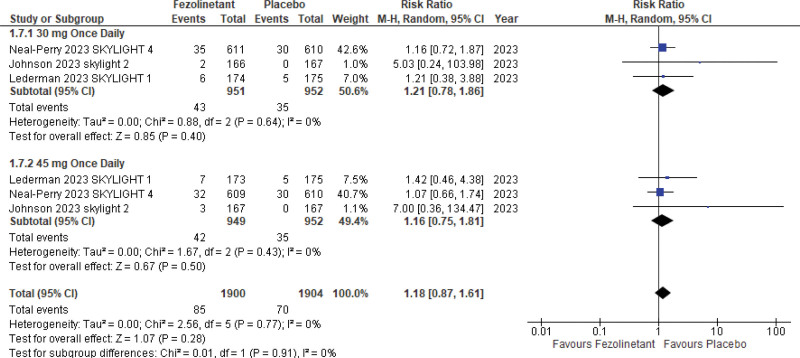
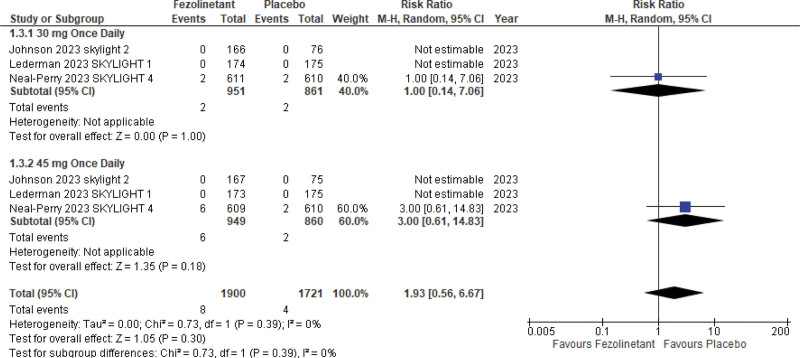
There was a significant reduction in mean daily VMS frequency at weeks 4 and 12 (MD, -2.36; 95% confidence interval [CI], -2.85 to -1.87; P < .00001, for week 12) and also a significant decrease in VMS severity scores in the treatment group. Furthermore, improvements in MENQoL, HFRDIS, and GCS scores were observed. There was no significant difference in adverse events while drug-related TEAEs (RR, 1.21; 95% CI, 0.90-1.63; P = .21) showed a slight increase with fezolinetant. Drug-related dropouts were again similar across the 2 groups. Uterine bleeding had a lower incidence while endometrial events and hepatotoxicity showed a statistically insignificant, increasing trend in the fezolinetant group.
Fezolinetant can be a treatment option for postmenopausal VMS but warns of a risk increase in endometrial hyperplasia or tumors. The heterogeneity in the data being analyzed, short follow-up period, and small sample size in most of the included randomized controlled trials were the greatest limitations, which must be considered in further research and safety profile exploration.
绝经会引起各种症状,如热潮红和盗汗。尽管更年期激素疗法已用于治疗绝经后血管舒缩症状(VMS)相当长一段时间,但它的安全性相当差。
回顾和分析现有数据,以评估神经激肽-3 拮抗剂 fezolinetant 治疗绝经后 VMS 的疗效,并评估其安全性概况。
根据系统评价和荟萃分析的首选报告项目 2020 年的规定,在 PubMed、Cochrane 图书馆和 Google Scholar 上进行了全面的文献检索,以查找关于 fezolinetant 治疗绝经后 VMS 的疗效的出版物。中度/重度 VMS 频率和严重程度评分的变化以及热潮红相关日常生活干扰量表(HFRDIS)、格林绝经量表(GCS)和绝经特异性生活质量量表(MENQoL)的变化是疗效指标。不良事件、与药物相关的治疗中出现的不良事件(TEAEs)、与药物相关的停药、肝毒性、子宫内膜增生或肿瘤和子宫出血都是安全性指标。我们使用 Review Manager 5.4 分别对二分类和连续性结局的风险比(RR)和平均差异(MD)进行汇总。P 值<.05 被认为具有统计学意义。
治疗 4 周和 12 周时,平均每日 VMS 频率显著降低(MD,-2.36;95%置信区间[CI],-2.85 至-1.87;P<.00001,第 12 周),VMS 严重程度评分也显著降低。此外,MENQoL、HFRDIS 和 GCS 评分也有所改善。不良事件无显著差异,而与药物相关的 TEAEs(RR,1.21;95%CI,0.90-1.63;P=.21)略有增加。两组间药物相关停药率再次相似。子宫出血发生率较低,而子宫内膜事件和肝毒性在 fezolinetant 组呈统计学上无显著增加的趋势。
Fezolinetant 可以作为治疗绝经后 VMS 的一种选择,但需要注意子宫内膜增生或肿瘤的风险增加。分析中数据的异质性、大多数纳入的随机对照试验随访时间短、样本量小是最大的局限性,这在进一步的研究和安全性概况探索中必须考虑。