School of Medicine, University of St Andrews, Medical and Biological Sciences Building, North Haugh, St Andrews, KY16 9TF, UK.
School of Medicine, Dentistry and Nursing, College of Medical, Veterinary & Life Sciences, University of Glasgow, Glasgow, Scotland.
Adv Ther. 2021 Oct;38(10):5025-5045. doi: 10.1007/s12325-021-01900-w. Epub 2021 Sep 12.
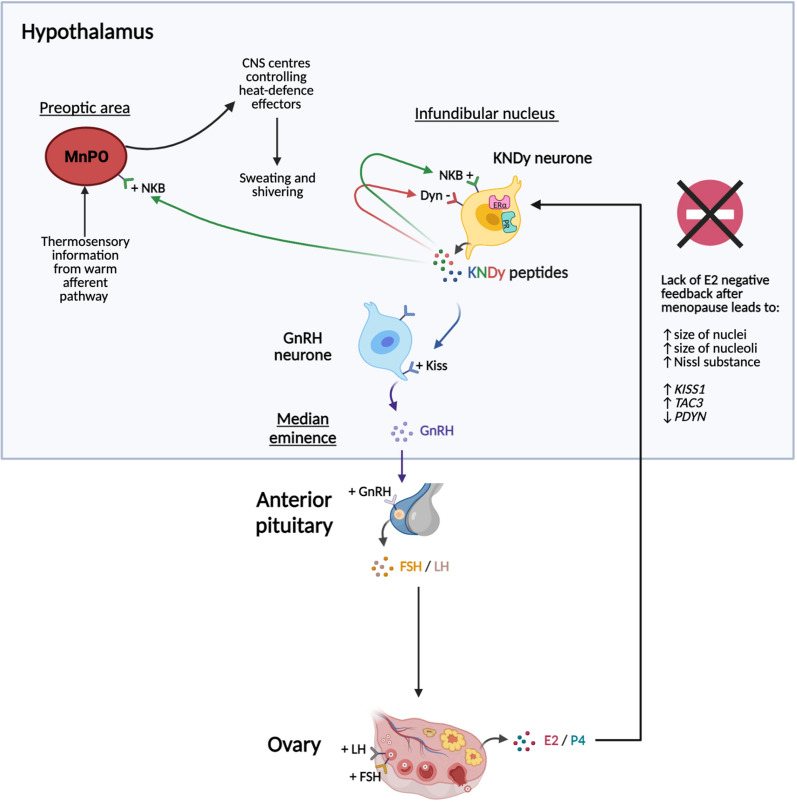
Hot flushes/flashes (HFs) or other vasomotor symptoms affect between 45 and 97% of women during menopause. Hormone replacement therapy (HRT) is effective at alleviating menopausal symptoms, but some women cannot or prefer not to take HRT. Since current non-hormonal options have suboptimal efficacy/tolerability, there is a pressing need for an effective, well-tolerated alternative. The neurokinin 3 receptor (NK3R) has recently been implicated in the generation of menopausal HFs and represents a novel therapeutic target to ameliorate HF symptoms. This review aims to assess if NK3R antagonists (NK3Ras) are more effective than Serotonin Norepinephrine Reuptake Inhibitors (SNRIs)-currently a common choice for non-hormonal treatment of menopausal HFs.
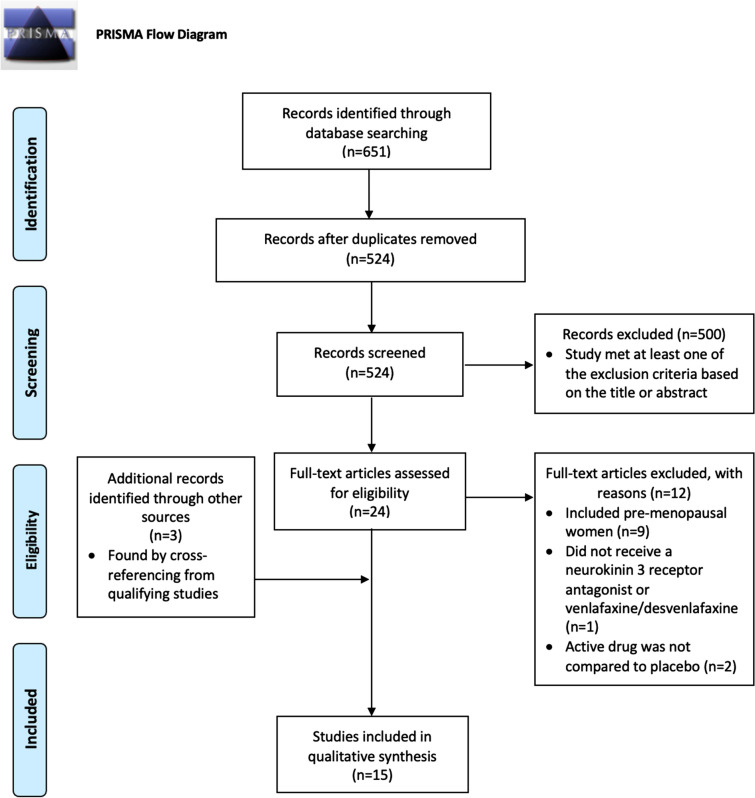
Studies were identified after systematically searching Ovid MEDLINE and EMBASE databases based on PRISMA guidelines. Trial quality and bias were assessed. Key efficacy outcomes (HF frequency, HF severity and number of night-time awakenings/night-sweats) and selected safety outcomes were extracted and analysed.
Seven SNRI and four NK3Ra placebo-controlled randomised trials (plus four follow-up reports) were included in this review. NK3Ra administration resulted in a larger reduction from baseline in HF frequency, HF severity and night-sweats compared to SNRIs. Five of seven SNRI trials showed a reduction in HF frequency that was statistically significant (by 48-67% from baseline at weeks 8 or 12) whereas all NK3Ra trials showed a statistically significant reduction in HF frequency (by 62-93% from baseline at weeks 2, 4 or 12). While SNRI trials reported poor tolerability, particularly nausea, NK3Ra trials reported good tolerability overall, although two trials reported elevation in transaminases.
NK3Ras trials show encouraging efficacy and tolerability/safety. Completion of phase 3 NK3Ra trials are required to confirm efficacy and uphold safety/tolerability data but phase 2 results suggest that NK3Ras are more effective than SNRIs for non-hormonal treatment of menopausal HFs.
热潮(HFs)或其他血管舒缩症状影响 45%至 97%的女性在更年期。激素替代疗法(HRT)在缓解更年期症状方面是有效的,但有些女性不能或不愿接受 HRT。由于目前非激素选择的疗效/耐受性不理想,因此迫切需要一种有效且耐受性良好的替代方法。神经激肽 3 受体(NK3R)最近被认为与绝经后 HFs 的发生有关,是改善 HF 症状的一种新的治疗靶点。本综述旨在评估 NK3 受体拮抗剂(NK3Ras)是否比目前常用于治疗绝经后 HFs 的非激素治疗的 5-羟色胺去甲肾上腺素再摄取抑制剂(SNRIs)更有效。
根据 PRISMA 指南,系统地搜索了 Ovid MEDLINE 和 EMBASE 数据库,以确定研究。评估了试验质量和偏倚。提取并分析了主要疗效结局(HF 频率、HF 严重程度和夜间觉醒/夜间出汗次数)和选定的安全性结局。
本综述纳入了 7 项 SNRI 和 4 项 NK3Ra 安慰剂对照随机试验(加上 4 项随访报告)。与 SNRIs 相比,NK3Ra 给药可使 HF 频率、HF 严重程度和夜间出汗次数从基线更大程度地降低。7 项 SNRI 试验中有 5 项显示 HF 频率降低具有统计学意义(在第 8 或 12 周时与基线相比降低 48-67%),而所有 NK3Ra 试验均显示 HF 频率降低具有统计学意义(在第 2、4 或 12 周时与基线相比降低 62-93%)。虽然 SNRI 试验报告了较差的耐受性,特别是恶心,但 NK3Ra 试验总体上报告了良好的耐受性,尽管有两项试验报告了转氨升高。
NK3Ra 试验显示出令人鼓舞的疗效和耐受性/安全性。需要完成 3 期 NK3Ra 试验以确认疗效并维持安全性/耐受性数据,但 2 期结果表明,NK3Ra 对于治疗绝经后 HFs 的非激素治疗比 SNRIs 更有效。