Research Service, Ralph H. Johnson Department of Veterans Affairs Health Care System, Charleston, SC 29401, USA.
Department of Pathology and Laboratory Medicine, Medical University of South Carolina, Charleston, SC 29425, USA.
Dis Model Mech. 2024 Jan 1;17(1). doi: 10.1242/dmm.050044. Epub 2024 Jan 12.
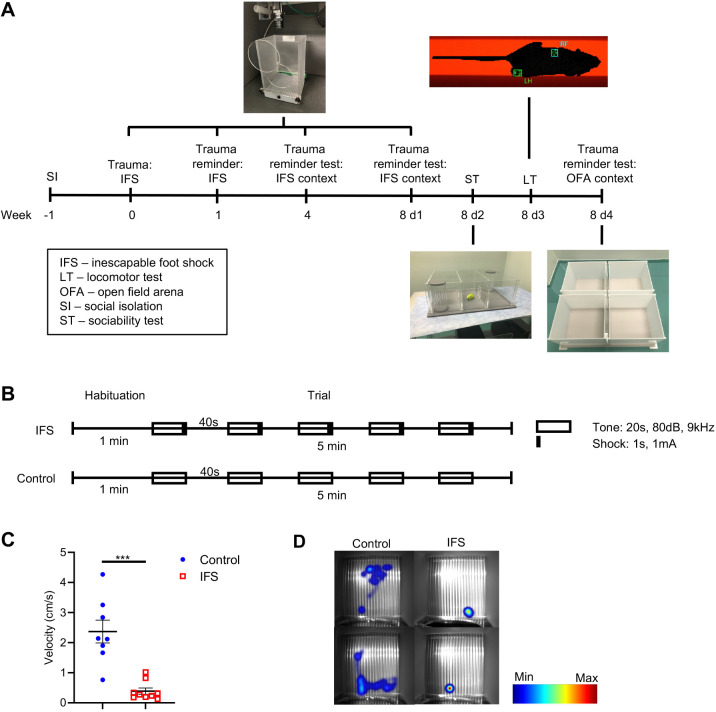
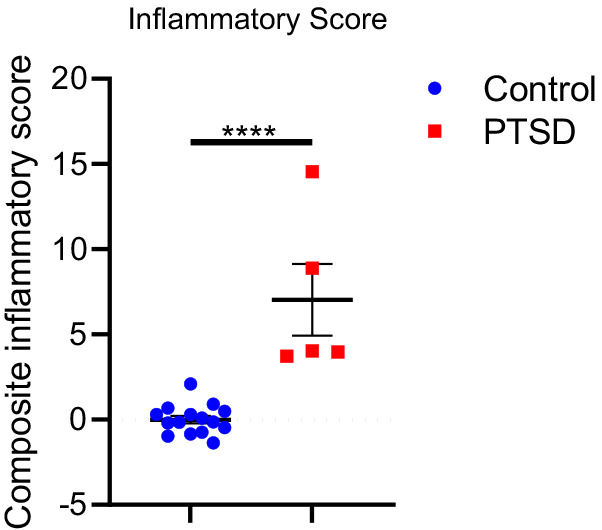
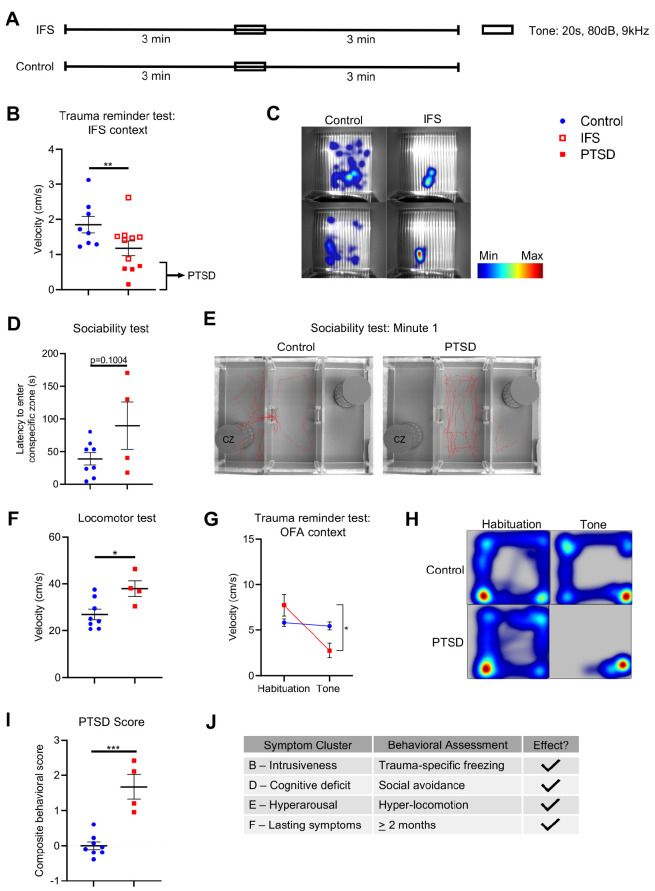
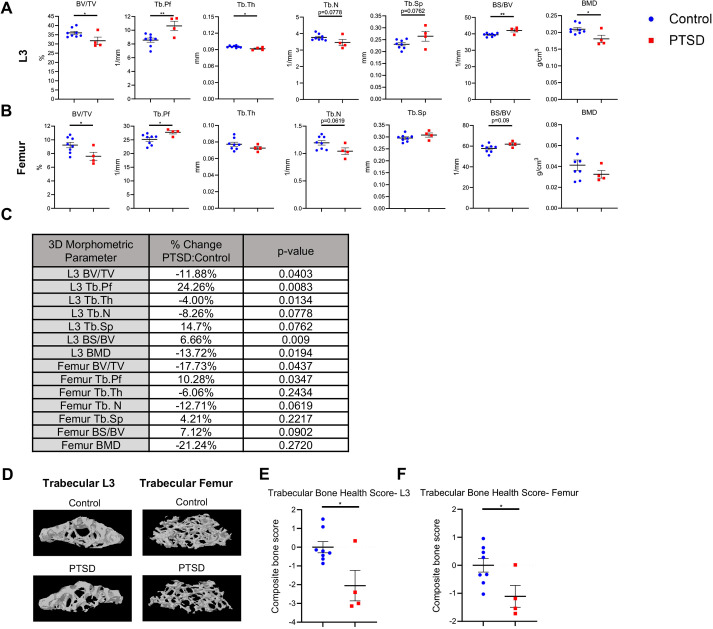
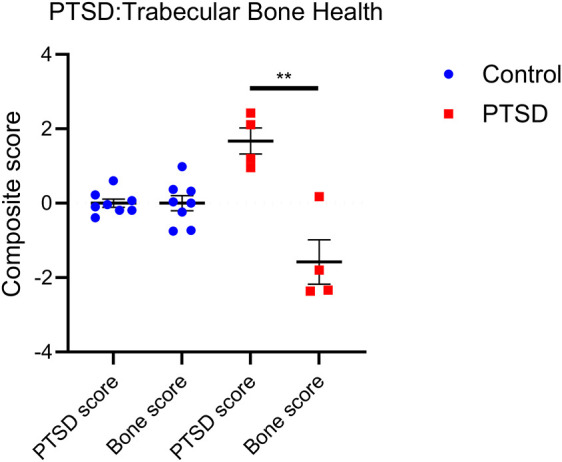
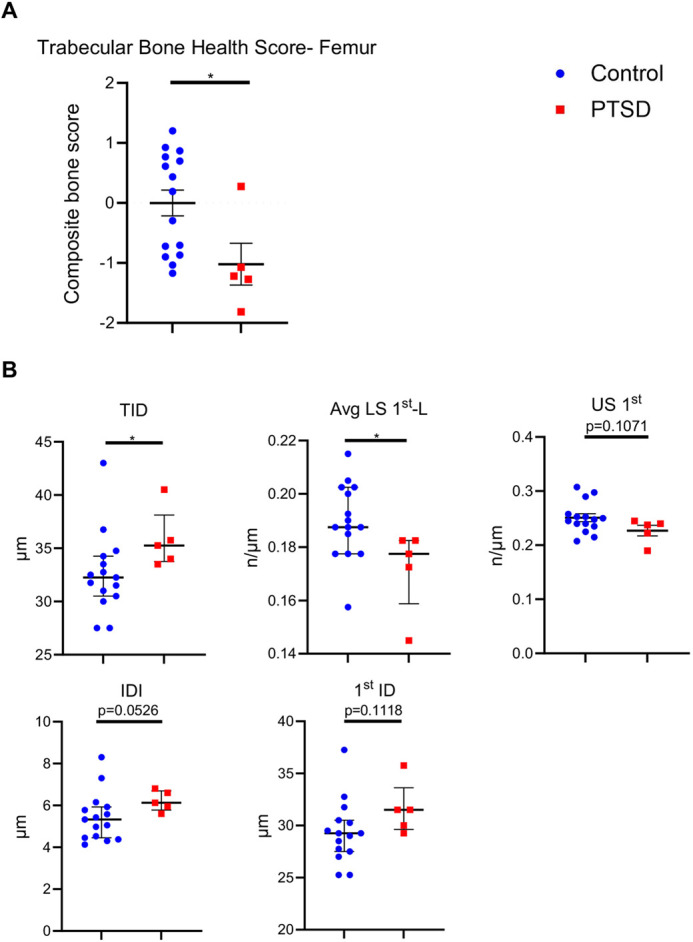
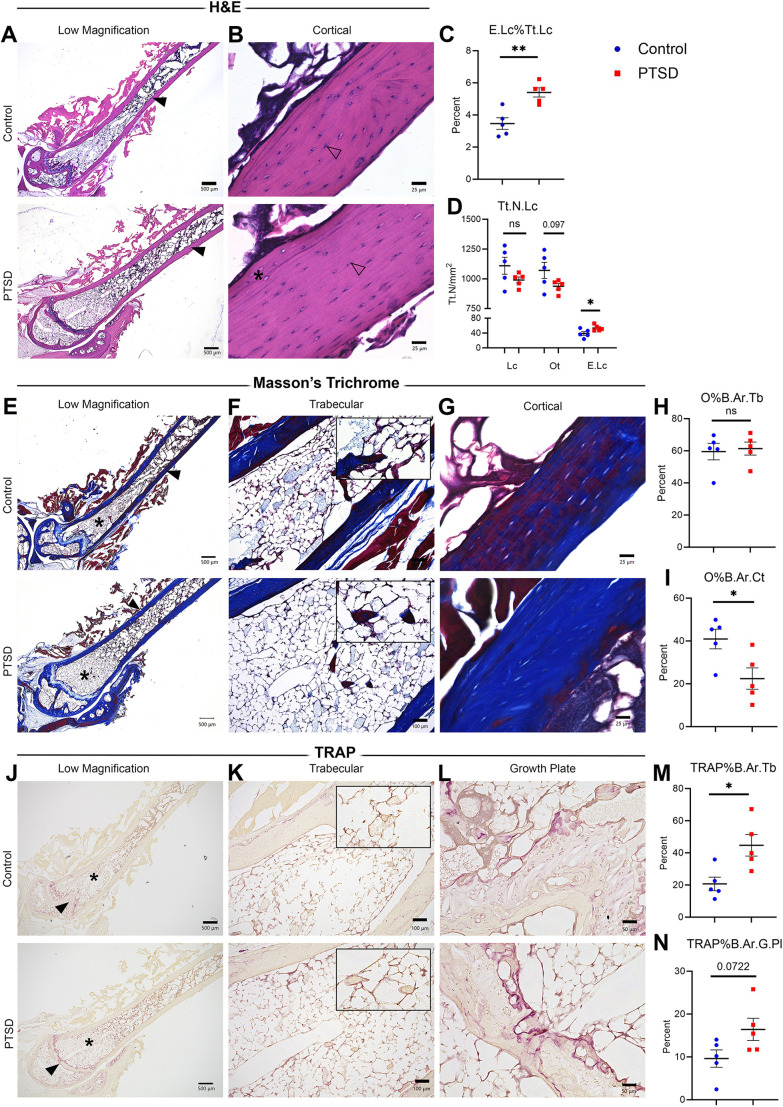
Post-traumatic stress disorder (PTSD) is associated with osteopenia, osteoporosis and increased fracture risk in the clinical population. Yet, the development of preclinical models to study PTSD-induced bone loss remains limited. In this study, we present a previously unreported model of PTSD in adult female C57BL/6 mice, by employing inescapable foot shock and social isolation, that demonstrates high face and construct validity. A subset of mice exposed to this paradigm (i.e. PTSD mice) display long-term alterations in behavioral and inflammatory indices. Using three-dimensional morphometric calculations, cyclic reference point indentation (cRPI) testing and histological analyses, we find that PTSD mice exhibit loss of trabecular bone, altered bone material quality, and aberrant changes in bone tissue architecture and cellular activity. This adult murine model of PTSD exhibits clinically relevant changes in bone physiology and provides a valuable tool for investigating the cellular and molecular mechanisms underlying PTSD-induced bone loss.
创伤后应激障碍(PTSD)与临床人群中的骨量减少、骨质疏松症和骨折风险增加有关。然而,用于研究 PTSD 导致的骨丢失的临床前模型的发展仍然有限。在这项研究中,我们通过使用无法逃避的足底电击和社会隔离,提出了一种以前未报道的成年雌性 C57BL/6 小鼠 PTSD 模型,该模型具有高的面部和结构有效性。一小部分暴露于该范式的小鼠(即 PTSD 小鼠)表现出行为和炎症指标的长期改变。使用三维形态计量学计算、循环参考点压痕(cRPI)测试和组织学分析,我们发现 PTSD 小鼠表现出小梁骨丢失、骨材料质量改变以及骨组织结构和细胞活性的异常变化。这种 PTSD 的成年小鼠模型表现出与临床相关的骨生理学变化,并为研究 PTSD 导致的骨丢失的细胞和分子机制提供了有价值的工具。