Pang Andy W C, Kosco Karena, Sahajpal Nikhil S, Sridhar Arthi, Hauenstein Jen, Clifford Benjamin, Estabrook Joey, Chitsazan Alex D, Sahoo Trilochan, Iqbal Anwar, Kolhe Ravindra, Raca Gordana, Hastie Alex R, Chaubey Alka
Bionano, San Diego, CA 92121, USA.
Bionano Laboratories, San Diego, CA 92121, USA.
Biomedicines. 2023 Dec 9;11(12):3263. doi: 10.3390/biomedicines11123263.
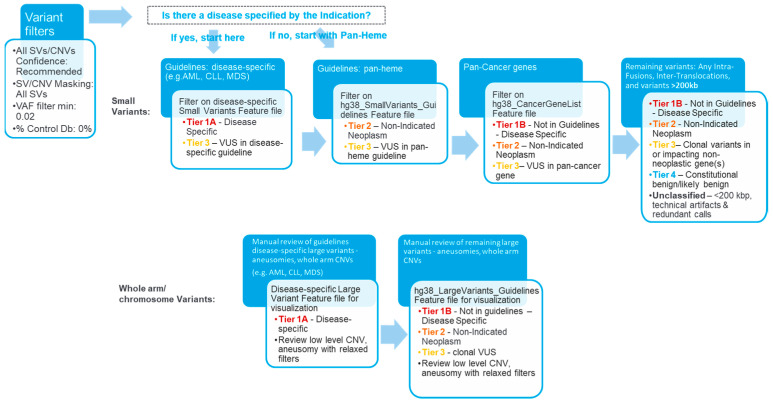
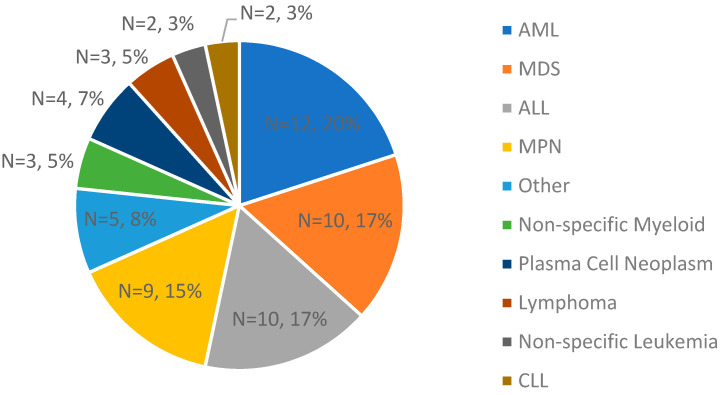
Structural variations (SVs) play a key role in the pathogenicity of hematological malignancies. Standard-of-care (SOC) methods such as karyotyping and fluorescence in situ hybridization (FISH), which have been employed globally for the past three decades, have significant limitations in terms of resolution and the number of recurrent aberrations that can be simultaneously assessed, respectively. Next-generation sequencing (NGS)-based technologies are now widely used to detect clinically significant sequence variants but are limited in their ability to accurately detect SVs. Optical genome mapping (OGM) is an emerging technology enabling the genome-wide detection of all classes of SVs at a significantly higher resolution than karyotyping and FISH. OGM requires neither cultured cells nor amplification of DNA, addressing the limitations of culture and amplification biases. This study reports the clinical validation of OGM as a laboratory-developed test (LDT) according to stringent regulatory (CAP/CLIA) guidelines for genome-wide SV detection in different hematological malignancies. In total, 60 cases with hematological malignancies (of various subtypes), 18 controls, and 2 cancer cell lines were used for this study. Ultra-high-molecular-weight DNA was extracted from the samples, fluorescently labeled, and run on the Bionano Saphyr system. A total of 215 datasets, Inc.luding replicates, were generated, and analyzed successfully. Sample data were then analyzed using either disease-specific or pan-cancer-specific BED files to prioritize calls that are known to be diagnostically or prognostically relevant. Sensitivity, specificity, and reproducibility were 100%, 100%, and 96%, respectively. Following the validation, 14 cases and 10 controls were run and analyzed using OGM at three outside laboratories showing reproducibility of 96.4%. OGM found more clinically relevant SVs compared to SOC testing due to its ability to detect all classes of SVs at higher resolution. The results of this validation study demonstrate the superiority of OGM over traditional SOC methods for the detection of SVs for the accurate diagnosis of various hematological malignancies.
结构变异(SVs)在血液系统恶性肿瘤的致病性中起着关键作用。在过去三十年中全球广泛应用的诸如核型分析和荧光原位杂交(FISH)等标准治疗(SOC)方法,在分辨率以及可同时评估的复发性畸变数量方面分别存在显著局限性。基于新一代测序(NGS)的技术目前被广泛用于检测具有临床意义的序列变异,但在准确检测SVs的能力方面存在局限。光学基因组图谱(OGM)是一项新兴技术,能够以比核型分析和FISH显著更高的分辨率在全基因组范围内检测所有类型的SVs。OGM既不需要培养细胞也不需要DNA扩增,解决了培养和扩增偏差的局限性。本研究根据严格的监管(CAP/CLIA)指南报告了OGM作为实验室开发检测方法(LDT)在不同血液系统恶性肿瘤全基因组SV检测中的临床验证。本研究总共使用了60例血液系统恶性肿瘤(各种亚型)病例、18例对照和2个癌细胞系。从样本中提取超高分子量DNA,进行荧光标记,并在Bionano Saphyr系统上运行。总共生成并成功分析了215个数据集,包括重复数据集。然后使用疾病特异性或泛癌特异性的BED文件分析样本数据,以对已知具有诊断或预后相关性的检测结果进行优先级排序。敏感性、特异性和可重复性分别为100%、100%和96%。验证之后,在三个外部实验室使用OGM对14例病例和10例对照进行检测和分析,显示可重复性为96.4%。由于OGM能够以更高分辨率检测所有类型的SVs,与SOC检测相比,它发现了更多具有临床相关性的SVs。这项验证研究的结果证明了OGM在检测SVs以准确诊断各种血液系统恶性肿瘤方面优于传统的SOC方法。