College of Management, Chung Hua University, Hsinchu 30012, Taiwan.
Graduate Institute of Science Education & Environmental Education, National Kaohsiung Normal University, Kaohsiung 82444, Taiwan.
Nutrients. 2023 Dec 13;15(24):5089. doi: 10.3390/nu15245089.
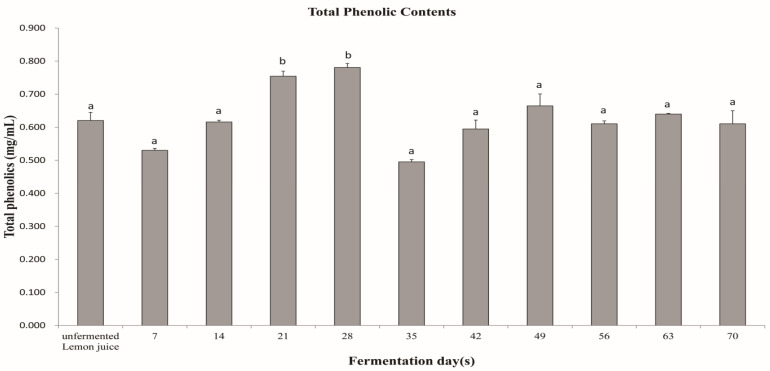
Aging and obesity make humans more prone to cardiovascular and metabolic syndrome diseases, leading to several serious health conditions, including hyperlipidemia, high blood pressure, and sleep disturbance. This study aimed to explore the hypolipidemic effect of fermented citrus lemon juice using a hyperlipidemic hamster model. The sugar-free lemon juice's fermentation was optimized, and the characteristics of fresh and fermented lemon juice (FLJ) were evaluated and compared, which contained polyphenols and superoxide dismutase-like activity. Results showed that the absorption and utilization efficiency of FLJ was higher compared with the unfermented lemon juice. This study's prefermentation efficiency evaluation found that 21-30 days of bacterial DMS32004 and DMS32005 fermentation of fresh lemon juice provided the best fermentation benefits, and 21-day FLJ was applied as a remedy after the efficiency compassion. After six weeks of feeding, the total cholesterol (TC) and triglyceride (TG) values in the blood and liver of the FLJ treatment groups were decreased compared with the high-fat diet (HFD) group. In addition, the blood low-density lipoprotein cholesterol (LDL-C) levels were significantly reduced in the FLJ treatment groups compared with the HFD group. In contrast, the blood high-density lipoprotein (HDL-C) to LDL-C ratio increased considerably in the FLJ treatment groups, and the total to HDL ratio was significantly lower than in the HFD group. Compared with the HFD group, the TC content in the FLJ treatment groups' feces increased significantly. This study demonstrated that the sugar-free fermentation method and fermentation cycle management provided FLJ with the potential to regulate blood lipids. Further research and verification will be carried out to isolate specific substances from the FLJ and identify their mechanisms of action.
衰老和肥胖使人类更容易患上心血管和代谢综合征疾病,导致多种严重的健康问题,包括高血脂、高血压和睡眠障碍。本研究旨在探索利用高脂血症仓鼠模型发酵柑橘柠檬汁的降血脂作用。对无糖柠檬汁进行发酵优化,并对新鲜和发酵柠檬果汁(FLJ)的特性进行评估和比较,其含有多酚和超氧化物歧化酶样活性。结果表明,与未经发酵的柠檬汁相比,FLJ 的吸收和利用效率更高。本研究的预发酵效率评估发现,细菌 DMS32004 和 DMS32005 对新鲜柠檬果汁发酵 21-30 天提供了最佳的发酵效果,因此采用 21 天的 FLJ 作为补救措施。经过六周的喂养,FLJ 处理组的血液和肝脏中的总胆固醇(TC)和甘油三酯(TG)值均低于高脂肪饮食(HFD)组。此外,FLJ 处理组的血液低密度脂蛋白胆固醇(LDL-C)水平明显低于 HFD 组。相比之下,FLJ 处理组的血液高密度脂蛋白(HDL-C)与 LDL-C 的比值显著增加,总与 HDL 的比值明显低于 HFD 组。与 HFD 组相比,FLJ 处理组粪便中的 TC 含量显著增加。本研究表明,无糖发酵方法和发酵周期管理为 FLJ 调节血液脂质提供了潜力。将进一步开展研究和验证,从 FLJ 中分离出特定物质,并确定其作用机制。