Lester and Sue Smith Breast Center, Baylor College of Medicine, Houston, Texas, USA; Department of Molecular and Human Genetics, Baylor College of Medicine, Houston, Texas, USA.
Department of Liver Surgery and Transplantation, Liver Cancer Institute, Zhongshan Hospital and Key Laboratory of Carcinogenesis and Cancer Invasion of the Ministry of China, Fudan University, Shanghai, China.
Mol Cell Proteomics. 2024 Feb;23(2):100707. doi: 10.1016/j.mcpro.2023.100707. Epub 2023 Dec 26.
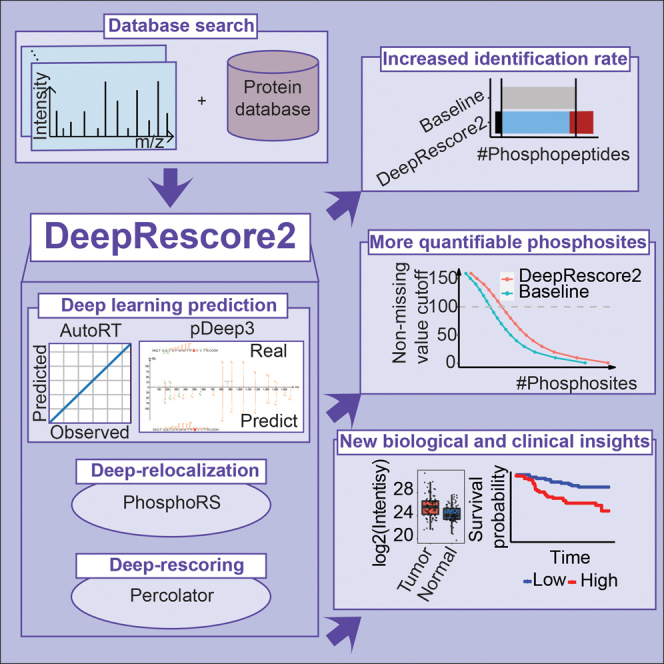
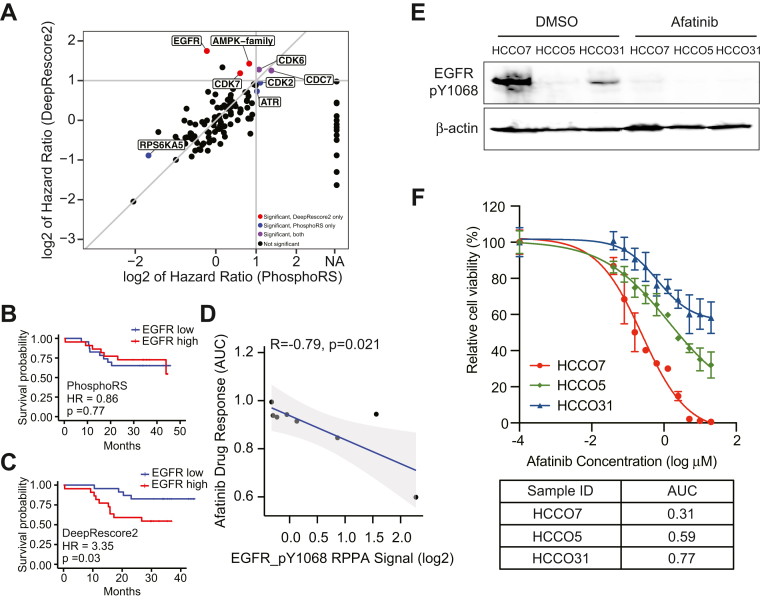
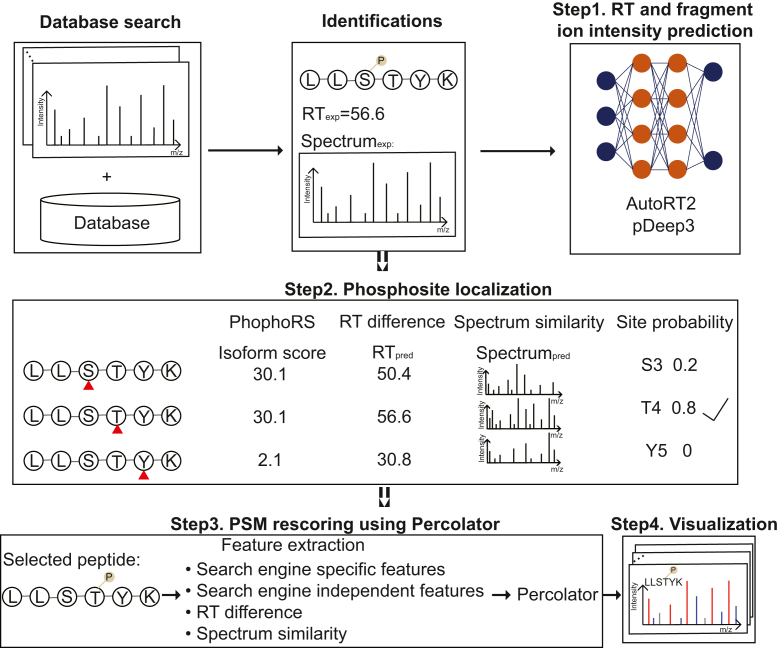
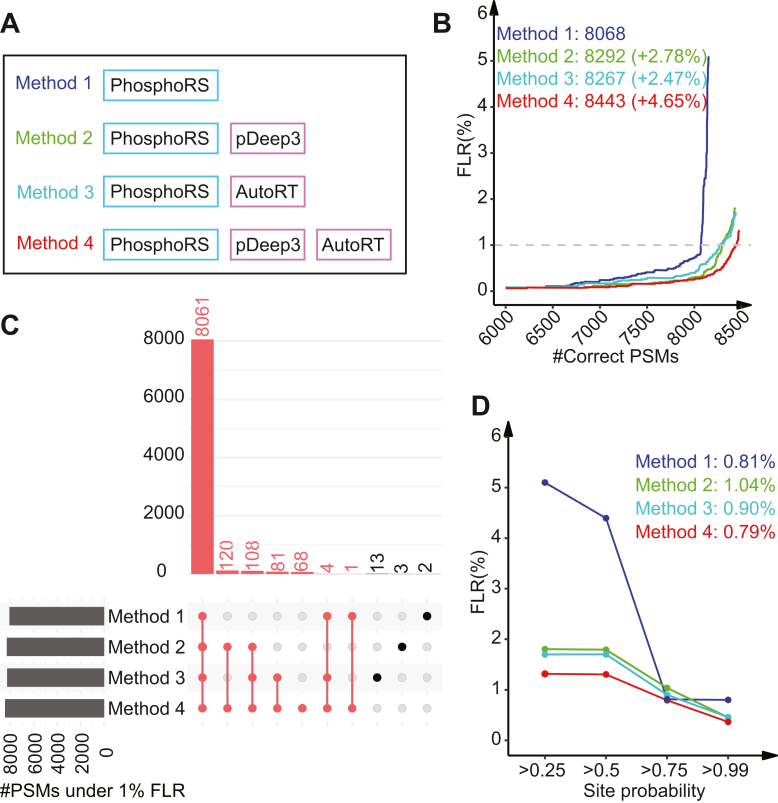
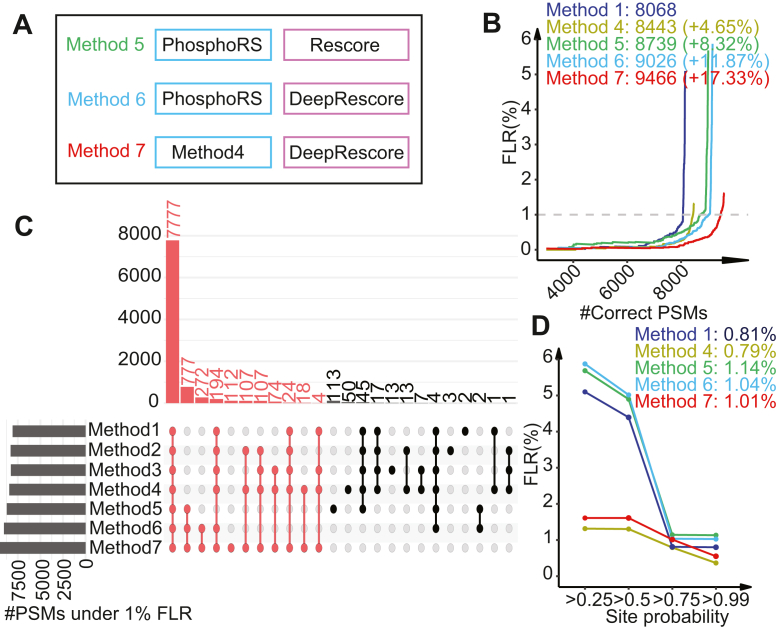
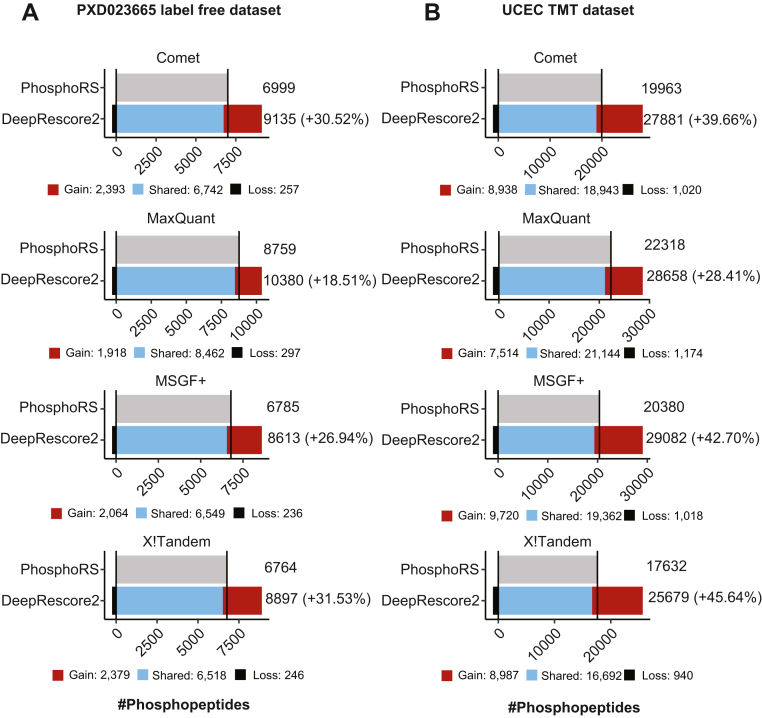
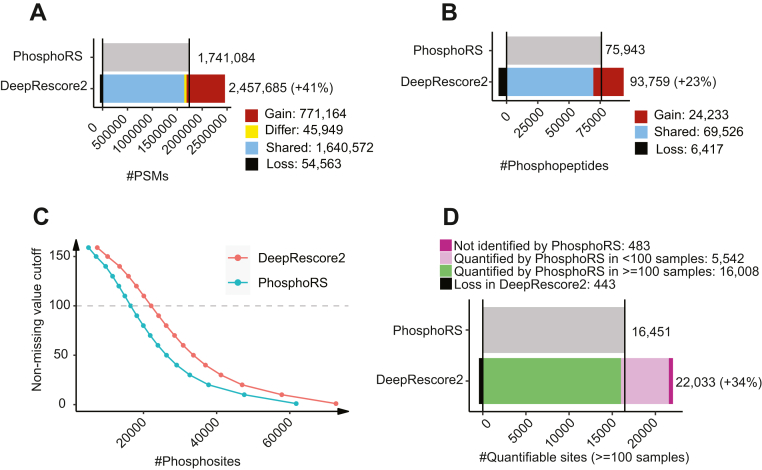
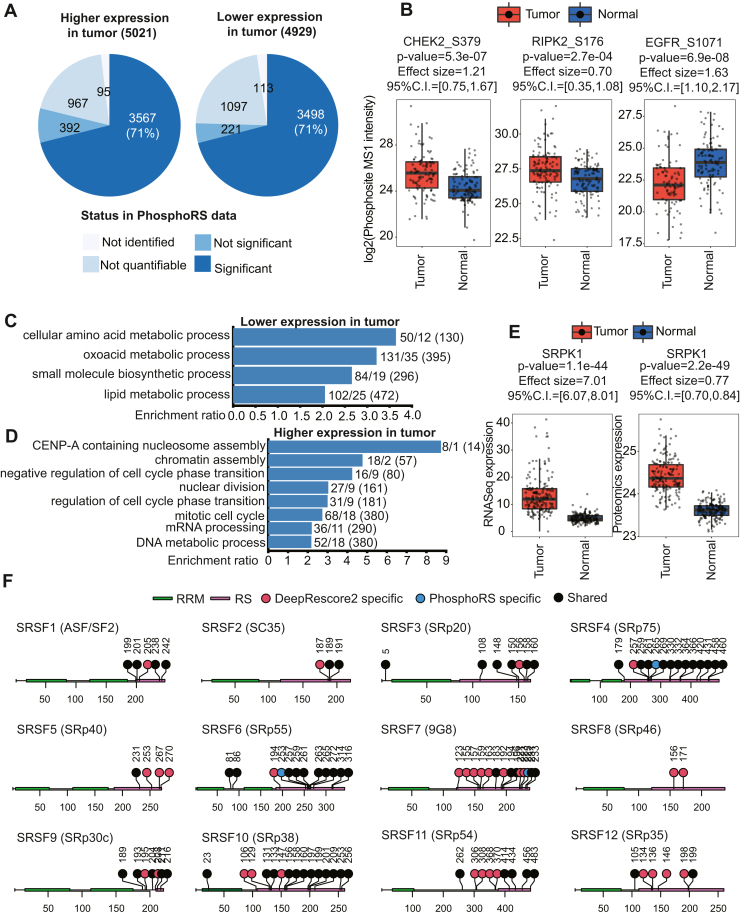
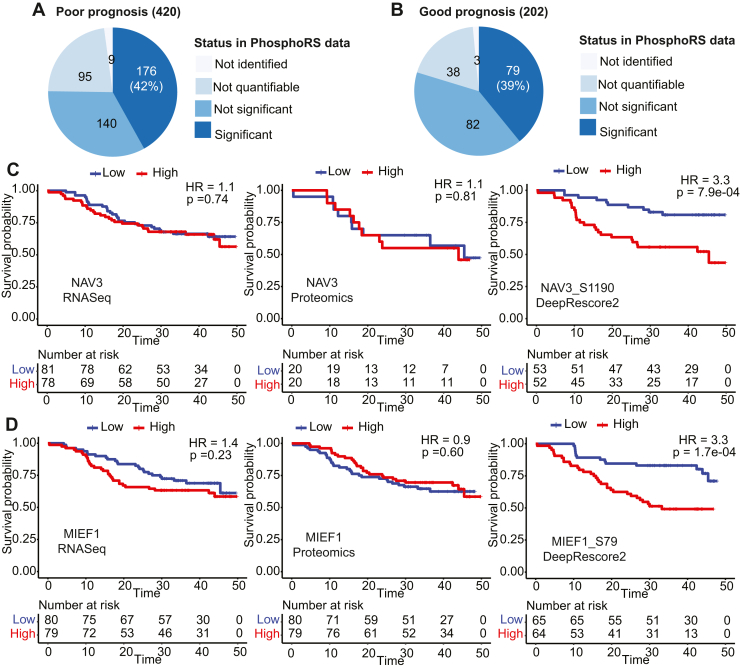
Shotgun phosphoproteomics enables high-throughput analysis of phosphopeptides in biological samples. One of the primary challenges associated with this technology is the relatively low rate of phosphopeptide identification during data analysis. This limitation hampers the full realization of the potential offered by shotgun phosphoproteomics. Here we present DeepRescore2, a computational workflow that leverages deep learning-based retention time and fragment ion intensity predictions to improve phosphopeptide identification and phosphosite localization. Using a state-of-the-art computational workflow as a benchmark, DeepRescore2 increases the number of correctly identified peptide-spectrum matches by 17% in a synthetic dataset and identifies 19% to 46% more phosphopeptides in biological datasets. In a liver cancer dataset, 30% of the significantly altered phosphosites between tumor and normal tissues and 60% of the prognosis-associated phosphosites identified from DeepRescore2-processed data could not be identified based on the state-of-the-art workflow. Notably, DeepRescore2-processed data uniquely identifies EGFR hyperactivation as a new target in poor-prognosis liver cancer, which is validated experimentally. Integration of deep learning prediction in DeepRescore2 improves phosphopeptide identification and facilitates biological discoveries.
Shotgun 磷酸化蛋白质组学能够实现生物样本中磷酸肽的高通量分析。该技术面临的主要挑战之一是在数据分析过程中磷酸肽的识别率相对较低。这一限制阻碍了 Shotgun 磷酸化蛋白质组学的全部潜力的实现。在这里,我们介绍了 DeepRescore2,这是一种计算工作流程,利用基于深度学习的保留时间和片段离子强度预测来改善磷酸肽的识别和磷酸化位点定位。使用最先进的计算工作流程作为基准,DeepRescore2 在合成数据集上将正确识别的肽谱匹配数量增加了 17%,并在生物数据集上识别出 19%到 46%的更多磷酸肽。在肝癌数据集上,肿瘤和正常组织之间有 30%的显著改变的磷酸化位点和 60%的预后相关的磷酸化位点无法基于最先进的工作流程识别,而这些都可以通过 DeepRescore2 处理后的数据识别。值得注意的是,DeepRescore2 处理后的数据还独特地将 EGFR 过度激活鉴定为预后不良的肝癌的一个新靶点,这在实验中得到了验证。DeepRescore2 中深度学习预测的整合提高了磷酸肽的识别能力,并促进了生物学发现。