Department of Ophthalmology, Dali Prefecture People's Hospital (The Third Affiliated Hospital of Dali University), Dali, Yunnan, 671003, China.
Department of Endocrine, The First Affiliated Hospital of Dali University, Dali, Yunnan, 671003, China.
Mol Biotechnol. 2024 Sep;66(9):2583-2594. doi: 10.1007/s12033-023-01042-0. Epub 2023 Dec 30.
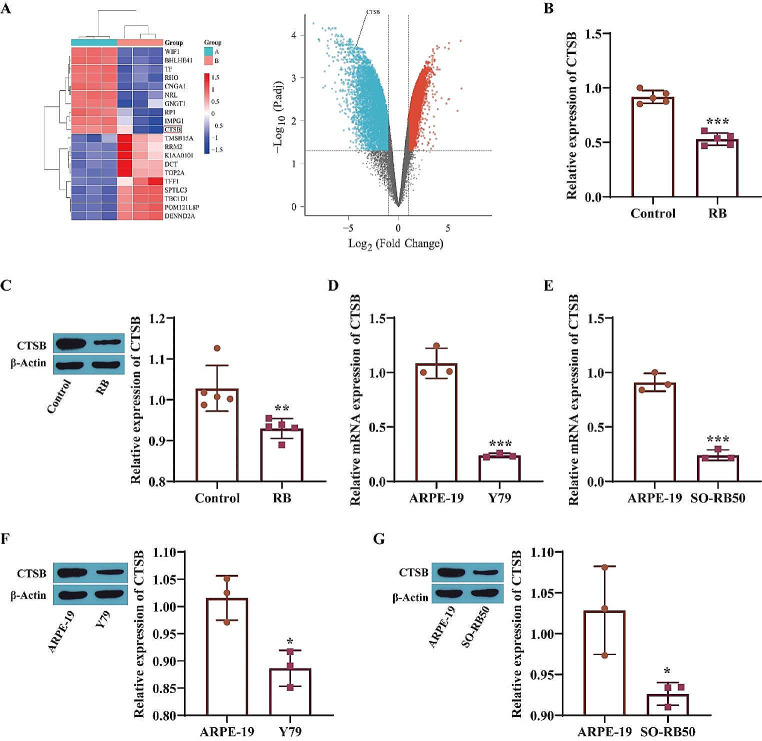
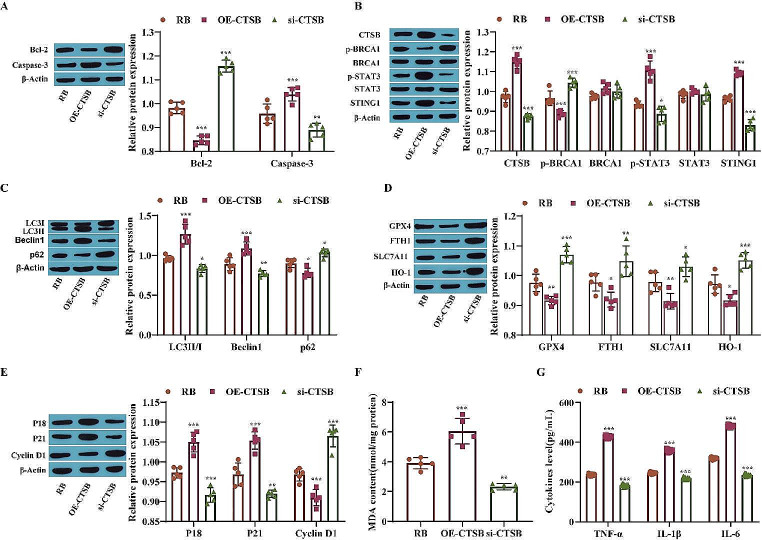
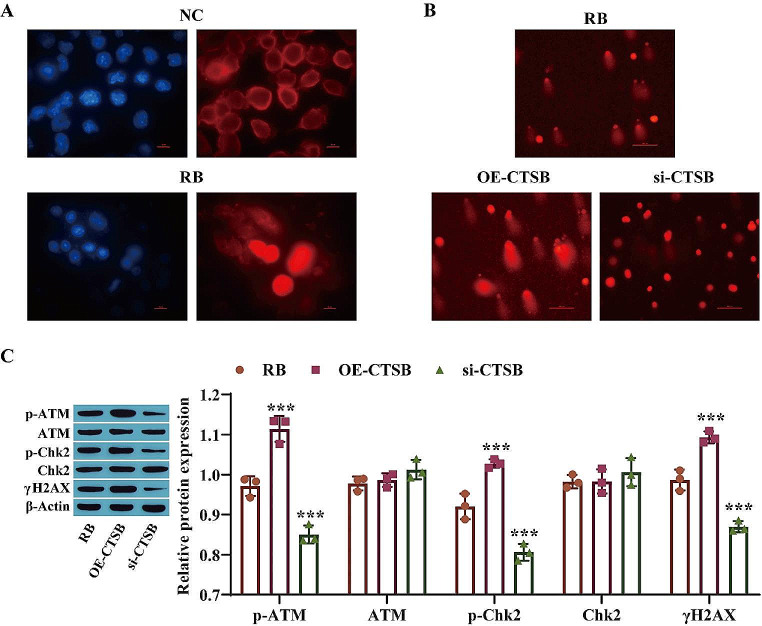
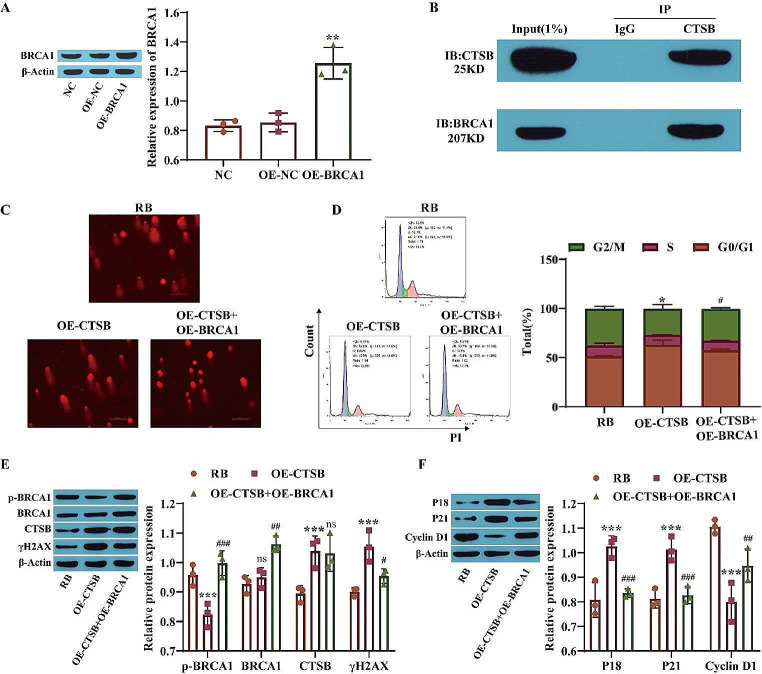
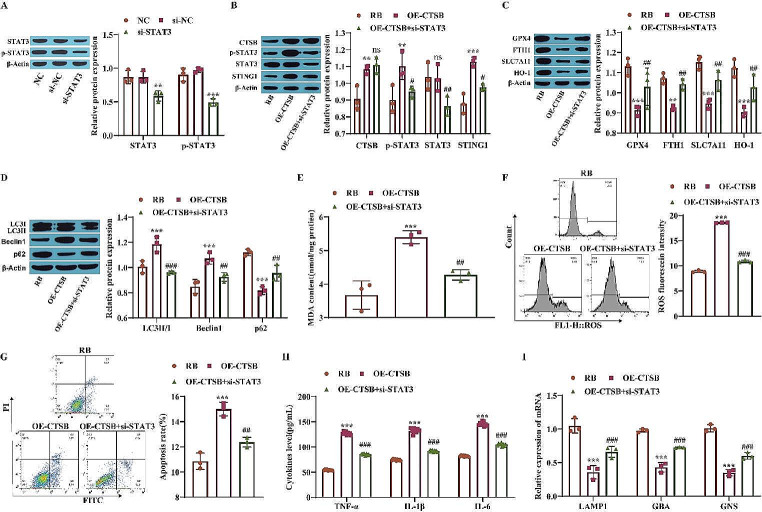
Retinoblastoma (RB) is a pernicious tumor originating from photoreceptor precursor cells that often endangers the lives of children. The purpose of our study was to further investigate the influence of cathepsin B (CTSB) nuclear translocation on RB cell death. Y79 cells were injected into the vitreous cavity of nude mice at a dose of 4 µL/mouse to establish an animal model of RB. Real-time quantitative polymerase chain reaction (RT-qPCR), Western blot analysis, a comet assay, a Cell Counting Kit-8 (CCK-8) assay and flow cytometry were used to measure the levels of the interrelated genes and proteins and to evaluate alterations in autophagy, apoptosis, proliferation, DNA damage and cell cycle arrest. CTSB was found to be expressed at low levels in RB animal model samples and RB cell lines. Functionally, CTSB nuclear translocation promoted DNA damage, cell cycle arrest, ferroptosis and autophagy in Y79 cells and inhibited their proliferation. Downstream mechanistic studies showed that nuclear translocation of CTSB facilitates DNA damage and cell cycle arrest in RB cells by inhibiting breast cancer 1 protein (BRCA1) expression and also activates the signal transducer and activator of transcription 3/stimulator of interferon response cGAMP interactor 1 (STAT3/STING1) pathway to induce lysosomal stress, leading to ferroptosis and autophagy in Y79 cells and alleviating RB. Nuclear translocation of CTSB facilitates DNA damage and cell cycle arrest in RB cells by inhibiting BRCA1 expression and activating the STAT3/STING1 pathway and induces lysosomal stress, which eventually leads to ferroptosis and autophagy and mitigates RB.
视网膜母细胞瘤 (RB) 是一种源自光感受器前体细胞的恶性肿瘤,常危及儿童生命。本研究旨在进一步探讨组织蛋白酶 B (CTSB) 核转位对 RB 细胞死亡的影响。将 Y79 细胞以 4μL/只的剂量注入裸鼠玻璃体腔,建立 RB 动物模型。采用实时定量聚合酶链反应 (RT-qPCR)、Western blot 分析、彗星试验、细胞计数试剂盒-8 (CCK-8) 检测和流式细胞术检测相关基因和蛋白水平,评估自噬、凋亡、增殖、DNA 损伤和细胞周期阻滞的变化。结果表明,CTSB 在 RB 动物模型样本和 RB 细胞系中低表达。功能上,CTSB 核转位促进 Y79 细胞的 DNA 损伤、细胞周期阻滞、铁死亡和自噬,抑制其增殖。下游机制研究表明,CTSB 核转位通过抑制乳腺癌 1 蛋白 (BRCA1) 表达促进 RB 细胞的 DNA 损伤和细胞周期阻滞,并激活信号转导和转录激活因子 3/干扰素反应 cGAMP 相互作用蛋白 1 (STAT3/STING1) 通路诱导溶酶体应激,导致 Y79 细胞发生铁死亡和自噬,缓解 RB 进程。CTSB 核转位通过抑制 BRCA1 表达和激活 STAT3/STING1 通路促进 RB 细胞的 DNA 损伤和细胞周期阻滞,并诱导溶酶体应激,最终导致铁死亡和自噬,减轻 RB 负担。