Department of Health Management, Policy & Economics, School of Public Health, Tehran University of Medical Sciences, Tehran, Iran.
Department of Global Health & Public Policy, School of Public Health, Tehran University of Medical Sciences, Poursina Avenue, Qods Street, Enqelab Square, Tehran, Iran.
Global Health. 2024 Jan 2;20(1):5. doi: 10.1186/s12992-023-01009-5.
This article explores the concept of institutionalization, which is the process of transforming ideas into programs and automating actions, in the context of health system governance and sustainable development. Institutionalization is a key mechanism for creating accountable and transparent institutions, which are essential for achieving health system resilience and sustainability. This study identifies the components and dimensions of institutionalization in the health system and its relationship with good governance and sustainable health development.
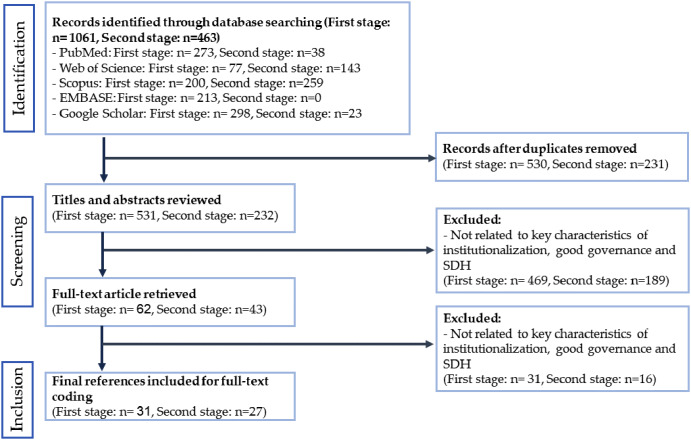
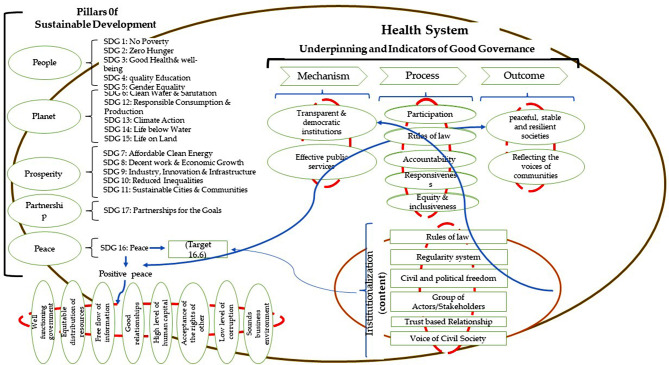
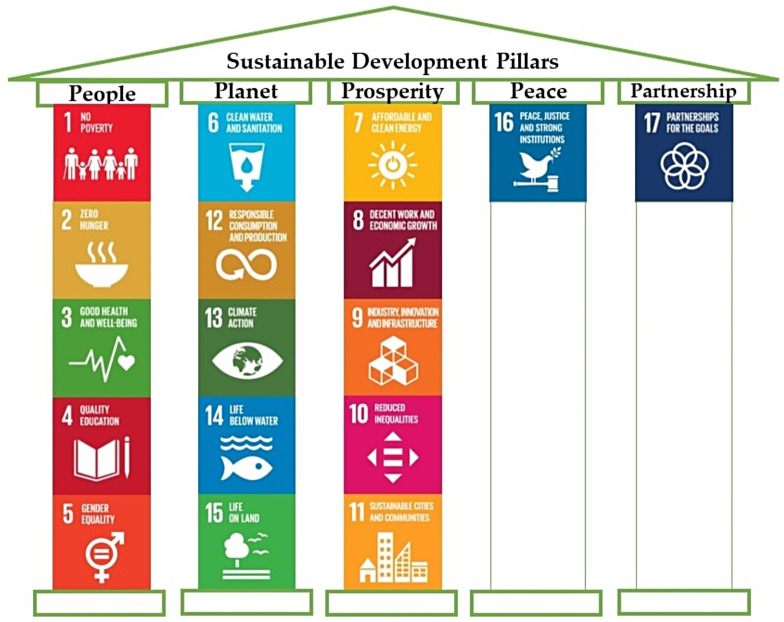
We applied a scoping review method in five steps. First, we formulated a question for our research. Then, we concluded a comprehensive literature search in five electronic databases for identifying relevant studies. This review has two phases: identifying the concept of institutional approach and its components in health system, and its relationship with good governance to reach Sustainable Health Development (SHD). The third step was study selection, and the 1st author performed data abstraction. The key issues which are identified in our review, related to the concepts of SDH, its goals, pillars and principles; positive peace; good governance; components of institutional approach components, and their relations. Finally, we summarized and organized our findings in a format of a proposed conceptual framework, to underpin the role of institutionalization in the health system to achieve sustainable development.
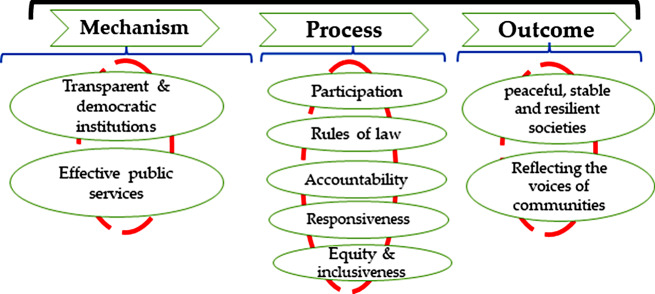
Institutionalization is a key concept for achieving positive peace and good governance, which requires meaningful involvement of leaders, politicians, civil society, and public participation. It also depends on the conditions of justice, human rights, transparency, accountability and rule of law. In the wake of COVID-19, institutionalization is more crucial than ever for advancing sustainable development, especially in the context of low and middle-income countries (LMICs).
本文探讨了制度化的概念,即健康系统治理和可持续发展背景下将理念转化为方案和自动化行动的过程。制度化是创建负责任和透明机构的关键机制,对于实现健康系统的弹性和可持续性至关重要。本研究确定了健康系统中制度化的组成部分和维度及其与良好治理和可持续健康发展的关系。
我们采用了五步式的范围综述方法。首先,我们为研究制定了一个问题。然后,我们在五个电子数据库中进行了全面的文献搜索,以确定相关研究。本次综述有两个阶段:确定健康系统中制度化方法的概念及其组成部分,以及其与实现可持续健康发展的良好治理的关系。第三步是研究选择,由第一作者进行数据提取。我们在综述中确定的关键问题涉及 SDH 的概念、其目标、支柱和原则;积极和平;良好治理;制度化方法的组成部分及其关系。最后,我们以拟议的概念框架的形式总结和组织了我们的发现,以支持制度化在健康系统中实现可持续发展的作用。
制度化是实现积极和平与良好治理的关键概念,需要领导者、政治家、民间社会和公众参与的有意义的参与。它还取决于正义、人权、透明度、问责制和法治的条件。在 COVID-19 之后,制度化对于推进可持续发展比以往任何时候都更加重要,特别是在中低收入国家(LMICs)的背景下。