
皖北土地利用冲突的特征与形成机制:以阜南县为例
Characteristics and formation mechanism of Land use conflicts in northern Anhui: A Case study of Funan county.
作者信息
Chen Xiaohua, Wu Shiqiang, Wu Jiang
机构信息
School of Architecture and Planning, Anhui Jianzhu University, Hefei 230601, China.
Research Center of Urbanization Development in Anhui Province, Hefei 230601, China.
出版信息
Heliyon. 2023 Dec 9;10(1):e22923. doi: 10.1016/j.heliyon.2023.e22923. eCollection 2024 Jan 15.
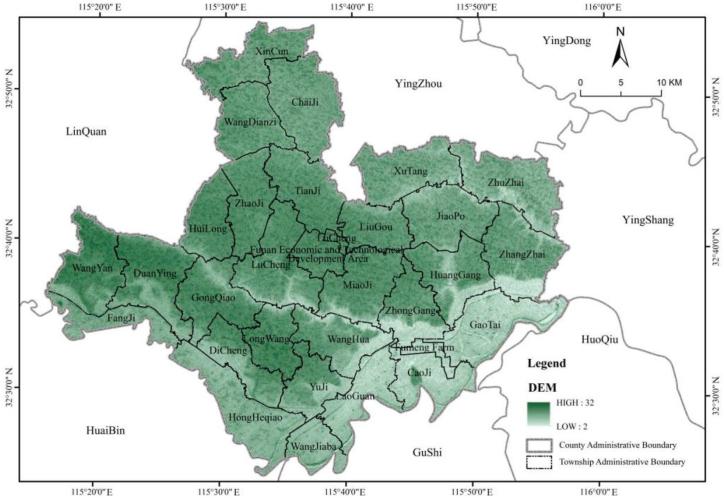
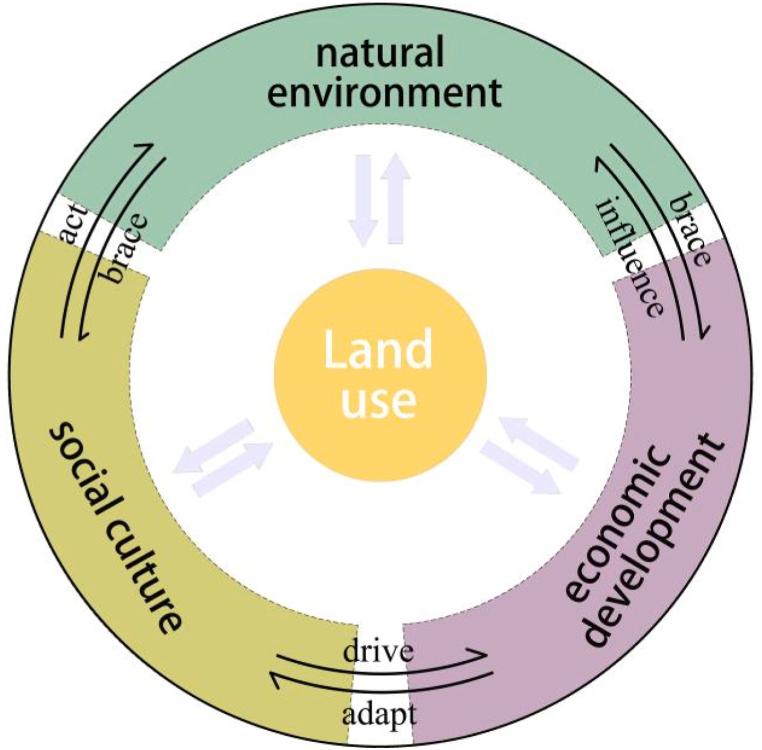
The rapid development of global urbanization and industrialization not only promotes a significant improvement in the level of socio-economic development, but also exacerbates the complexity and vulnerability of regional land resource utilization, resulting in frequent land use conflicts and seriously constraining the sustainable development of regional socio-economic and ecological environment. Taking Funan County as an example, based on interpretation data of Landsat TM/ETM remote sensing image data from 1980 to 2020, this paper analyses the temporal and spatial evolution characteristics of land use conflict in Funan County from 1980 to 2020 using the ArcGIS spatial analysis method, land use conflict measurement model, geographically weighted regression and geographical detector and then deeply analyses the main factors affecting land use conflict in Funan County and its driving mechanisms. In descending order, land use types undergoing the most change include cultivated land, urban and rural construction land, grassland, forestland and water area. The results of land use change are mainly the occupation of cultivated land by construction land, water area and forestland. Overall land use conflict in Funan County is serious with approximately 80 % of land use in the county in conflict, the severe land use conflict is mostly concentrated in urban and township built-up areas, and there is an increase trend year by year. Land use conflict is the result of multiple factors. Policy, economic development, and the social population and natural environment are the key driving factors behind land use conflict, which have a significant impact on the direction, location, scale and rate of land use transfer.Accurately identifying regional land use changes and conflicts and exploring the driving mechanism behind land use conflicts are of great significance for achieving the sustainable development of regional social economies and ecological environments.
全球城市化和工业化的快速发展,不仅推动了社会经济发展水平的显著提高,也加剧了区域土地资源利用的复杂性和脆弱性,导致土地利用冲突频发,严重制约了区域社会经济和生态环境的可持续发展。以阜南县为例,基于1980年至2020年Landsat TM/ETM遥感影像数据的解译数据,运用ArcGIS空间分析方法、土地利用冲突测度模型、地理加权回归和地理探测器,分析了阜南县1980年至2020年土地利用冲突的时空演变特征,并深入分析了影响阜南县土地利用冲突的主要因素及其驱动机制。土地利用变化最大的土地利用类型依次为耕地、城乡建设用地、草地、林地和水域。土地利用变化的结果主要是建设用地、水域和林地占用耕地。阜南县土地利用冲突总体较为严重,全县约80%的土地利用存在冲突,严重的土地利用冲突大多集中在城镇建成区,且呈逐年增加趋势。土地利用冲突是多种因素作用的结果。政策、经济发展、社会人口和自然环境是土地利用冲突背后的关键驱动因素,对土地利用转移的方向、位置、规模和速度有重大影响。准确识别区域土地利用变化和冲突,探索土地利用冲突背后的驱动机制,对于实现区域社会经济和生态环境的可持续发展具有重要意义。



 Zotero 插件