Department of Biomedicine, Basel University, 4056 Basel, Switzerland.
Sci Adv. 2024 Jan 5;10(1):eadi7624. doi: 10.1126/sciadv.adi7624. Epub 2024 Jan 3.
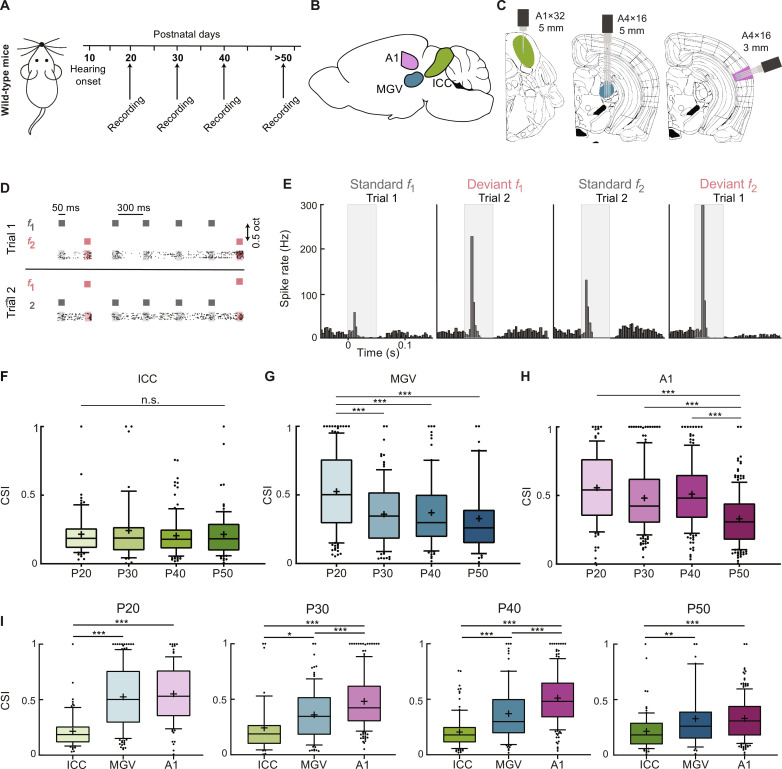
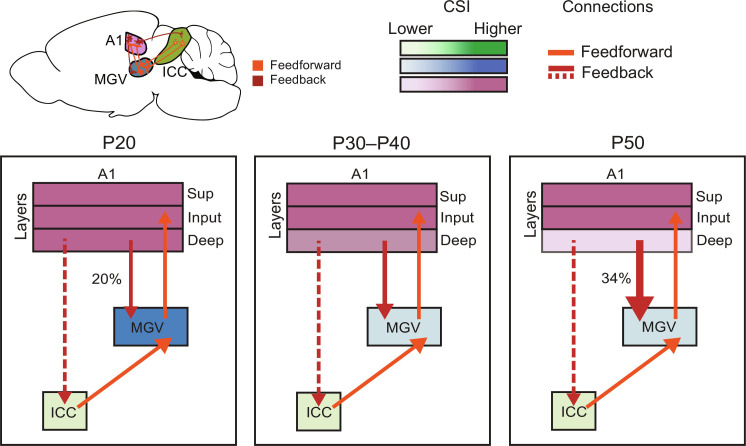
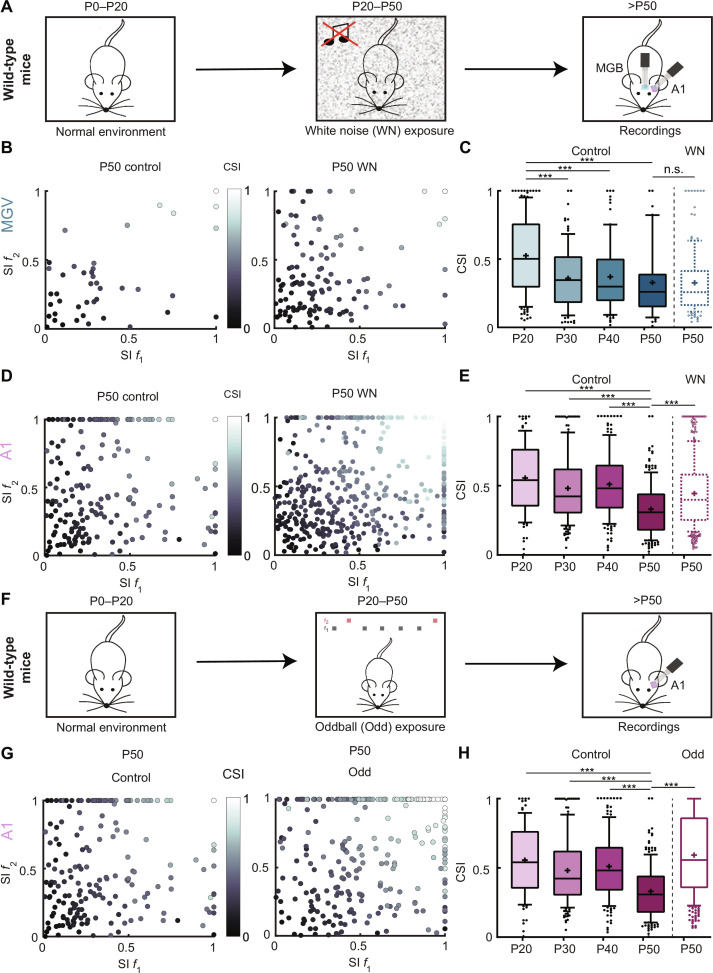
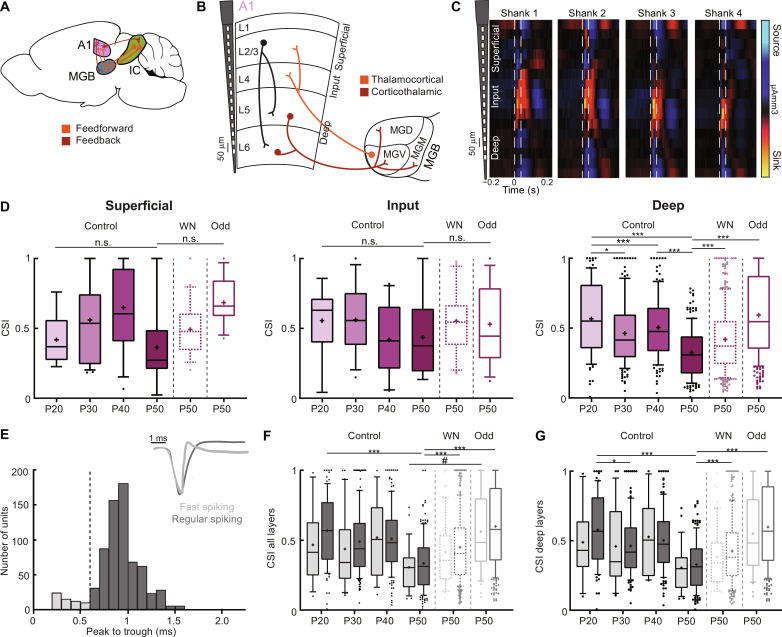
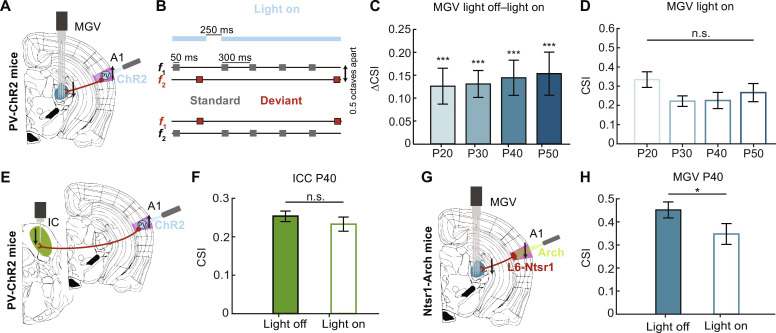
Stimulus-specific adaptation (SSA), the reduction of neural activity to a common stimulus that does not generalize to other, rare stimuli, is an essential property of our brain. Although well characterized in adults, it is still unknown how it develops during adolescence and what neuronal circuits are involved. Using in vivo electrophysiology and optogenetics in the lemniscal pathway of the mouse auditory system, we observed SSA to be stable from postnatal day 20 (P20) in the inferior colliculus, to develop until P30 in the auditory thalamus and even later in the primary auditory cortex (A1). We found this maturation process to be experience-dependent in A1 but not in thalamus and to be related to alterations in deep but not input layers of A1. We also identified corticothalamic projections to be implicated in thalamic SSA development. Together, our results reveal different circuits underlying the sequential SSA maturation and provide a unique perspective to understand predictive coding and surprise across sensory systems.
刺激特异性适应(SSA)是指对一种常见刺激的神经活动减少,而这种刺激不会泛化到其他罕见刺激,这是我们大脑的一个基本特性。尽管在成年人中已经得到了很好的描述,但它在青少年时期是如何发展的,以及涉及哪些神经元回路仍然未知。我们使用活体电生理学和光遗传学在小鼠听觉系统的投射纤维中观察到,SSA 从出生后第 20 天(P20)在下丘脑中稳定,直到 P30 在听觉丘脑发育,甚至在初级听觉皮层(A1)中发育得更晚。我们发现这个成熟过程在 A1 中是依赖于经验的,但在丘脑中不是,并且与 A1 的深层而不是输入层的变化有关。我们还发现,皮层丘脑投射与丘脑 SSA 发育有关。总的来说,我们的结果揭示了不同的回路是如何支持 SSA 的顺序成熟的,并为理解跨感觉系统的预测编码和惊喜提供了一个独特的视角。