Department of Neurology and Center for Translational Neuro- and Behavioral Sciences (C-TNBS), Essen University Hospital, University of Duisburg-Essen, 45147 Essen, Germany
Erwin L. Hahn Institute for Magnetic Resonance Imaging, University of Duisburg-Essen, 45141 Essen, Germany.
eNeuro. 2024 Feb 26;11(2). doi: 10.1523/ENEURO.0365-23.2023. Print 2024 Feb.
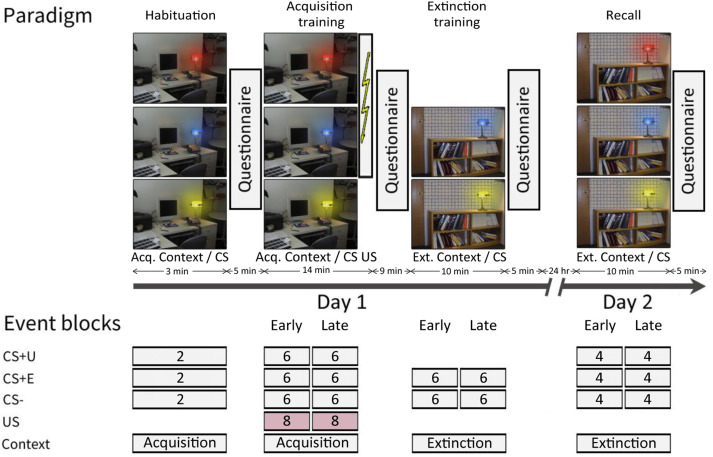
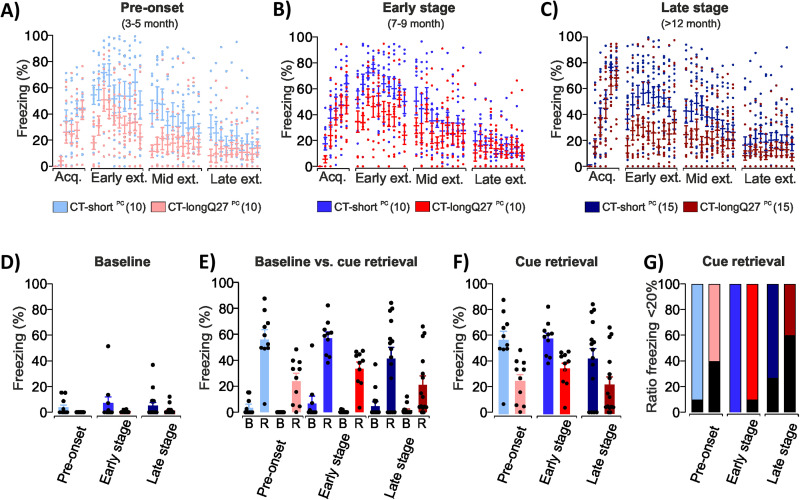
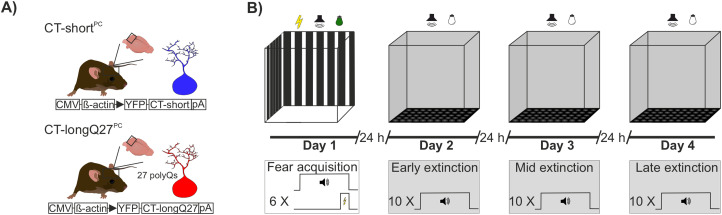
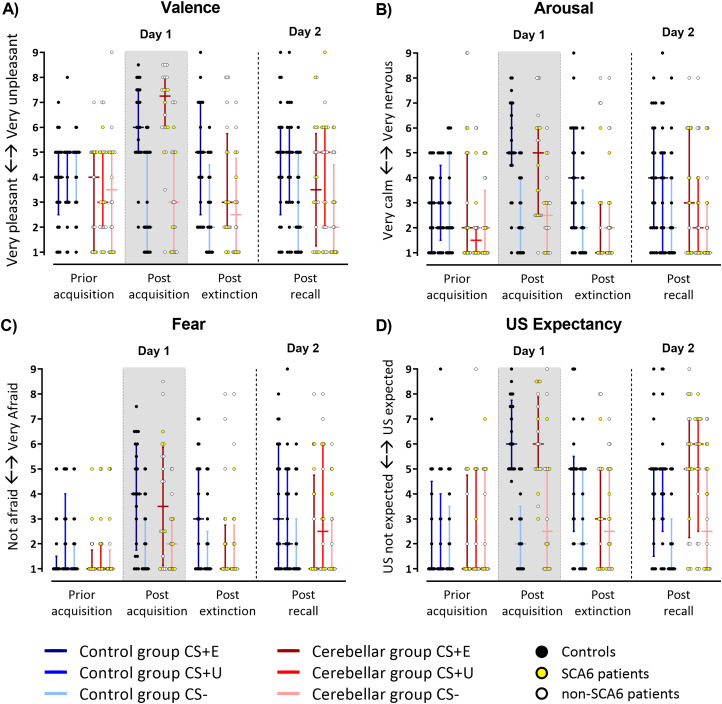
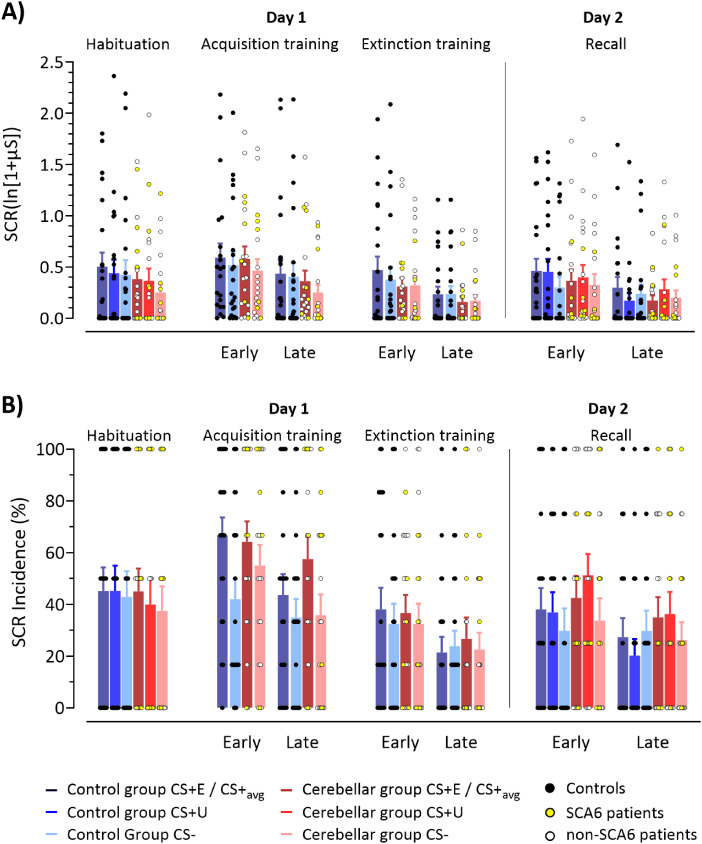
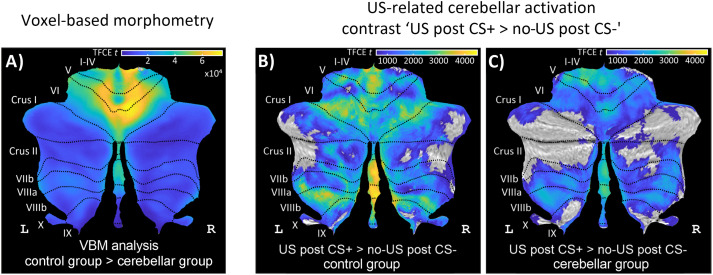
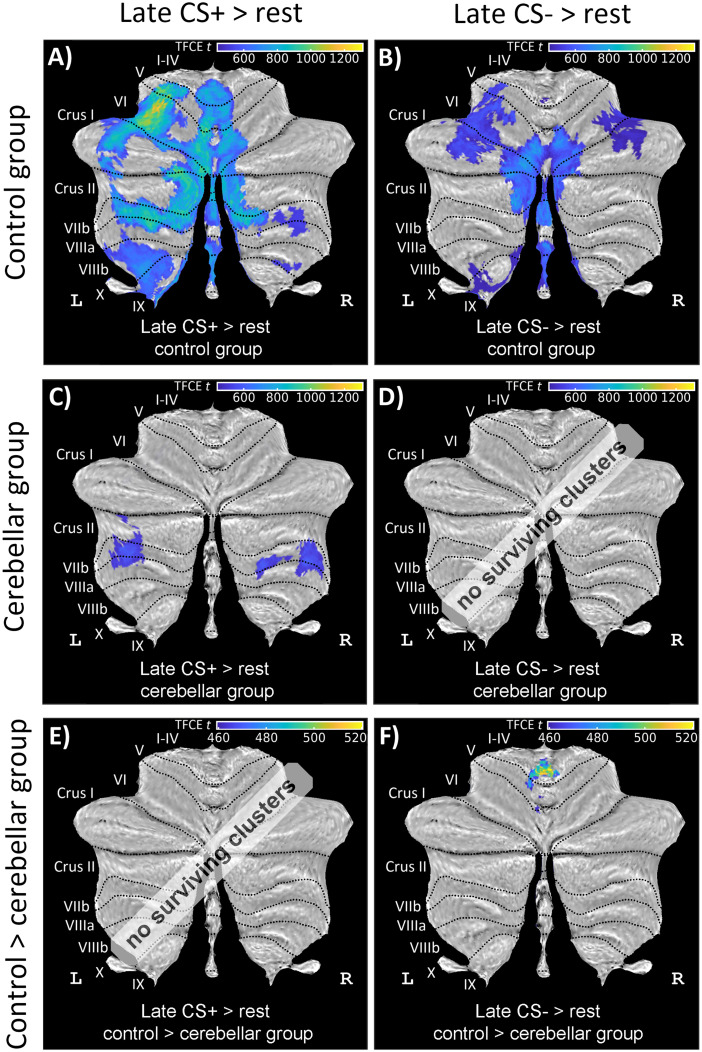
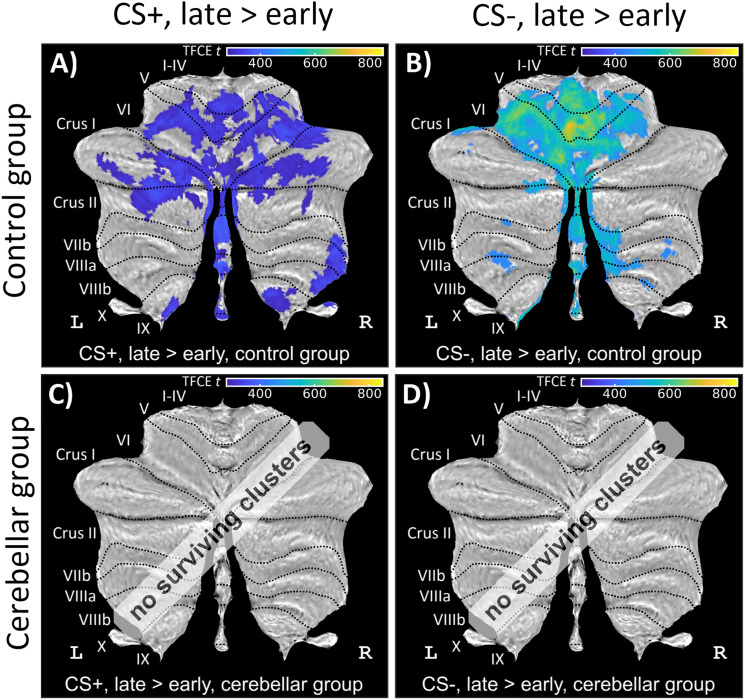
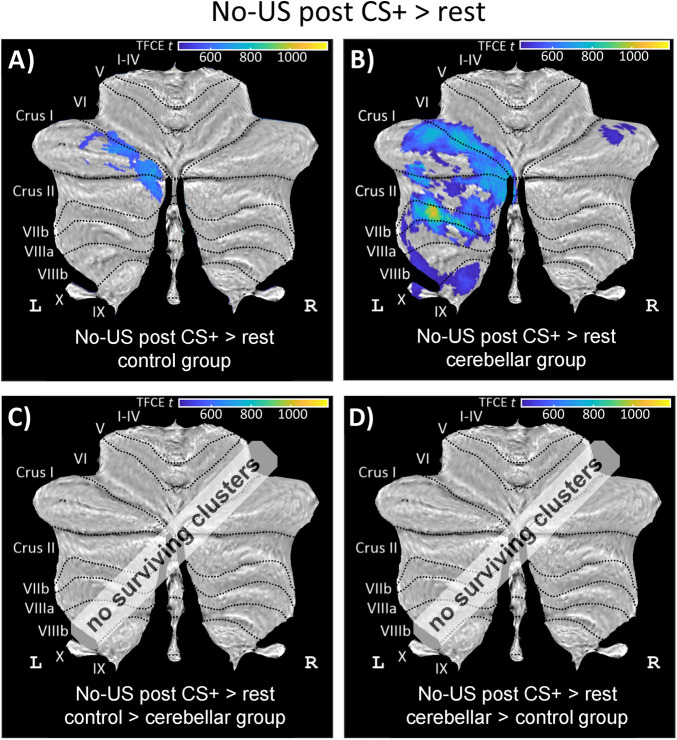
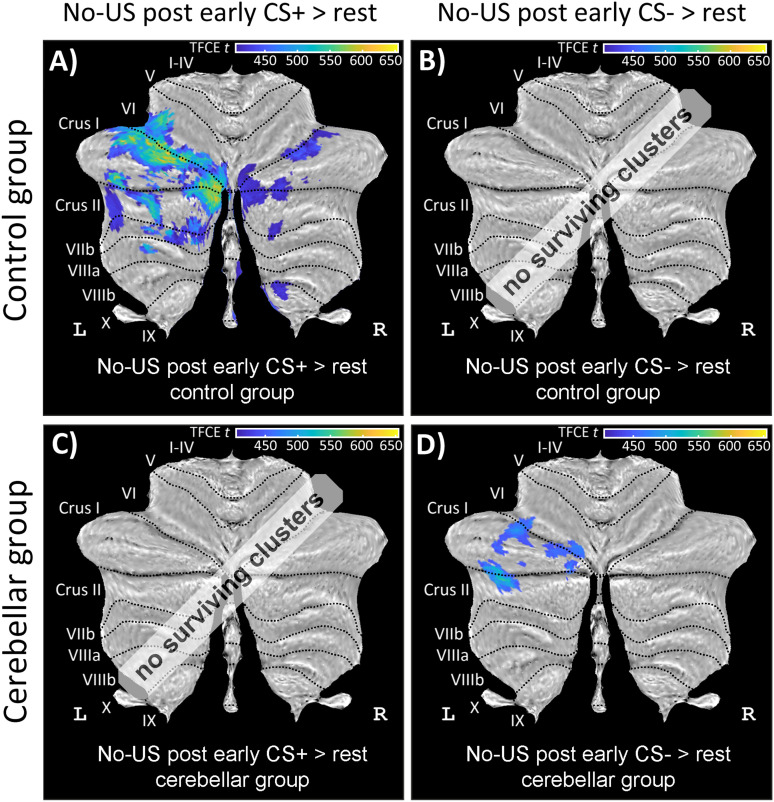
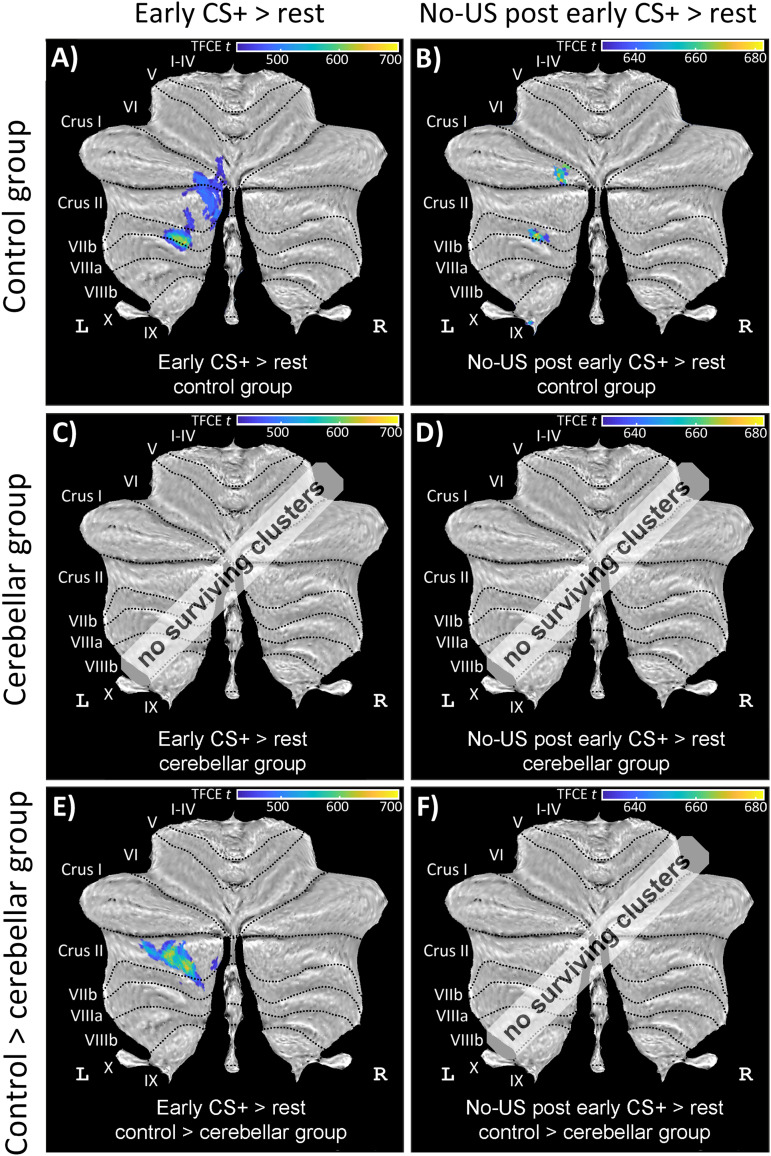
Functional brain imaging studies in humans suggest involvement of the cerebellum in fear conditioning but do not allow conclusions about the functional significance. The main aim of the present study was to examine whether patients with cerebellar degeneration show impaired fear conditioning and whether this is accompanied by alterations in cerebellar cortical activations. To this end, a 2 d differential fear conditioning study was conducted in 20 cerebellar patients and 21 control subjects using a 7 tesla (7 T) MRI system. Fear acquisition and extinction training were performed on day 1, followed by recall on day 2. Cerebellar patients learned to differentiate between the CS+ and CS-. Acquisition and consolidation of learned fear, however, was slowed. Additionally, extinction learning appeared to be delayed. The fMRI signal was reduced in relation to the prediction of the aversive stimulus and altered in relation to its unexpected omission. Similarly, mice with cerebellar cortical degeneration (spinocerebellar ataxia type 6, SCA6) were able to learn the fear association, but retrieval of fear memory was reduced. In sum, cerebellar cortical degeneration led to mild abnormalities in the acquisition of learned fear responses in both humans and mice, particularly manifesting postacquisition training. Future research is warranted to investigate the basis of altered fMRI signals related to fear learning.
人类功能性脑成像研究表明,小脑参与了恐惧条件反射,但不能得出关于其功能意义的结论。本研究的主要目的是检验小脑退行性变患者是否存在恐惧条件反射受损,以及小脑皮质激活是否存在改变。为此,我们使用 7T MRI 系统对 20 名小脑退行性变患者和 21 名对照组受试者进行了为期 2 天的差分恐惧条件反射研究。恐惧获得和消退训练在第 1 天进行,然后在第 2 天进行回忆。小脑退行性变患者学会了区分 CS+和 CS-。然而,获得和巩固习得的恐惧的速度较慢。此外,消退学习似乎也被延迟了。与预测的厌恶刺激相比,fMRI 信号减少,并与预期的刺激缺失有关。同样,小脑皮质退行性变的小鼠(脊髓小脑共济失调 6 型,SCA6)能够学习到恐惧的关联,但对恐惧记忆的检索能力降低。总之,小脑皮质退行性变导致人类和小鼠对习得性恐惧反应的获取出现轻度异常,尤其是在获得后训练中表现明显。未来的研究需要进一步探究与恐惧学习相关的 fMRI 信号改变的基础。