Riphah Institute of System Engineering, Riphah International University Islamabad, Islamabad, 46000, Pakistan.
Research and Development Department, Lun Startup Studio, 11543, Riyadh, Saudi Arabia.
Sci Rep. 2024 Jan 4;14(1):514. doi: 10.1038/s41598-024-51184-7.
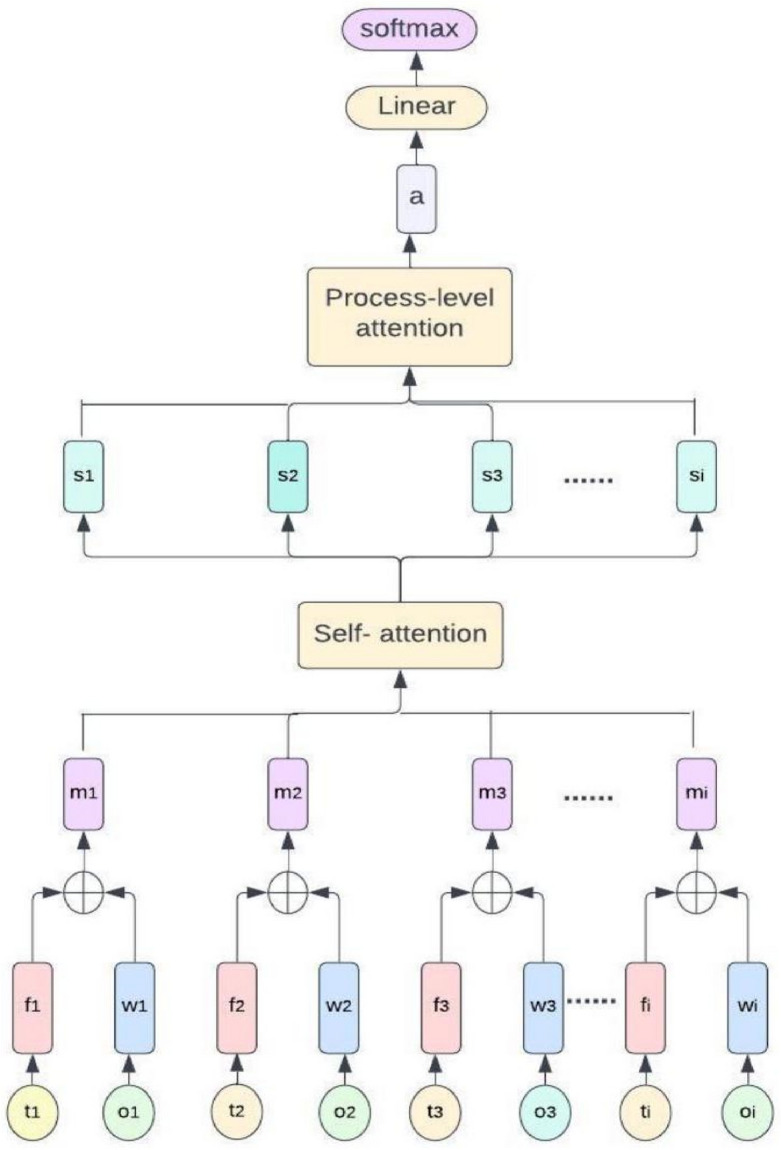
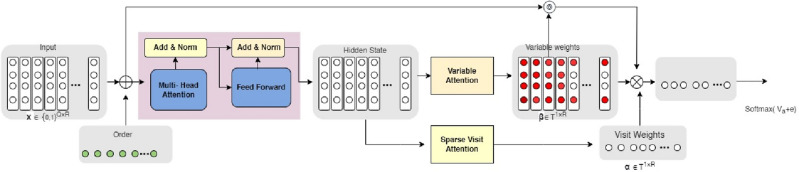
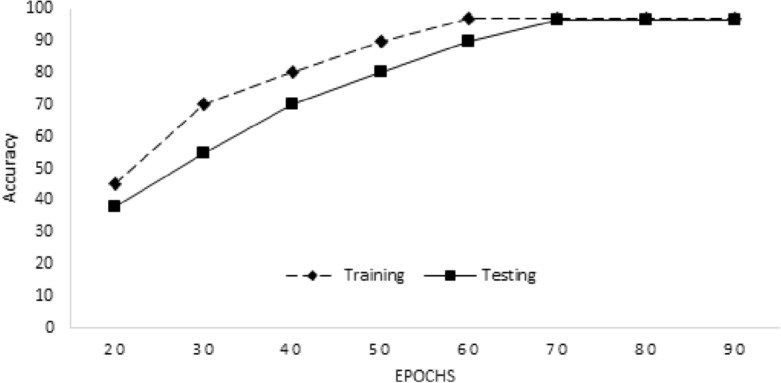
Cardiovascular diseases (CVDs) continue to be the leading cause of more than 17 million mortalities worldwide. The early detection of heart failure with high accuracy is crucial for clinical trials and therapy. Patients will be categorized into various types of heart disease based on characteristics like blood pressure, cholesterol levels, heart rate, and other characteristics. With the use of an automatic system, we can provide early diagnoses for those who are prone to heart failure by analyzing their characteristics. In this work, we deploy a novel self-attention-based transformer model, that combines self-attention mechanisms and transformer networks to predict CVD risk. The self-attention layers capture contextual information and generate representations that effectively model complex patterns in the data. Self-attention mechanisms provide interpretability by giving each component of the input sequence a certain amount of attention weight. This includes adjusting the input and output layers, incorporating more layers, and modifying the attention processes to collect relevant information. This also makes it possible for physicians to comprehend which features of the data contributed to the model's predictions. The proposed model is tested on the Cleveland dataset, a benchmark dataset of the University of California Irvine (UCI) machine learning (ML) repository. Comparing the proposed model to several baseline approaches, we achieved the highest accuracy of 96.51%. Furthermore, the outcomes of our experiments demonstrate that the prediction rate of our model is higher than that of other cutting-edge approaches used for heart disease prediction.
心血管疾病(CVDs)仍然是全球 1700 多万人死亡的主要原因。早期准确地发现心力衰竭对于临床试验和治疗至关重要。根据血压、胆固醇水平、心率和其他特征,患者将被分为各种类型的心脏病。通过使用自动系统,我们可以通过分析他们的特征,为那些易患心力衰竭的人提供早期诊断。在这项工作中,我们部署了一种新的基于自我注意的转换器模型,该模型结合了自我注意机制和转换器网络,用于预测 CVD 风险。自注意层捕获上下文信息并生成表示,有效地对数据中的复杂模式进行建模。自我注意机制通过给输入序列的每个组件赋予一定的注意力权重来提供可解释性。这包括调整输入和输出层、增加更多层以及修改注意力过程以收集相关信息。这也使得医生能够理解数据的哪些特征对模型的预测做出了贡献。所提出的模型在克利夫兰数据集上进行了测试,克利夫兰数据集是加利福尼亚大学欧文分校(UCI)机器学习(ML)存储库的基准数据集。将所提出的模型与几种基线方法进行比较,我们实现了 96.51%的最高准确性。此外,我们的实验结果表明,我们的模型的预测率高于用于心脏病预测的其他最先进方法。