Yin Shikang, Zhou Yiying, Liu Zhonghuan, Wang Huijie, Zhao Xiaoxue, Zhu Zhi, Yan Yan, Huo Pengwei
Institute of Green Chemistry and Chemical Technology, School of Chemistry and Chemical Engineering, Jiangsu University, Zhenjiang, 212013, PR China.
Nat Commun. 2024 Jan 10;15(1):437. doi: 10.1038/s41467-024-44753-x.
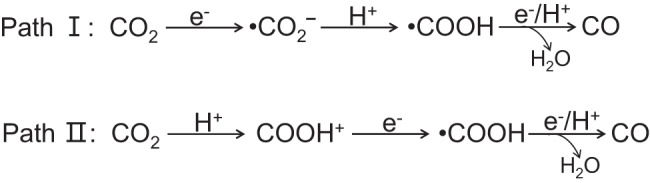
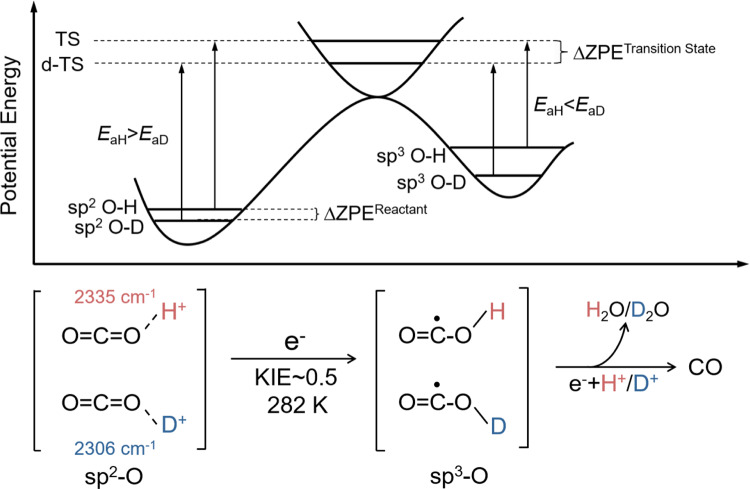
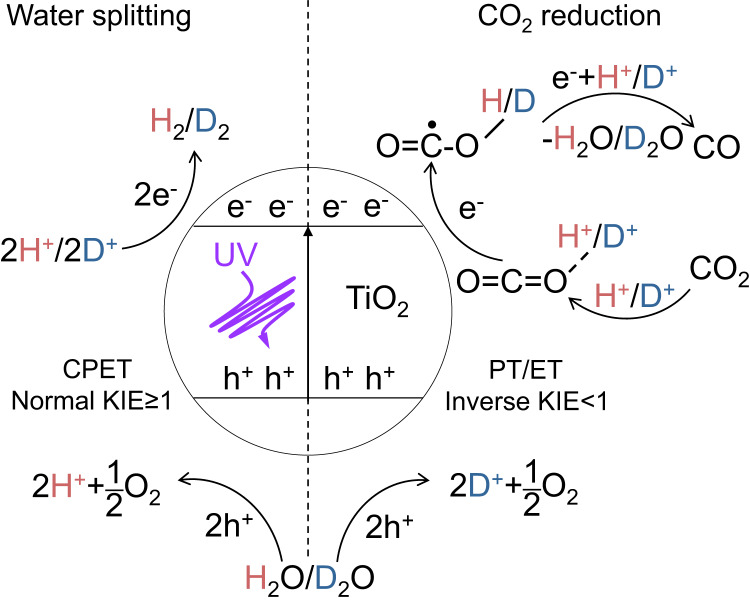
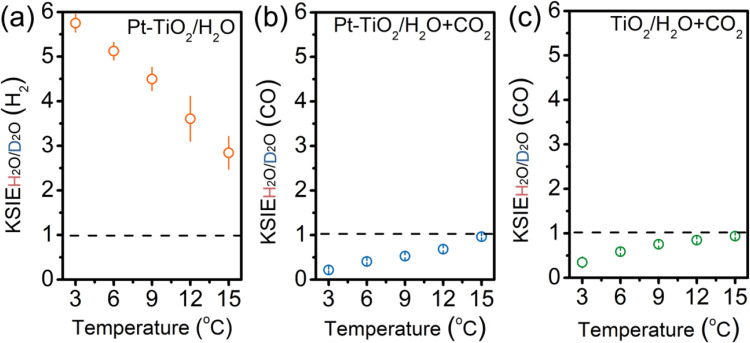
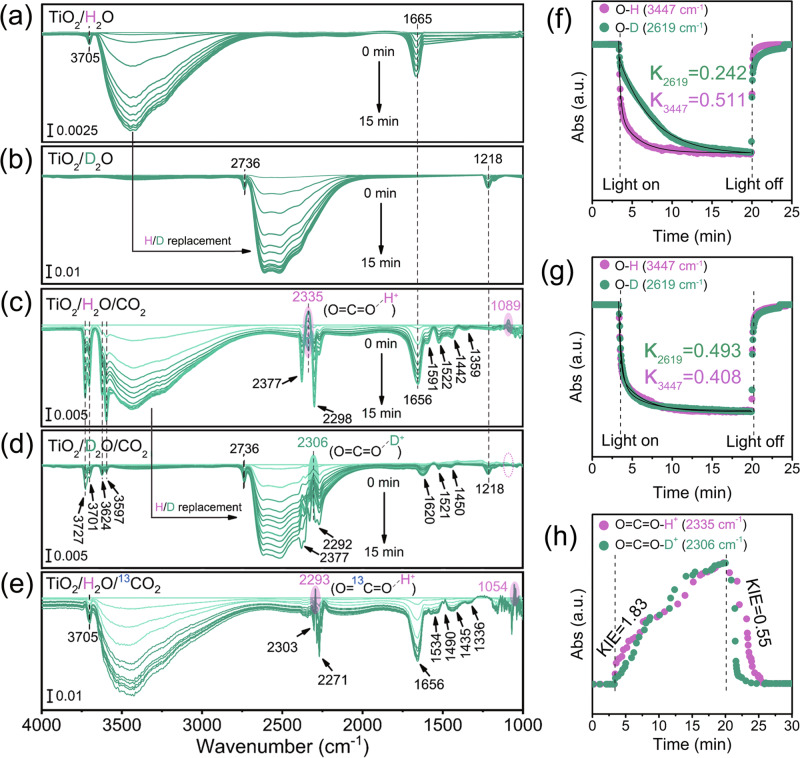
The surge in anthropogenic CO emissions from fossil fuel dependence demands innovative solutions, such as artificial photosynthesis, to convert CO into value-added products. Unraveling the CO photoreduction mechanism at the molecular level is vital for developing high-performance photocatalysts. Here we show kinetic isotope effect evidence for the contested protonation pathway for CO photoreduction on TiO nanoparticles, which challenges the long-held assumption of electron-initiated activation. Employing isotopically labeled HO/DO and in-situ diffuse reflectance infrared Fourier transform spectroscopy, we observe H/D-protonated intermediates on TiO nanoparticles and capture their inverse decay kinetic isotope effect. Our findings significantly broaden our understanding of the CO uptake mechanism in semiconductor photocatalysts.
对化石燃料的依赖导致人为二氧化碳排放激增,这就需要创新解决方案,比如人工光合作用,将二氧化碳转化为高附加值产品。在分子水平上揭示二氧化碳光还原机制对于开发高性能光催化剂至关重要。在此,我们展示了关于二氧化钛纳米颗粒上二氧化碳光还原存在争议的质子化途径的动力学同位素效应证据,这对长期以来电子引发活化的假设提出了挑战。利用同位素标记的H₂O/D₂O以及原位漫反射红外傅里叶变换光谱,我们在二氧化钛纳米颗粒上观察到了H/D质子化中间体,并捕捉到了它们的逆衰减动力学同位素效应。我们的发现显著拓宽了我们对半导体光催化剂中二氧化碳吸收机制的理解。