Department of Dental Technology, College of Applied Medical Sciences, King Khalid University, Abha, 62529, Saudi Arabia.
International European University School of Medicine, Akademika Hlushkova Ave, 42В, Kyiv, 03187, Ukraine.
BMC Oral Health. 2024 Jan 10;24(1):67. doi: 10.1186/s12903-023-03741-1.
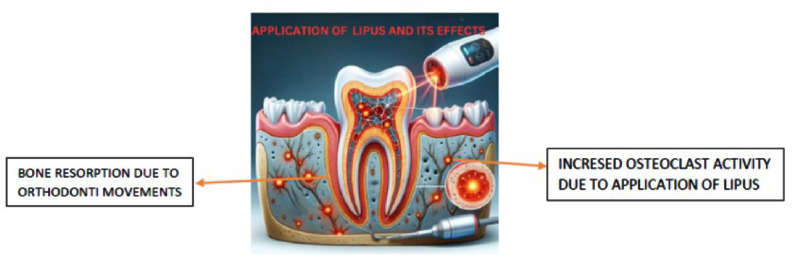
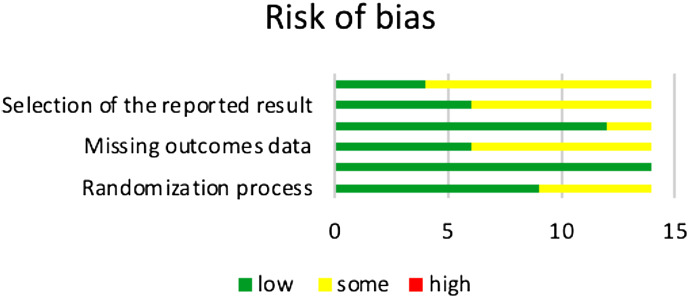
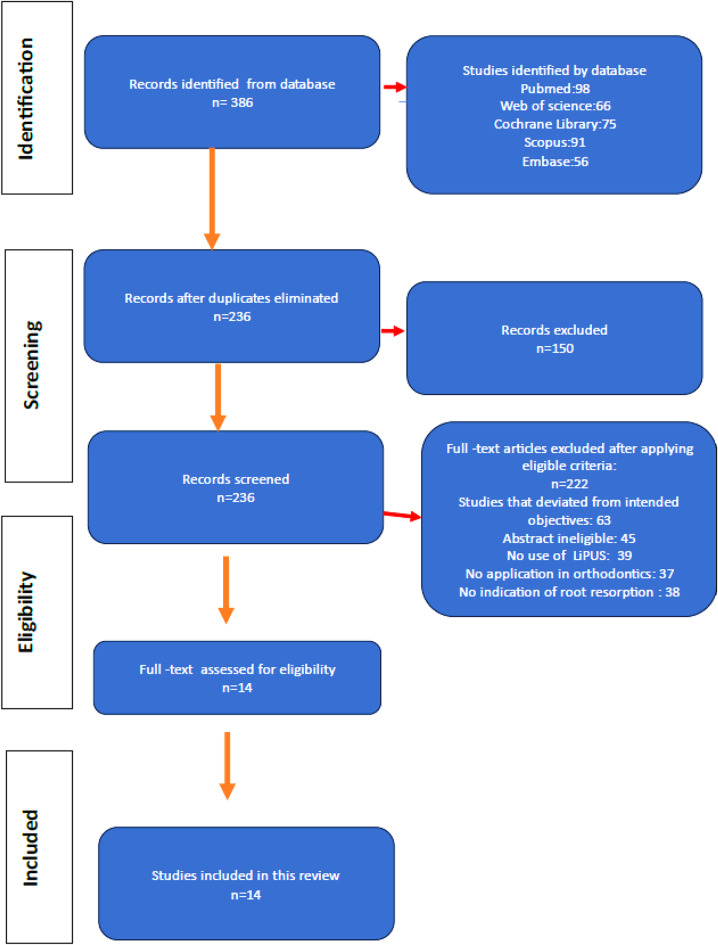
Ultrasound is an effective tool for both diagnostic and therapeutic applications. As an imaging tool, ultrasound has mostly been used for real-time noninvasive diagnostic imaging. As ultrasound propagates through a material, a reflected radio-frequency (RF) signal is generated when encountering a mismatch in acoustic impedance. While traditionally recognized for its diagnostic imaging capabilities, the application of ultrasound has broadened to encompass therapeutic interventions, most notably in the form of Low-Intensity Pulsed Ultrasound (LIPUS). Low-Intensity Pulsed Ultrasound (LIPUS) is a form of mechanical energy transmitted transcutaneously by high-frequency acoustic pressure waves. The intensity of LIPUS (30 mW/cm2) is within the range of ultrasound intensities used for diagnostic purposes (1-50 mW/cm2) and is regarded as non-thermal, non-destructive, permeating living tissues and triggering a cascade of biochemical responses at the cellular level. The LIPUS device produces a 200 µs burst of 1.5 MHz acoustic sine waves, that repeats at a modulation frequency of 1 kHz and provides a peak pressure of 30 mW/cm2. Low-intensity pulsed ultrasound (LIPUS) forms one of the currently available non-invasive healing-enhancing devices besides electro-stimulation (pulsed electro-magnetic field, PEMF). This modality has been leveraged to enhance drug delivery, expedite injury recovery, improve muscle mobility, alleviate joint stiffness and muscle pain, and enhance bone fracture healing. Although LIPUS has been embraced within various medical disciplines, its integration into standard dental practices is still in its nascent stages, signifying an unexplored frontier with potentially transformative implications. Low-intensity pulsed ultrasound (LIPUS) has emerged as an attractive adjuvant therapy in various dental procedures, such as orthodontic treatment and maxillary sinus augmentation. Its appeal lies in its simplicity and non-invasive nature, positioning LIPUS as a promising avenue for clinical innovation. One particular area of interest is orthodontically induced inflammatory root resorption (OIIRR), an oftenunavoidable outcome of the orthodontic intervention, resulting in the permanent loss of root structure. Notably, OIIRR is the second most common form of root resorption (RR), surpassed only by root resorption related to pulpal infection. Given the high prevalence and potential long-term consequences of OIIRR, this literature review seeks to evaluate the efficacy of LIPUS as a therapeutic approach, with an emphasis on assessing its capacity to reduce the severity of OIIRR to a level of clinical significance. To conduct this systematic review, a comprehensive automated literature search was executed across multiple databases, including MEDLINE, Embase, PsycINFO, Web of Knowledge, Scopus, CINAHL, LILACS, SciELO, Cochrane, PubMed, trials registries, 3ie, and Google Scholar. Both forward and backward citation tracking was employed, encompassing studies published from database inception through January 2009 to April 2023. The review focused on randomized controlled trials (RCTs) that specifically evaluated the effects of low-intensity pulsed ultrasound therapy on orthodontically induced inflammatory root resorption (OIIRR), without restrictions of publication date. A stringent selection criterion was applied, and only studies demonstrating high levels of statistical significance were included. Ultimately, fourteen studies met the inclusion criteria and were subjected to further analysis. The overall quality of the included randomized controlled trials (RCTs) was rigorously assessed utilizing the Grading of Recommendations Assessment, Development, and Evaluation (GRADE) approach. This analysis revealed certain methodological limitations that posed challenges in drawing definitive conclusions from the available evidence. Despite these constraints, the review offers invaluable insights that can inform and guide future research. Specifically, it delineates recommendations for targeted populations, necessary interventions, appropriate outcome measures, suitable study designs, and essential infrastructure to facilitate further investigations. The synthesis of these insights aims to enhance the development and application of low-intensity pulsed ultrasound therapy within the field of dentistry, thereby contributing to improved patient outcomes.
超声是一种有效的诊断和治疗工具。作为一种成像工具,超声主要用于实时的非侵入性诊断成像。当超声在材料中传播时,遇到声阻抗不匹配时会产生反射射频 (RF) 信号。虽然传统上超声因其诊断成像能力而被认可,但超声的应用已经扩展到包括治疗干预,尤其是以低强度脉冲超声 (LIPUS) 的形式。低强度脉冲超声 (LIPUS) 是一种通过高频声压波经皮传递的机械能形式。LIPUS 的强度(30 mW/cm2)在用于诊断目的的超声强度范围内(1-50 mW/cm2),被认为是非热、非破坏性的,可穿透活组织,并在细胞水平引发级联的生化反应。LIPUS 设备产生 200µs 的 1.5MHz 声正弦波爆发,以 1kHz 的调制频率重复,并提供 30 mW/cm2 的峰值压力。低强度脉冲超声(LIPUS)是除电刺激(脉冲电磁场,PEMF)之外的目前可用的非侵入性增强愈合设备之一。这种模式已被用于增强药物输送、加速损伤恢复、提高肌肉活动性、缓解关节僵硬和肌肉疼痛以及增强骨折愈合。尽管 LIPUS 已在各种医学领域得到应用,但它在标准牙科实践中的整合仍处于起步阶段,这标志着一个潜在具有变革性影响的未知领域。低强度脉冲超声(LIPUS)已成为各种牙科手术中一种有吸引力的辅助治疗方法,例如正畸治疗和上颌窦增高术。它的吸引力在于其简单性和非侵入性,使 LIPUS 成为临床创新的有前途的途径。一个特别感兴趣的领域是正畸诱导的炎症性根吸收(OIIRR),这是正畸干预的一个不可避免的结果,导致根结构的永久丧失。值得注意的是,OIIRR 是第二常见的根吸收形式(RR),仅次于与牙髓感染相关的根吸收。鉴于 OIIRR 的高患病率和潜在的长期后果,本文献综述旨在评估 LIPUS 作为一种治疗方法的疗效,重点评估其降低 OIIRR 严重程度至具有临床意义水平的能力。为了进行这项系统评价,我们在多个数据库中进行了全面的自动文献搜索,包括 MEDLINE、Embase、PsycINFO、Web of Knowledge、Scopus、CINAHL、LILACS、SciELO、Cochrane、PubMed、试验注册处、3ie 和 Google Scholar。我们采用了前向和后向引文追踪,包括从数据库成立到 2009 年 1 月至 2023 年 4 月期间发表的研究。该综述重点关注了专门评估低强度脉冲超声治疗对正畸诱导的炎症性根吸收(OIIRR)影响的随机对照试验(RCTs),不限制出版日期。我们应用了严格的选择标准,仅纳入了显示出高水平统计学意义的研究。最终,有 14 项研究符合纳入标准,并进一步进行了分析。纳入的随机对照试验(RCTs)的总体质量通过 Grading of Recommendations Assessment, Development, and Evaluation(GRADE)方法进行了严格评估。该分析揭示了一些方法学限制,这些限制使得从现有证据中得出明确结论具有挑战性。尽管存在这些限制,但该综述提供了宝贵的见解,可以为未来的研究提供信息和指导。具体而言,它为目标人群、必要的干预措施、适当的结果测量、合适的研究设计和必要的基础设施提供了建议,以促进进一步的研究。这些见解的综合旨在增强低强度脉冲超声治疗在牙科领域的发展和应用,从而提高患者的治疗效果。