Center for Neural Repair and Rehabilitation (Shriners Hospitals Pediatric Research Center), Lewis Katz School of Medicine, Temple University, Philadelphia, PA 19140, USA.
Medical College of Wisconsin-Prevea Health, Green Bay, WI 54304, USA.
Cells. 2023 Dec 19;13(1):2. doi: 10.3390/cells13010002.
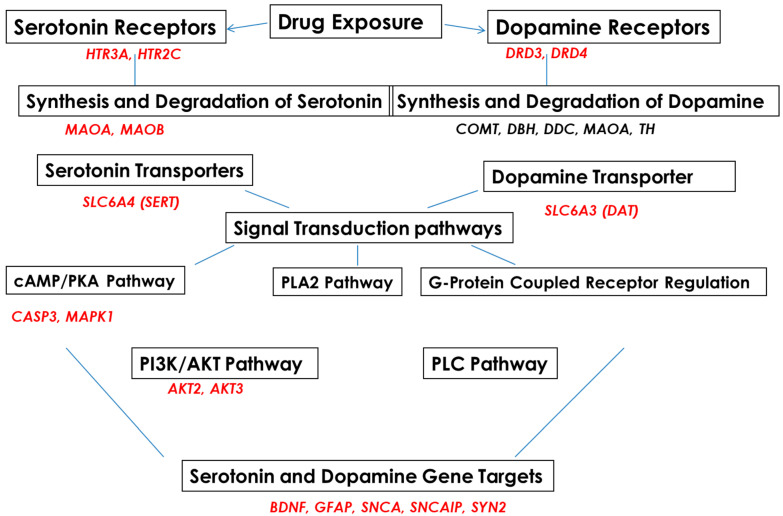
Children with fetal alcohol spectrum disorders (FASD) exhibit behavioral and affective dysregulation, including hyperactivity and depression. The mechanisms are not known, but they could conceivably be due to postnatal social or environmental factors. However, we postulate that, more likely, the affective dysregulation is associated with the effects of EtOH exposure on the development of fetal serotonergic (5-HT) and/or dopaminergic (DA) pathways, i.e., pathways that in postnatal life are believed to regulate mood. Many women who use alcohol (ethanol, EtOH) during pregnancy suffer from depression and take selective serotonin reuptake inhibitors (SSRIs), which might influence these monoaminergic pathways in the fetus. Alternatively, monoaminergic pathway abnormalities might reflect a direct effect of EtOH on the fetal brain. To distinguish between these possibilities, we measured their expressions in fetal brains and in fetal brain-derived exosomes (FB-Es) isolated from the mothers' blood. We hypothesized that maternal use of EtOH and/or SSRIs during pregnancy would be associated with impaired fetal neural development, detectable as abnormal levels of monoaminergic and apoptotic biomarkers in FB-Es.
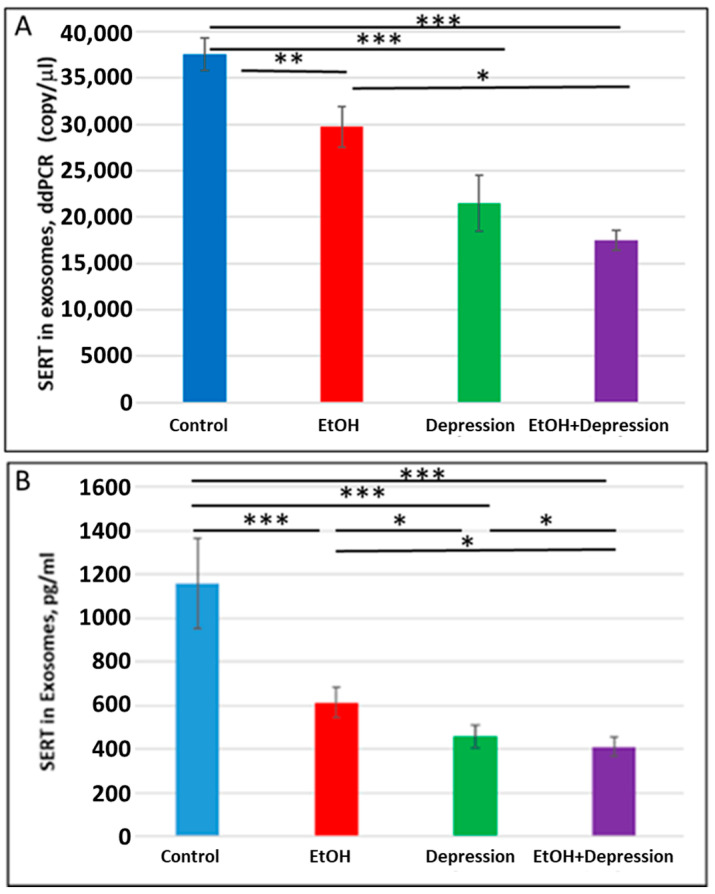
Fetal brain tissues and maternal blood were collected at 9-23 weeks of pregnancy. EtOH groups were compared with unexposed controls matched for gestational age (GA). The expression of 84 genes associated with the DA and 5-HT pathways was analyzed by quantitative reverse transcription polymerase chain reaction (qRT-PCR) on microarrays. FB-Es also were assayed for serotonin transporter protein (SERT) and brain-derived neurotrophic factor (BDNF) by enzyme-linked immunosorbent assay (ELISA).
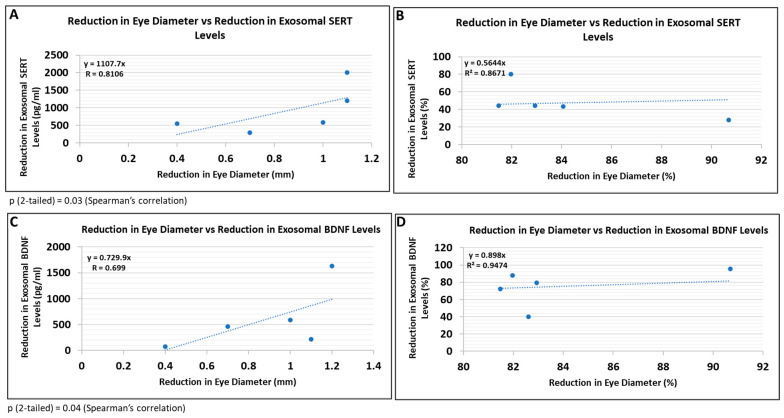
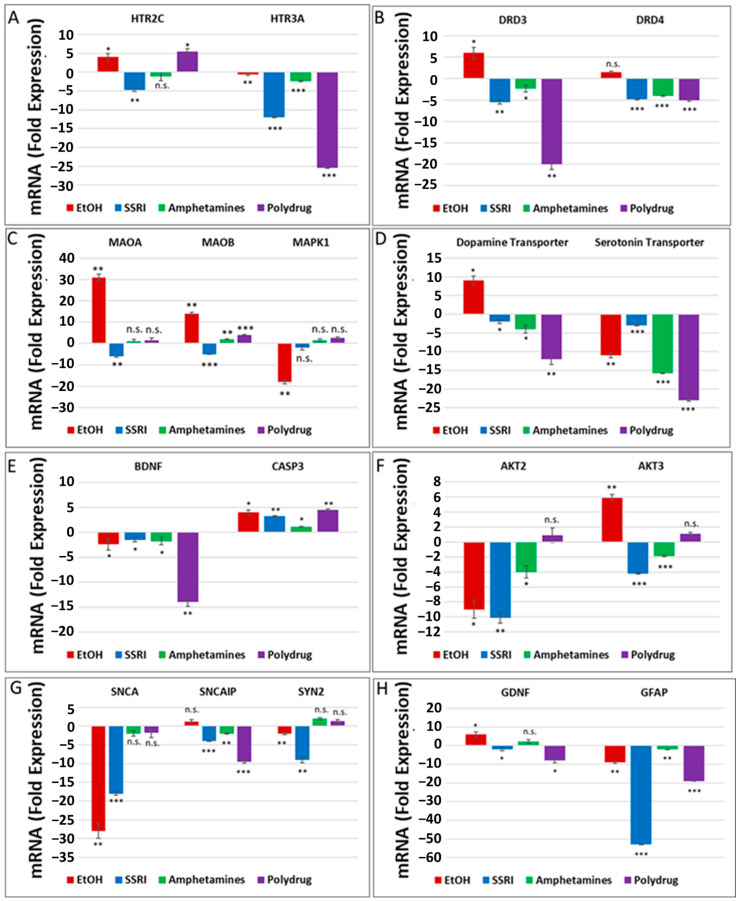
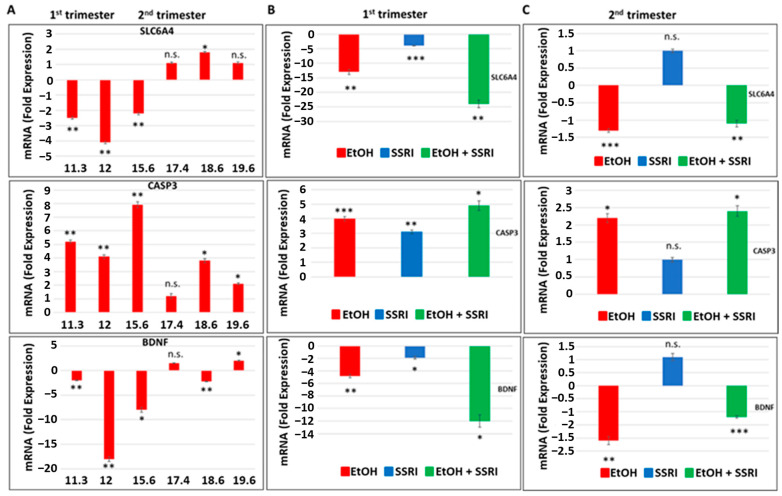
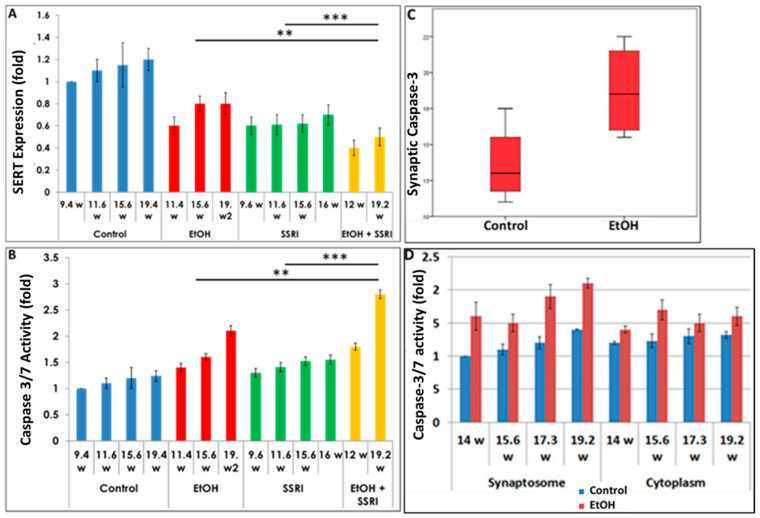
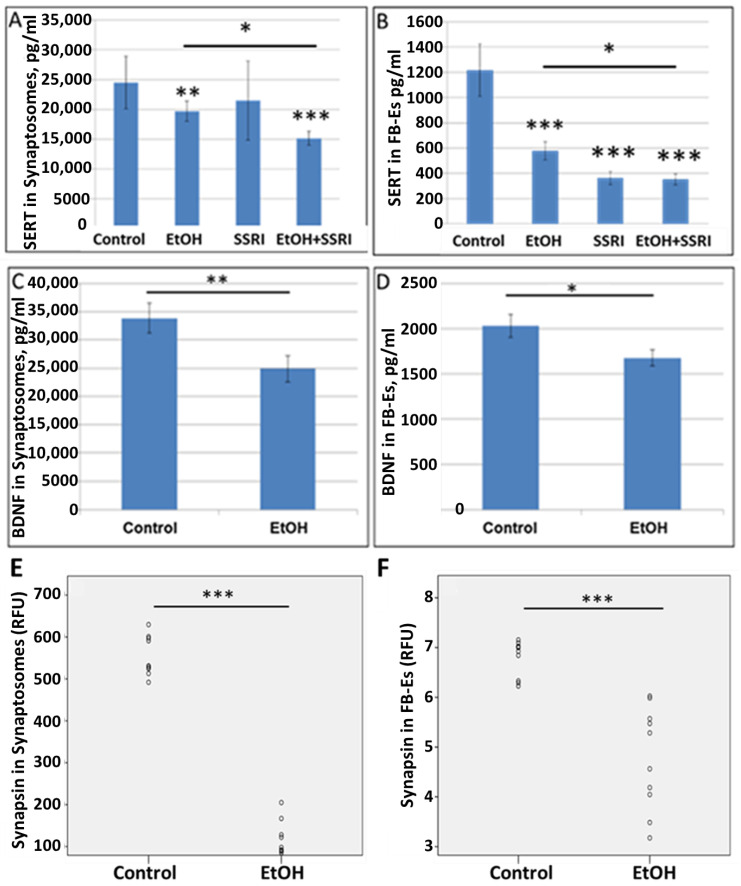
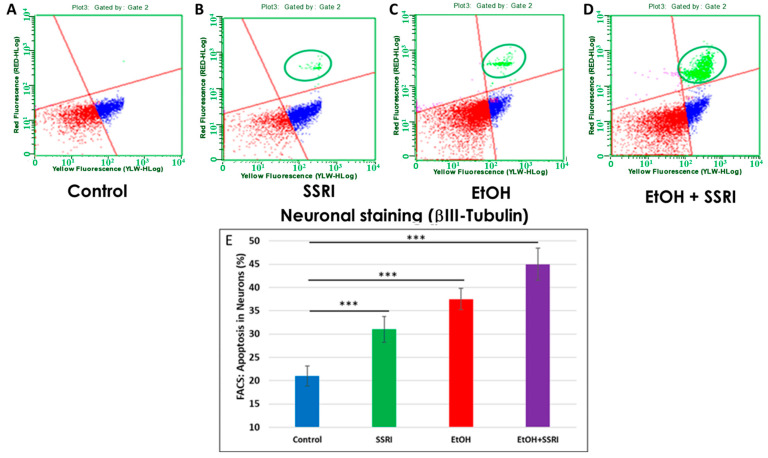
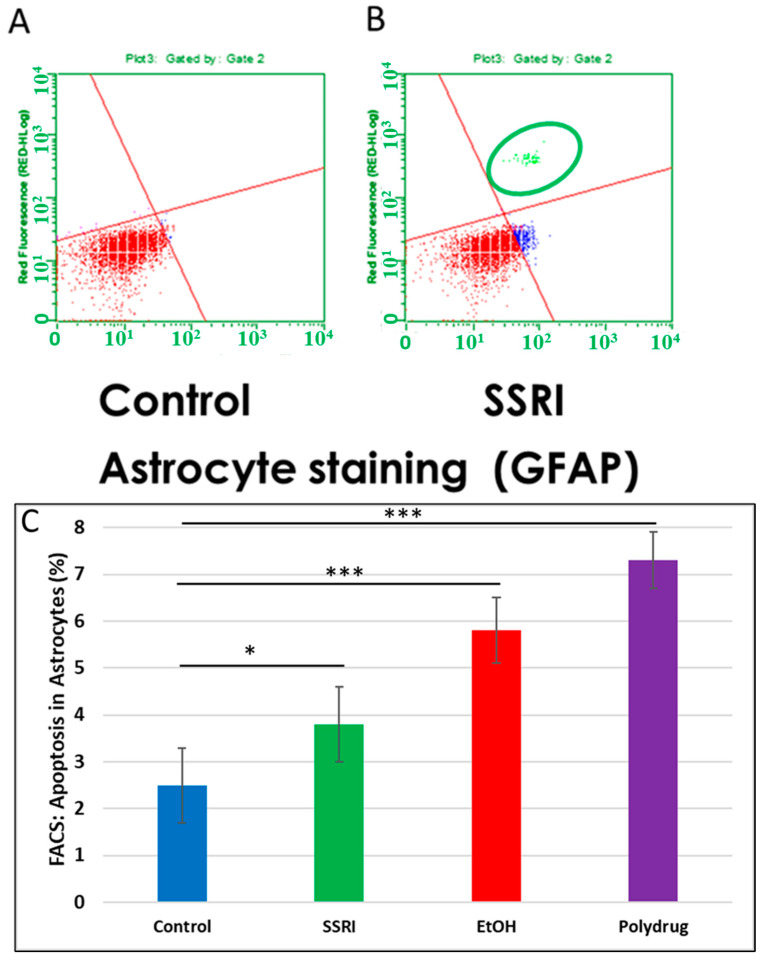
Six EtOH-exposed human fetal brain samples were compared to SSRI- or polydrug-exposed samples and to unexposed controls. EtOH exposure was associated with significant upregulation of DA receptor D3 and 5-HT receptor HTR2C, while HTR3A was downregulated. Monoamine oxidase A (MAOA), MAOB, the serine/threonine kinase AKT3, and caspase-3 were upregulated, while mitogen-activated protein kinase 1 (MAPK1) and AKT2 were downregulated. ETOH was associated with significant upregulation of the DA transporter gene, while SERT was downregulated. There were significant correlations between EtOH exposure and (a) caspase-3 activation, (b) reduced SERT protein levels, and (c) reduced BDNF levels. SSRI exposure independently increased caspase-3 activity and downregulated SERT and BDNF. Early exposure to EtOH and SSRI together was associated synergistically with a significant upregulation of caspase-3 and a significant downregulation of SERT and BDNF. Reduced SERT and BDNF levels were strongly correlated with a reduction in eye diameter, a somatic manifestation of FASD.
Maternal use of EtOH and SSRI during pregnancy each was associated with changes in fetal brain monoamine pathways, consistent with potential mechanisms for the affective dysregulation associated with FASD.
患有胎儿酒精谱系障碍(FASD)的儿童表现出行为和情感失调,包括多动和抑郁。其机制尚不清楚,但可能是由于产后社会或环境因素造成的。然而,我们推测,更有可能的是,情感失调与乙醇暴露对胎儿 5-羟色胺(5-HT)和/或多巴胺(DA)途径的发育的影响有关,即在产后生活中,这些途径被认为可以调节情绪。许多在怀孕期间饮酒(乙醇,EtOH)的妇女患有抑郁症并服用选择性 5-羟色胺再摄取抑制剂(SSRIs),这可能会影响胎儿中的这些单胺能途径。或者,单胺能途径异常可能反映了乙醇对胎儿大脑的直接影响。为了区分这些可能性,我们测量了它们在胎儿大脑中和从母亲血液中分离的胎儿脑衍生外泌体(FB-Es)中的表达。我们假设母亲在怀孕期间使用 EtOH 和/或 SSRIs 会导致胎儿神经发育受损,这可以通过 FB-Es 中单胺能和细胞凋亡生物标志物的异常水平来检测。
在妊娠 9-23 周时收集胎儿脑组织和母亲血液。将 EtOH 组与按孕龄(GA)匹配的未暴露对照组进行比较。通过定量逆转录聚合酶链反应(qRT-PCR)在微阵列上分析与 DA 和 5-HT 途径相关的 84 个基因的表达。通过酶联免疫吸附试验(ELISA)还测定了 FB-Es 中的血清素转运蛋白(SERT)和脑源性神经营养因子(BDNF)。
将 6 个暴露于 EtOH 的人类胎儿脑组织样本与暴露于 SSRI 或多药物的样本以及未暴露的对照组进行了比较。EtOH 暴露与 DA 受体 D3 和 5-HT 受体 HTR2C 的显著上调有关,而 HTR3A 则下调。单胺氧化酶 A(MAOA)、MAOB、丝氨酸/苏氨酸激酶 AKT3 和半胱天冬酶-3 上调,而丝氨酸/苏氨酸激酶 AKT2 和丝裂原激活蛋白激酶 1(MAPK1)下调。EtOH 与 DA 转运体基因的显著上调有关,而 SERT 下调。EtOH 暴露与(a)半胱天冬酶-3 激活、(b)SERT 蛋白水平降低和(c)BDNF 水平降低之间存在显著相关性。SSRI 暴露独立增加了半胱天冬酶-3 的活性并下调了 SERT 和 BDNF。早期同时接触 EtOH 和 SSRI 与半胱天冬酶-3 的显著上调以及 SERT 和 BDNF 的显著下调有关。SERT 和 BDNF 水平的降低与眼睛直径的减小密切相关,眼睛直径是 FASD 的一种躯体表现。
母亲在怀孕期间使用 EtOH 和 SSRI 都与胎儿大脑单胺能途径的变化有关,这与与 FASD 相关的情感失调的潜在机制一致。