Habib Arslan, Habib Nadiya, Anjum Khalid Mahmood, Iqbal Riffat, Ashraf Zeeshan, Taj Muhammad Usman, Asim Muhammad, Javid Kanwal, Idoon Faezeh, Dashti Saeid, Medeiros Cassio Rocha, Gurgel Ana Pavla Almeida Diniz, Coutinho Henrique Douglas Melo
Laboratory of Molecular Immunology, School of Life Sciences, Fudan University, Shanghai 200433, China.
Department of Zoology, University of Gujrat, Gujrat, Punjab 50700, Pakistan.
Infect Med (Beijing). 2023 Nov 18;2(4):324-333. doi: 10.1016/j.imj.2023.11.007. eCollection 2023 Dec.
Hepatitis C, caused by the Hepatitis C Virus (HCV), is the second most common form of viral hepatitis. The geographical distribution of HCV genotypes can be quite complex, making it challenging to ascertain the most prevalent genotype in a specific area.
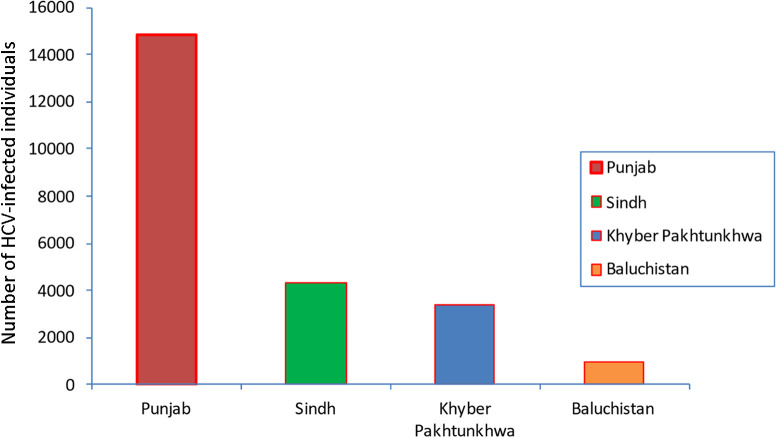
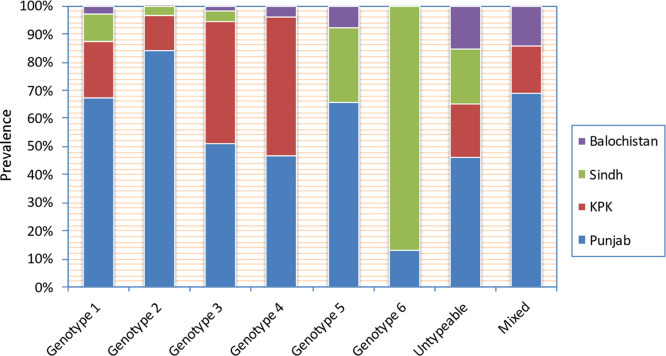
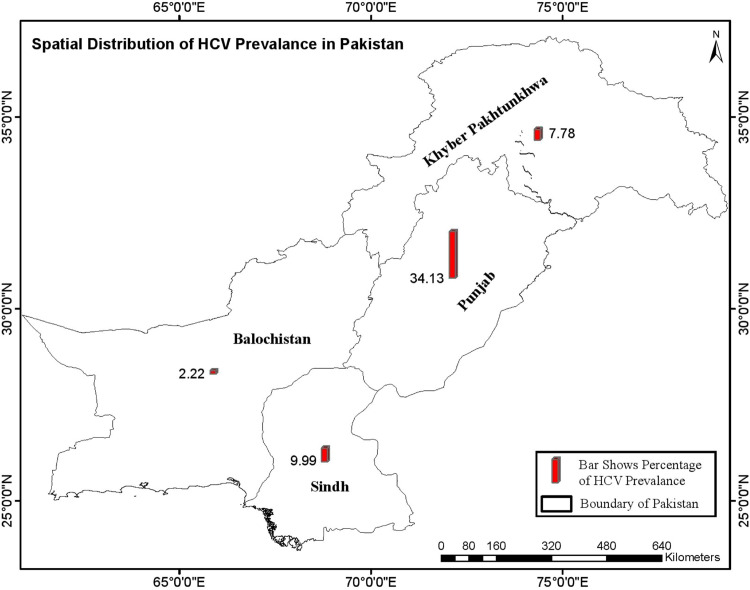
To address this, a review was conducted to determine the prevalence of HCV genotypes across various provinces and as a whole in Pakistan. The scientific literature regarding the prevalence, distribution, genotyping, and epidemiology of HCV was gathered from published articles spanning the years 1996-2020.
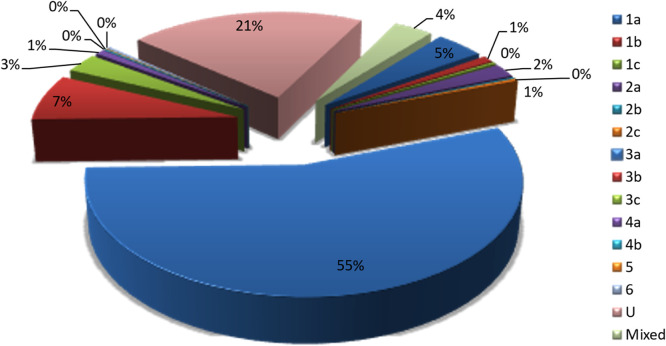
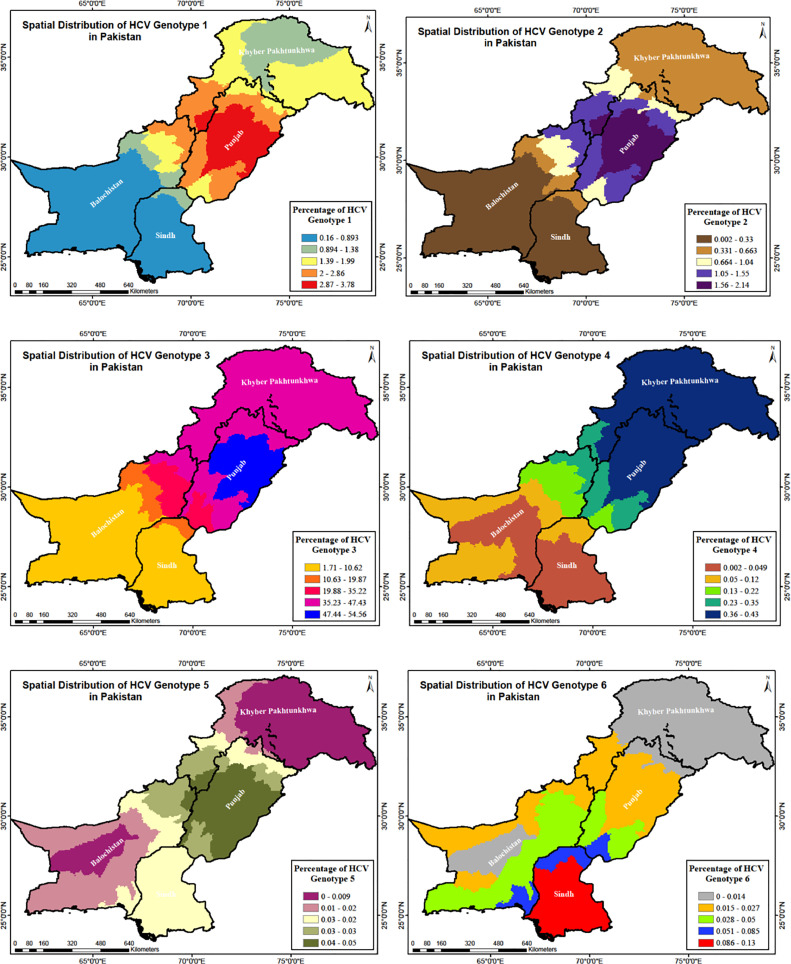
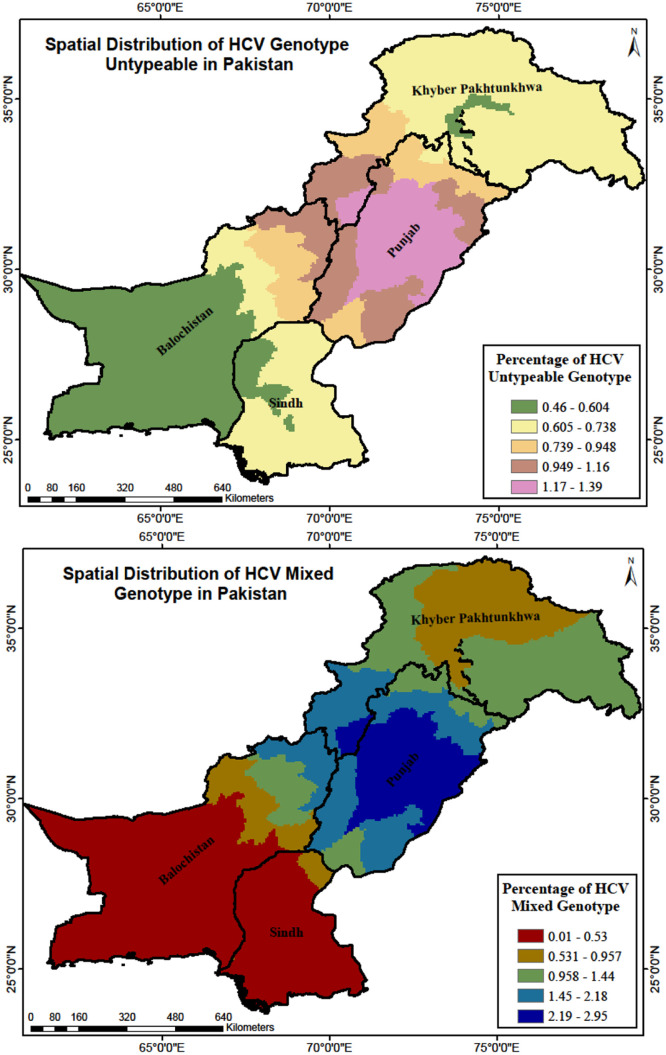
Genotype 1 accounted for 5.1% of the patients, with its predominant subtype being 1a at 4.38%. The frequencies of its other subtypes, 1b and 1c, were observed to be 1.0% and 0.31% respectively. Genotype 2 had a frequency of 2.66%, with the most widely distributed subtype being 2a at 2.11% of the patients. Its other subtypes, 2b and 2c, had frequencies of 0.17% and 0.36% respectively. The most prevalent genotype among all isolates was 3 (65.35%), with the most frequent subtype being 3a (55.15%), followed by 3b (7.18%). The prevalence of genotypes 4, 5, and 6 were scarce in Pakistan, with frequencies of 0.97%, 0.08%, and 0.32% respectively. The prevalence of untypeable and mixed genotypes was 21.34% and 3.53% respectively. Estimating genotypes proves to be a productive method in assisting with the duration and selection of antiviral treatment. Different HCV genotypes can exhibit variations in their response to specific antiviral treatments. Different genotypes may have distinct natural histories, including variations in disease progression and severity. Some genotypes may lead to more rapid liver damage, while others progress more slowly.
This information can guide screening and testing strategies, helping to identify individuals at higher risk of developing severe complications. Studying the distribution of HCV genotypes in a population can provide valuable insights into the transmission dynamics of the virus.
丙型肝炎由丙型肝炎病毒(HCV)引起,是第二常见的病毒性肝炎形式。HCV基因型的地理分布可能相当复杂,这使得确定特定地区最流行的基因型具有挑战性。
为了解决这个问题,进行了一项综述,以确定巴基斯坦各省以及全国范围内HCV基因型的流行情况。从1996年至2020年发表的文章中收集了有关HCV流行率、分布、基因分型和流行病学的科学文献。
基因型1占患者的5.1%,其主要亚型为1a,占4.38%。观察到其其他亚型1b和1c的频率分别为1.0%和0.31%。基因型2的频率为2.66%,分布最广的亚型为2a,占患者的2.11%。其其他亚型2b和2c的频率分别为0.17%和0.36%。所有分离株中最流行的基因型是3(65.35%),最常见的亚型是3a(55.15%),其次是3b(7.18%)。基因型4、5和6在巴基斯坦的流行率很低,频率分别为0.97%、0.08%和0.32%。无法分型和混合基因型的流行率分别为21.34%和3.53%。估计基因型被证明是一种有助于确定抗病毒治疗疗程和选择的有效方法。不同的HCV基因型对特定抗病毒治疗的反应可能存在差异。不同的基因型可能有不同的自然史,包括疾病进展和严重程度的差异。一些基因型可能导致更快的肝损伤,而另一些则进展较慢。
这些信息可以指导筛查和检测策略,有助于识别发生严重并发症风险较高的个体。研究人群中HCV基因型的分布可以为病毒的传播动态提供有价值的见解。