College of Landscape Architecture and Arts, Northwest A&F University, Yangling, Shaanxi 712100, China.
Department of Plant Sciences, University of California, Davis, Davis, CA 95616, USA.
Plant Physiol. 2024 Mar 29;194(4):2449-2471. doi: 10.1093/plphys/kiae014.
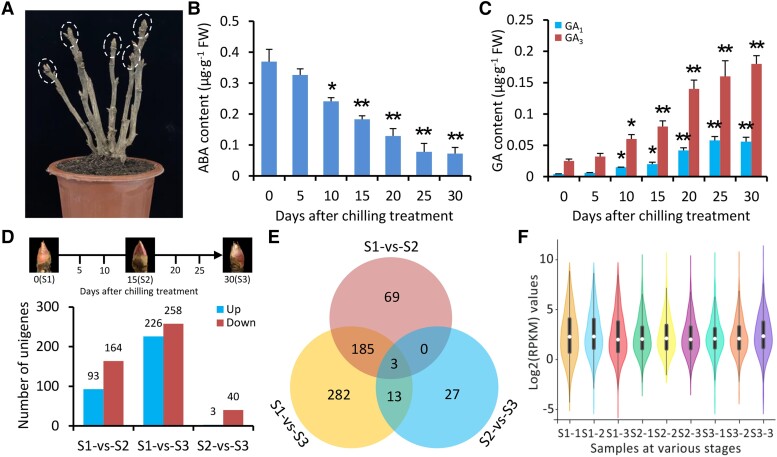
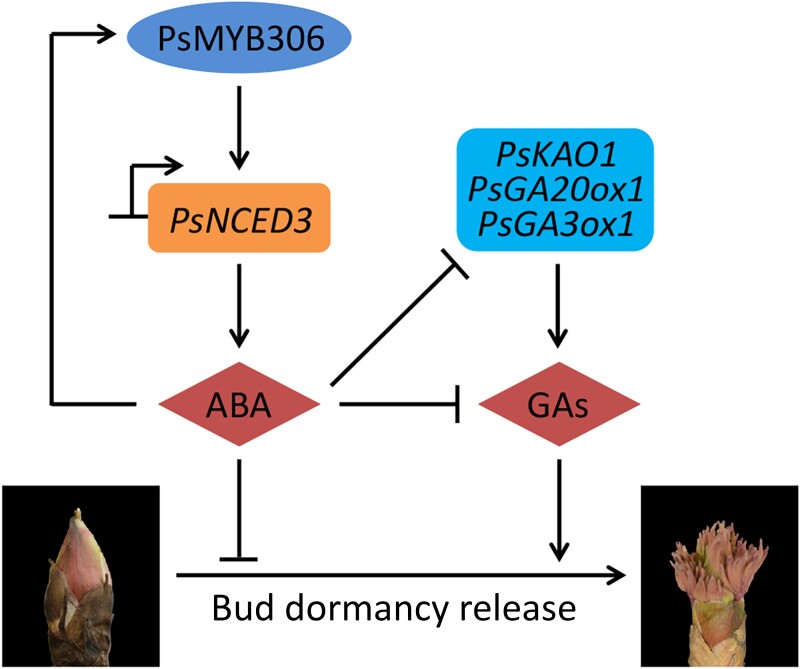
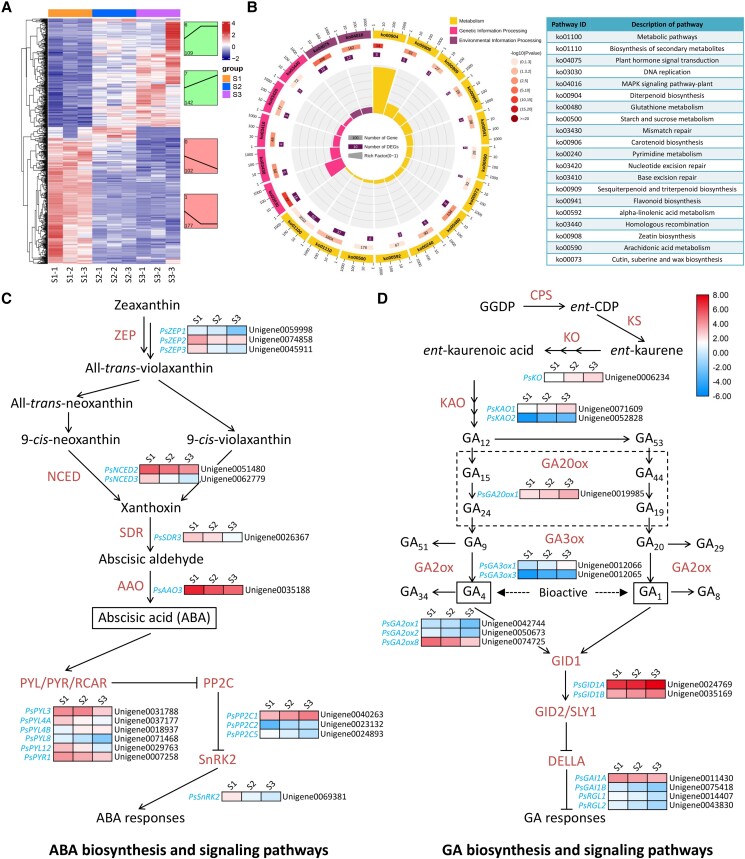
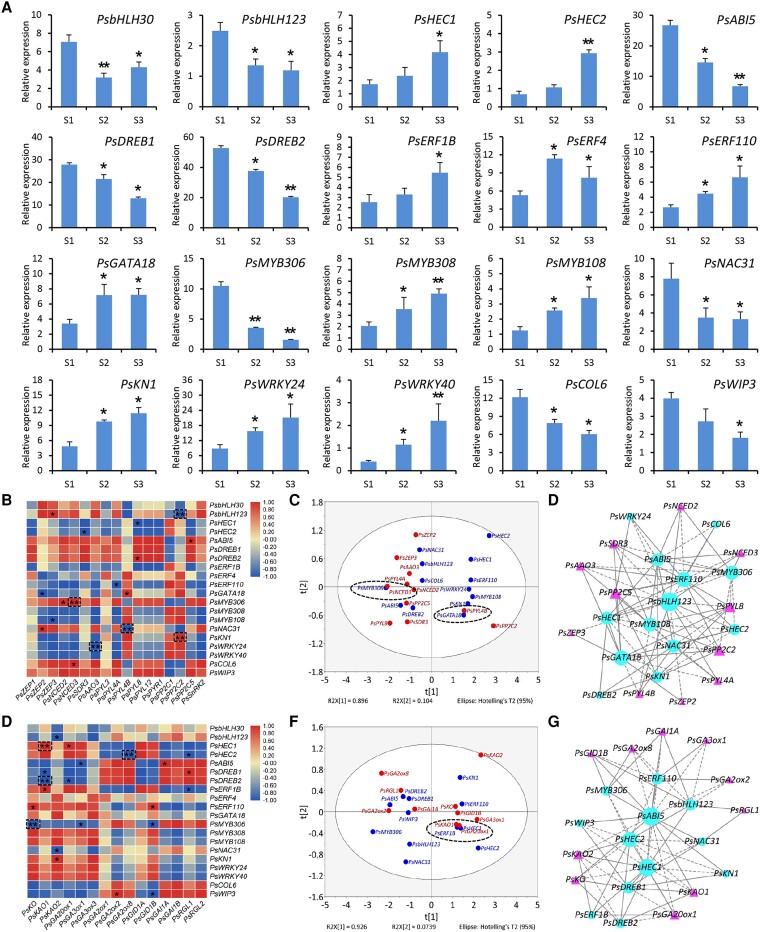
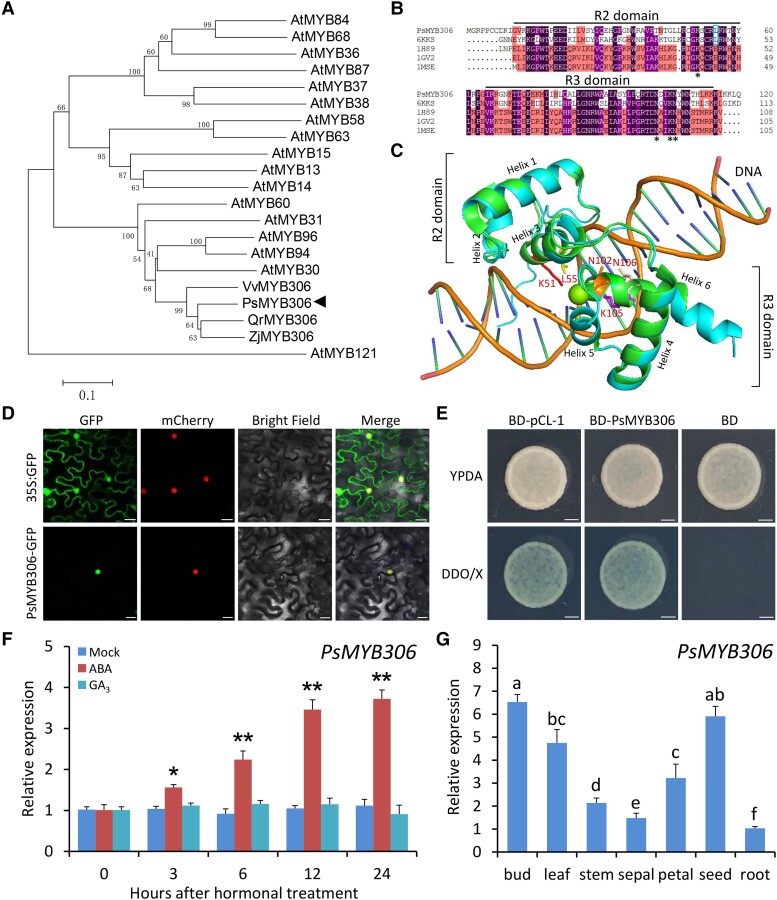
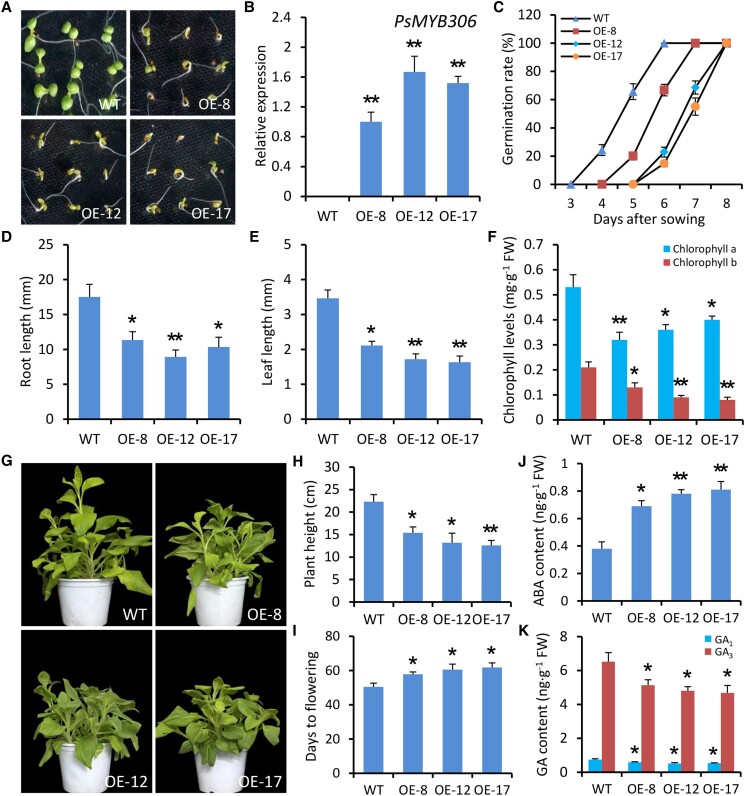
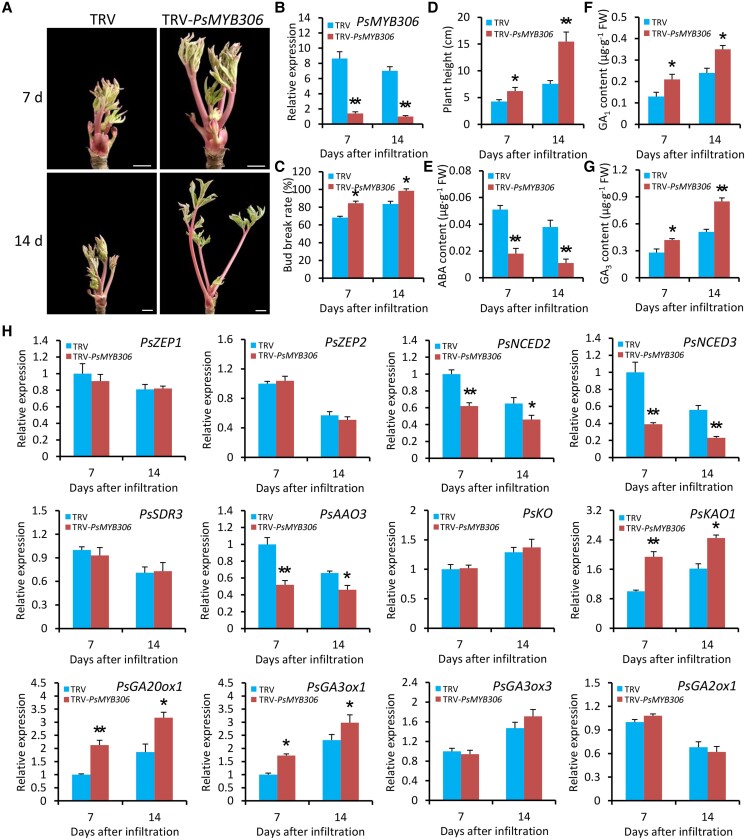
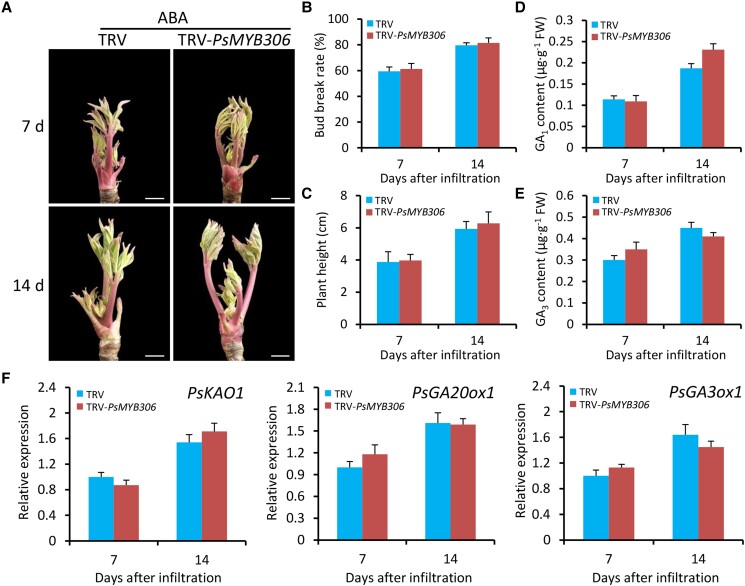
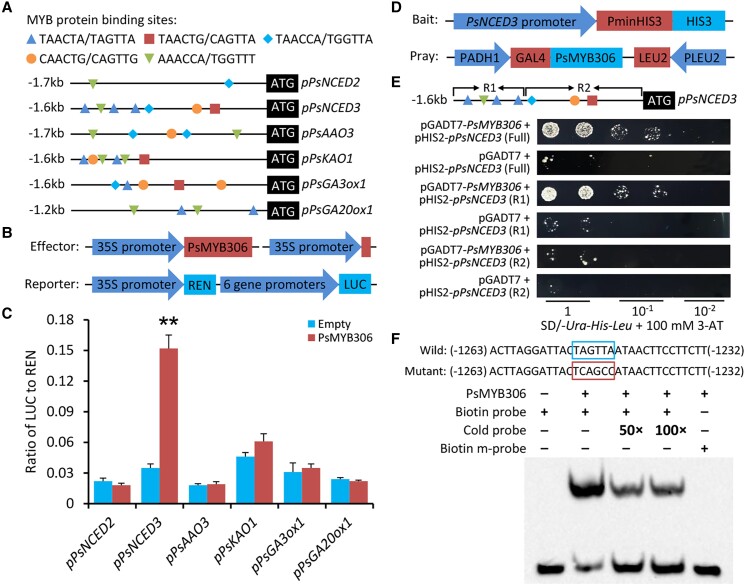
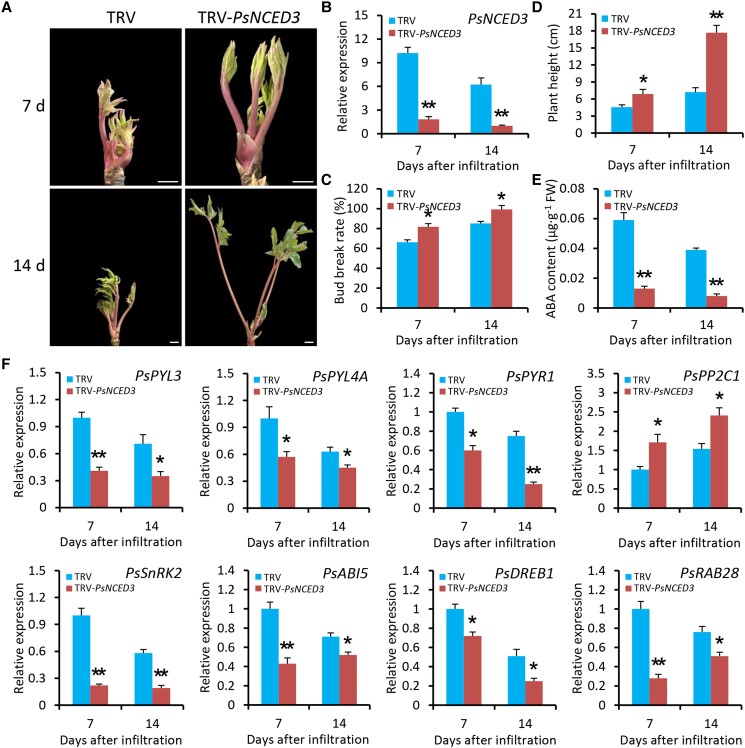
Bud dormancy is a crucial strategy for perennial plants to withstand adverse winter conditions. However, the regulatory mechanism of bud dormancy in tree peony (Paeonia suffruticosa) remains largely unknown. Here, we observed dramatically reduced and increased accumulation of abscisic acid (ABA) and bioactive gibberellins (GAs) GA1 and GA3, respectively, during bud endodormancy release of tree peony under prolonged chilling treatment. An Illumina RNA sequencing study was performed to identify potential genes involved in the bud endodormancy regulation in tree peony. Correlation matrix, principal component, and interaction network analyses identified a downregulated MYB transcription factor gene, PsMYB306, the expression of which positively correlated with 9-CIS-EPOXYCAROTENOID DIOXYGENASE 3 (PsNCED3) expression. Protein modeling analysis revealed 4 residues within the R2R3 domain of PsMYB306 to possess DNA binding capability. Transcription of PsMYB306 was increased by ABA treatment. Overexpression of PsMYB306 in petunia (Petunia hybrida) inhibited seed germination and plant growth, concomitant with elevated ABA and decreased GA contents. Silencing of PsMYB306 accelerated cold-triggered tree peony bud burst and influenced the production of ABA and GAs and the expression of their biosynthetic genes. ABA application reduced bud dormancy release and transcription of ENT-KAURENOIC ACID OXIDASE 1 (PsKAO1), GA20-OXIDASE 1 (PsGA20ox1), and GA3-OXIDASE 1 (PsGA3ox1) associated with GA biosynthesis in PsMYB306-silenced buds. In vivo and in vitro binding assays confirmed that PsMYB306 specifically transactivated the promoter of PsNCED3. Silencing of PsNCED3 also promoted bud break and growth. Altogether, our findings suggest that PsMYB306 negatively modulates cold-induced bud endodormancy release by regulating ABA production.
芽休眠是多年生植物抵御冬季逆境的关键策略。然而,牡丹(Paeonia suffruticosa)芽休眠的调控机制在很大程度上尚不清楚。在这里,我们观察到在牡丹芽休眠解除过程中,经过长时间的冷藏处理,ABA(脱落酸)和生物活性赤霉素(GA)GA1 和 GA3 的积累分别显著减少和增加。进行了一项 Illumina RNA 测序研究,以鉴定与牡丹芽休眠调控相关的潜在基因。相关矩阵、主成分和相互作用网络分析鉴定出一个下调的 MYB 转录因子基因 PsMYB306,其表达与 9-顺式-环氧类胡萝卜素双加氧酶 3(PsNCED3)的表达呈正相关。蛋白建模分析表明,PsMYB306 的 R2R3 结构域内的 4 个残基具有 DNA 结合能力。ABA 处理增加了 PsMYB306 的转录。PsMYB306 在矮牵牛(Petunia hybrida)中的过表达抑制了种子萌发和植物生长,同时伴随着 ABA 的增加和 GA 的减少。PsMYB306 的沉默加速了牡丹芽的冷触发萌发,并影响了 ABA 和 GAs 的产生以及它们生物合成基因的表达。ABA 的应用降低了休眠芽的休眠释放以及与 GA 生物合成相关的 ENT-贝壳杉烯酸氧化酶 1(PsKAO1)、GA20-氧化酶 1(PsGA20ox1)和 GA3-氧化酶 1(PsGA3ox1)的转录,在 PsMYB306 沉默的芽中。体内和体外结合测定证实,PsMYB306 特异性地激活了 PsNCED3 的启动子。PsNCED3 的沉默也促进了芽的萌发和生长。总之,我们的研究结果表明,PsMYB306 通过调节 ABA 的产生来负调控冷诱导的芽休眠解除。