Ding Nana, Zhang Guangkun, Zhang LinPei, Shen Ziyun, Yin Lianghong, Zhou Shenghu, Deng Yu
National Engineering Research Center for Cereal Fermentation and Food Biomanufacturing, Jiangnan University, 1800 Lihu Road, Wuxi, Jiangsu 214122, People's Republic of China.
Jiangsu Provincial Research Center for Bioactive Product Processing Technology, Jiangnan University, People's Republic of China.
Comput Struct Biotechnol J. 2023 Apr 28;21:2929-2939. doi: 10.1016/j.csbj.2023.04.026. eCollection 2023.
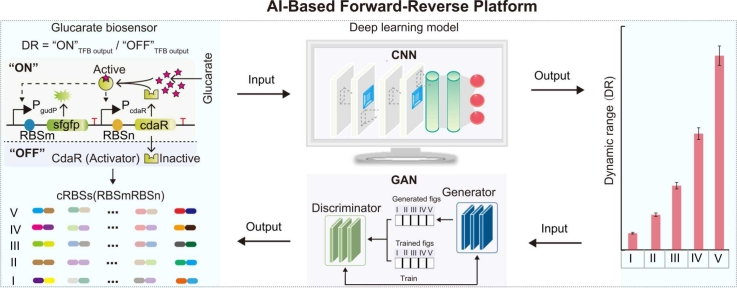
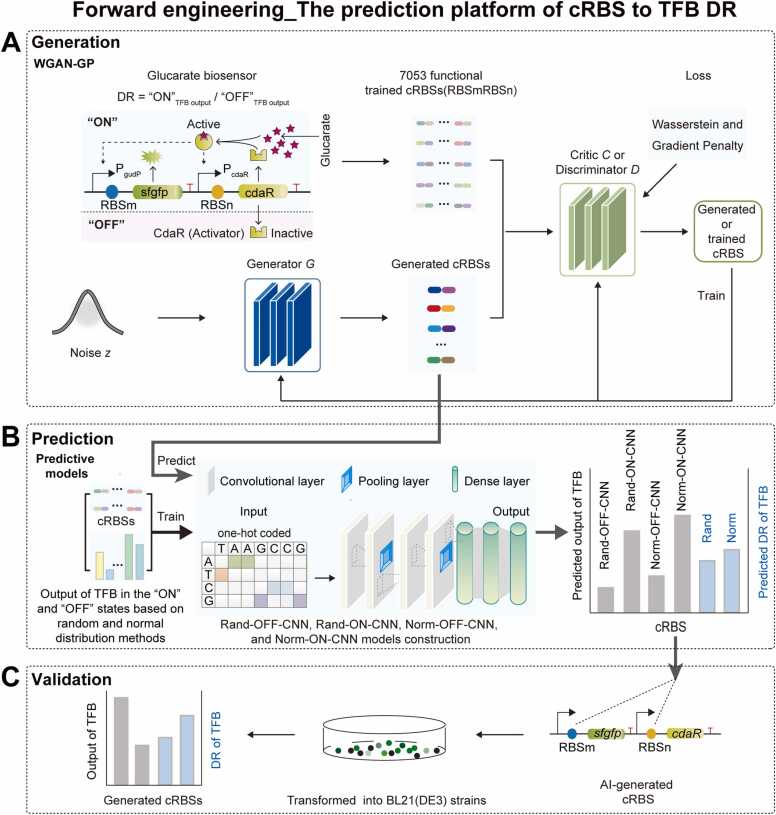
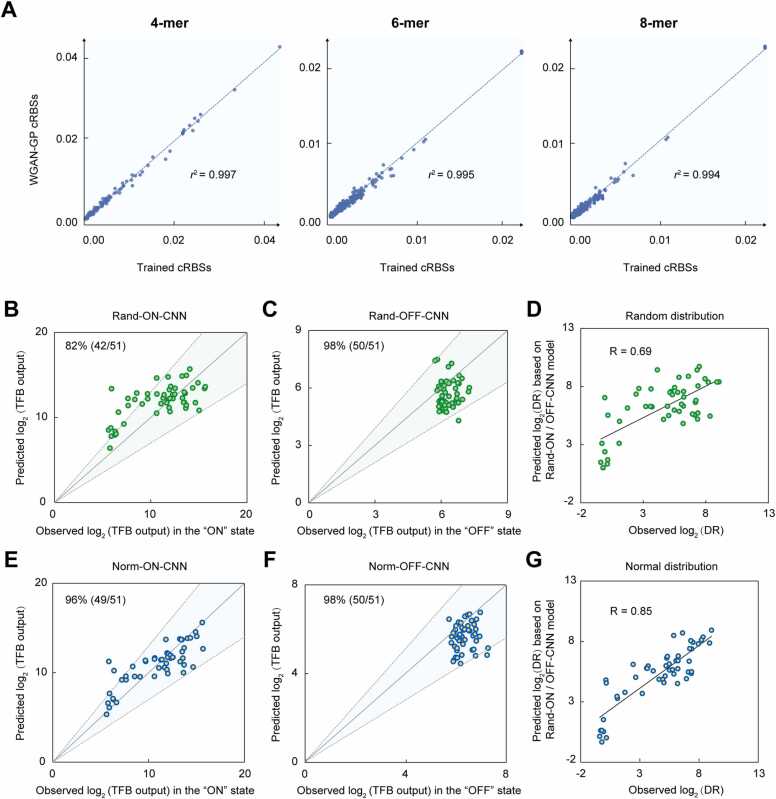
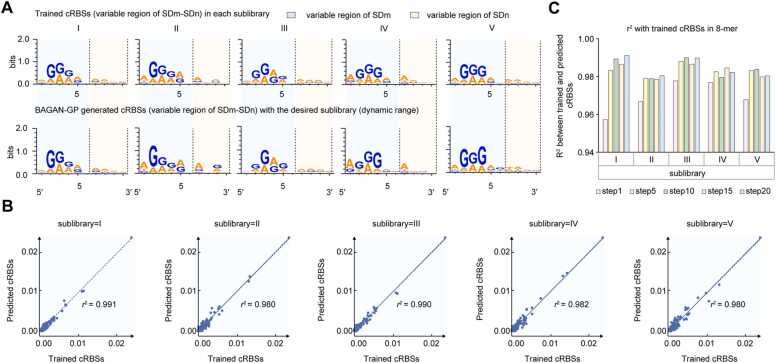
A cross-ribosome binding site (cRBS) adjusts the dynamic range of transcription factor-based biosensors (TFBs) by controlling protein expression and folding. The rational design of a cRBS with desired TFB dynamic range remains an important issue in TFB forward and reverse engineering. Here, we report a novel artificial intelligence (AI)-based forward-reverse engineering platform for TFB dynamic range prediction and cRBS design with selected TFB dynamic ranges. The platform demonstrated superior in processing unbalanced minority-class datasets and was guided by sequence characteristics from trained cRBSs. The platform identified correlations between cRBSs and dynamic ranges to mimic bidirectional design between these factors based on Wasserstein generative adversarial network (GAN) with a gradient penalty (GP) (WGAN-GP) and balancing GAN with GP (BAGAN-GP). For forward and reverse engineering, the predictive accuracy was up to 98% and 82%, respectively. Collectively, we generated an AI-based method for the rational design of TFBs with desired dynamic ranges.
交叉核糖体结合位点(cRBS)通过控制蛋白质表达和折叠来调整基于转录因子的生物传感器(TFB)的动态范围。具有所需TFB动态范围的cRBS的合理设计仍然是TFB正向和逆向工程中的一个重要问题。在这里,我们报告了一种基于人工智能(AI)的新颖的正向-逆向工程平台,用于TFB动态范围预测和具有选定TFB动态范围的cRBS设计。该平台在处理不平衡的少数类数据集方面表现出色,并以训练后的cRBS的序列特征为指导。该平台确定了cRBS与动态范围之间的相关性,以基于具有梯度惩罚(GP)的瓦瑟斯坦生成对抗网络(GAN)(WGAN-GP)和具有GP的平衡GAN(BAGAN-GP)来模拟这些因素之间的双向设计。对于正向和逆向工程,预测准确率分别高达98%和82%。总体而言,我们生成了一种基于AI的方法,用于合理设计具有所需动态范围的TFB。