Han Yukun, Akhtar Javed, Liu Guozhen, Li Chenzhong, Wang Guanyu
Institute of Modern Biology, Nanjing University, Nanjing 210023, China.
Guangdong Provincial Key Laboratory of Computational Science and Material Design, Shenzhen 518055, China.
Comput Struct Biotechnol J. 2023 Jul 4;21:3478-3489. doi: 10.1016/j.csbj.2023.07.002. eCollection 2023.
Early detection of complex diseases like hepatocellular carcinoma remains challenging due to their network-driven pathology. Dynamic network biomarkers (DNB) based on monitoring changes in molecular correlations may enable earlier predictions. However, DNB analysis often overlooks disease heterogeneity.
We integrated DNB analysis with graph convolutional neural networks (GCN) to identify critical transitions during hepatocellular carcinoma development in a mouse model. A DNB-GCN model was constructed using transcriptomic data and gene expression levels as node features.
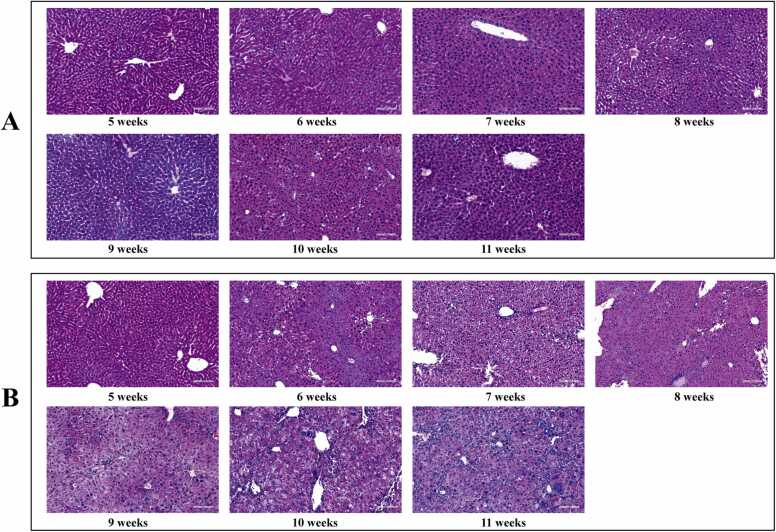
DNB analysis identified a critical transition point at 7 weeks of age despite histological examinations being unable to detect cancerous changes at that time point. The DNB-GCN model achieved 100% accuracy in classifying healthy and cancerous mice, and was able to accurately predict the health status of newly introduced mice.
The integration of DNB analysis and GCN demonstrates potential for the early detection of complex diseases by capturing network structures and molecular features that conventional biomarker discovery methods overlook. The approach warrants further development and validation.
由于肝细胞癌等复杂疾病的病理是由网络驱动的,因此其早期检测仍然具有挑战性。基于监测分子相关性变化的动态网络生物标志物(DNB)可能有助于更早地进行预测。然而,DNB分析往往忽略了疾病的异质性。
我们将DNB分析与图卷积神经网络(GCN)相结合,以识别小鼠模型中肝细胞癌发展过程中的关键转变。使用转录组数据和基因表达水平作为节点特征构建了DNB-GCN模型。
DNB分析确定了7周龄时的一个关键转变点,尽管组织学检查在该时间点未能检测到癌变变化。DNB-GCN模型在对健康小鼠和患癌小鼠进行分类时准确率达到100%,并且能够准确预测新引入小鼠的健康状况。
DNB分析与GCN的整合通过捕捉传统生物标志物发现方法忽略的网络结构和分子特征,展示了在复杂疾病早期检测中的潜力。该方法值得进一步开发和验证。