Liu Xiaoping, Chang Xiao, Leng Siyang, Tang Hui, Aihara Kazuyuki, Chen Luonan
Key Laboratory of Systems Biology, Center for Excellence in Molecular Cell Science, Institute of Biochemistry and Cell Biology, Shanghai Institutes for Biological Sciences, Chinese Academy of Sciences, Shanghai 200031, China.
School of Mathematics and Statistics, Shandong University at Weihai, Weihai 264209, China.
Natl Sci Rev. 2019 Jul;6(4):775-785. doi: 10.1093/nsr/nwy162. Epub 2018 Dec 28.
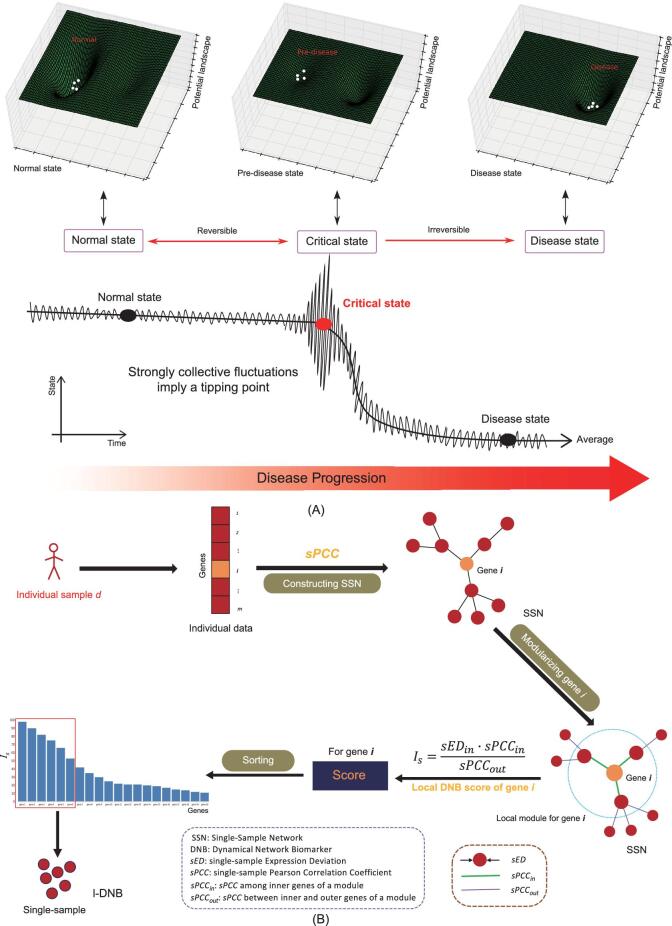
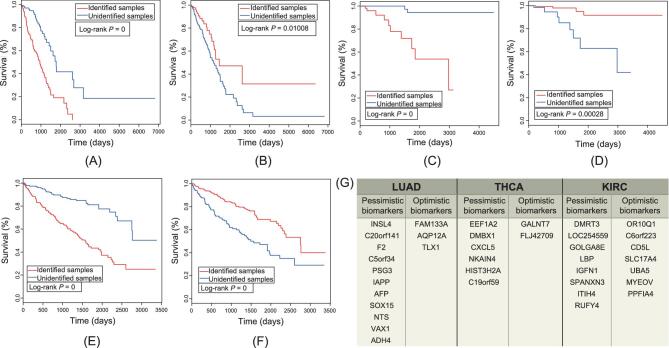
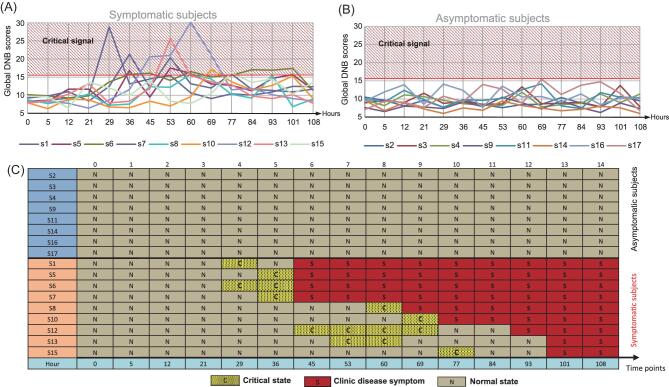
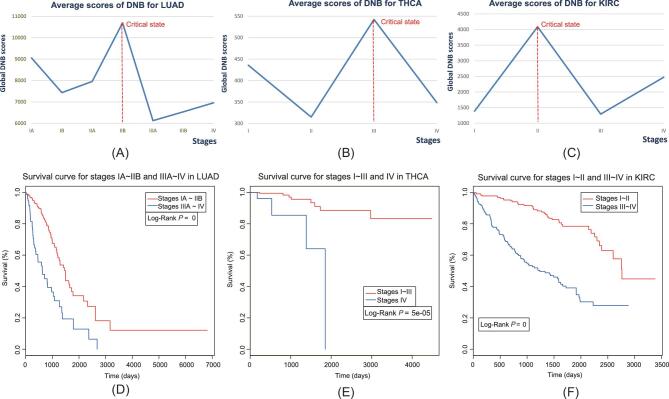
A new model-free method has been developed and termed the landscape dynamic network biomarker (-DNB) methodology. The method is based on bifurcation theory, which can identify tipping points prior to serious disease deterioration using only single-sample omics data. Here, we show that -DNB provides early-warning signals of disease deterioration on a single-sample basis and also detects critical genes or network biomarkers (i.e. DNB members) that promote the transition from normal to disease states. As a case study, -DNB was used to predict severe influenza symptoms prior to the actual symptomatic appearance in influenza virus infections. The -DNB approach was then also applied to three tumor disease datasets from the TCGA and was used to detect critical stages prior to tumor deterioration using an individual DNB for each patient. The individual DNBs were further used as individual biomarkers in the analysis of physiological data, which led to the identification of two biomarker types that were surprisingly effective in predicting the prognosis of tumors. The biomarkers can be considered as common biomarkers for cancer, wherein one indicates a poor prognosis and the other indicates a good prognosis.
一种新的无模型方法已经被开发出来,并被称为景观动态网络生物标志物(-DNB)方法。该方法基于分岔理论,仅使用单样本组学数据就能在严重疾病恶化之前识别临界点。在这里,我们表明-DNB在单样本基础上提供疾病恶化的早期预警信号,并且还能检测促进从正常状态转变为疾病状态的关键基因或网络生物标志物(即DNB成员)。作为一个案例研究,-DNB被用于在流感病毒感染实际出现症状之前预测严重流感症状。然后,-DNB方法也被应用于来自TCGA的三个肿瘤疾病数据集,并用于使用每个患者的个体DNB检测肿瘤恶化之前的关键阶段。个体DNB在生理数据分析中进一步用作个体生物标志物,这导致识别出两种在预测肿瘤预后方面出奇有效的生物标志物类型。这些生物标志物可被视为癌症的常见生物标志物,其中一种表明预后不良,另一种表明预后良好。