Center for Health Outcomes and Policy Evaluation Studies, Ohio State University College of Public Health, 381 Cunz Hall, 1841 Neil Avenue, Columbus, OH, 43210, USA.
Department of Mental Health, Johns Hopkins Bloomberg School of Public Health, Baltimore, MD, USA.
Harm Reduct J. 2024 Jan 13;21(1):11. doi: 10.1186/s12954-023-00924-5.
Shifts in the US drug supply, including the proliferation of synthetic opioids and emergence of xylazine, have contributed to the worsening toll of the overdose epidemic. Drug checking services offer a critical intervention to promote agency among people who use drugs (PWUD) to reduce overdose risk. Current drug checking methods can be enhanced to contribute to supply-level monitoring in the USA, overcoming the selection bias associated with existing supply monitoring efforts and informing public health interventions.
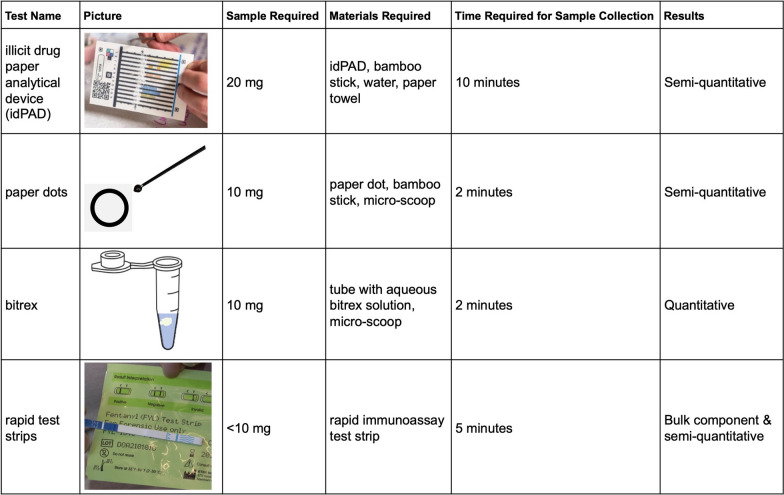
As a group of analytical chemists, public health researchers, evaluators, and harm reductionists, we used a semi-structured guide to facilitate discussion of four different approaches for syringe service programs (SSPs) to offer drug checking services for supply-level monitoring. Using thematic analysis, we identified four key principles that SSPs should consider when implementing drug checking programs.
A number of analytical methods exist for drug checking to contribute to supply-level monitoring. While there is likely not a one-size-fits-all approach, SSPs should prioritize methods that can (1) provide immediate utility to PWUD, (2) integrate seamlessly into existing workflows, (3) balance individual- and population-level data needs, and (4) attend to legal concerns for implementation and dissemination.
Enhancing drug checking methods for supply-level monitoring has the potential to detect emerging threats in the drug supply and reduce the toll of the worsening overdose epidemic.
美国毒品供应的变化,包括合成阿片类药物的泛滥和苯环己哌啶的出现,导致了过量用药流行的情况恶化。毒品检测服务提供了一个关键的干预措施,以促进药物使用者(PWUD)的自主决策,从而降低过量用药的风险。当前的毒品检测方法可以得到加强,以促进美国的供应层面监测,克服现有供应监测工作所存在的选择偏差,并为公共卫生干预措施提供信息。
作为一组分析化学家、公共卫生研究人员、评估人员和减少伤害专家,我们使用半结构化指南来促进对四种不同方法的讨论,即注射器服务计划(SSP)如何提供毒品检测服务以进行供应层面监测。我们采用主题分析方法,确定了 SSP 在实施毒品检测计划时应考虑的四个关键原则。
有许多分析方法可用于毒品检测以促进供应层面监测。虽然可能没有一种通用的方法,但 SSP 应优先考虑那些能够(1)为 PWUD 提供即时效用,(2)无缝融入现有工作流程,(3)平衡个人和人群层面的数据需求,以及(4)关注实施和传播的法律问题的方法。
加强毒品检测方法以进行供应层面监测有可能发现毒品供应中的新出现的威胁,并减少日益恶化的过量用药流行所带来的危害。