Department of Obstetrics and Gynecology, Key Laboratory of Birth Defects and Related of Women and Children of Ministry of Education, West China Second University Hospital, Sichuan University, Frontier Medical Center, Tianfu Jincheng Laboratory, Chengdu, Sichuan, China.
National Engineering Laboratory for Clean Technology of Leather Manufacture, Sichuan University, Chengdu, China.
Front Immunol. 2023 Dec 28;14:1109122. doi: 10.3389/fimmu.2023.1109122. eCollection 2023.
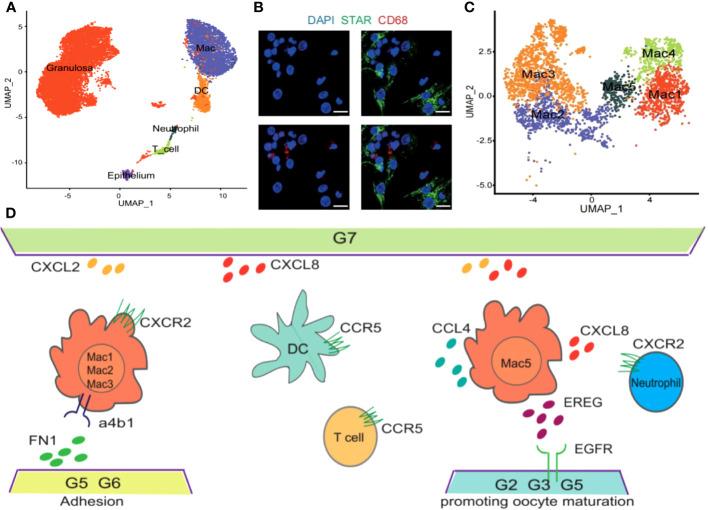
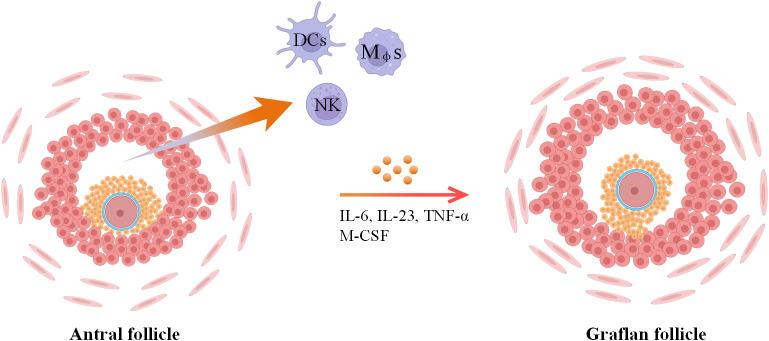
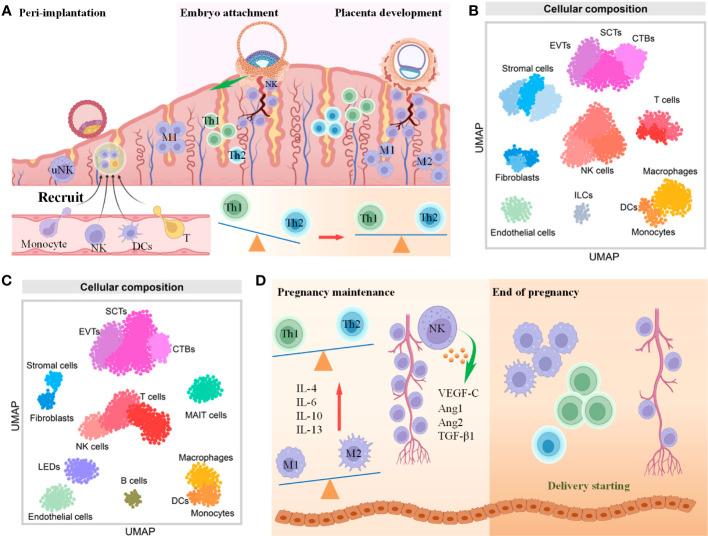
Female fertility decline is an accumulative consequence caused by complex factors, among them, the disruption of the immune profile in female reproduction stands out as a crucial contributor. Presently, the effects of immune microenvironment (IME) on the female reproductive process have attracted increasing attentions for their dynamic but precisive roles. Immunocytes including macrophages, dendritic cells, T cells, B cells and neutrophils, with diverse subpopulations as well as high plasticity functioned dynamically in the process of female reproduction through indirect intercellular communication via specific cytokine release transduced by molecular signal networks or direct cell-cell contact to maintain the stability of the reproductive process have been unveiled. The immune profile of female reproduction in each stage has also been meticulously unveiled. Especially, the application of single-cell sequencing (scRNA-seq) technology in this process reveals the distribution map of immune cells, which gives a novel insight for the homeostasis of IME and provides a research direction for better exploring the role of immune cells in female reproduction. Here, we provide an all-encompassing overview of the latest advancements in immune modulation within the context of the female reproductive process. Our approach involves structuring our summary in accordance with the physiological sequence encompassing gonadogenesis, folliculogenesis within the ovaries, ovulation through the fallopian tubes, and the subsequent stages of embryo implantation and development within the uterus. Our overarching objective is to construct a comprehensive portrayal of the immune microenvironment (IME), thereby accentuating the pivotal role played by immune cells in governing the intricate female reproductive journey. Additionally, we emphasize the pressing need for heightened attention directed towards strategies that focus on immune interventions within the female reproductive process, with the ultimate aim of enhancing female fertility.
女性生育力下降是由复杂因素累积导致的结果,其中女性生殖免疫谱的紊乱是一个重要的促成因素。目前,免疫微环境(IME)对女性生殖过程的影响因其动态但精确的作用而引起了越来越多的关注。免疫细胞包括巨噬细胞、树突状细胞、T 细胞、B 细胞和中性粒细胞,它们通过特定细胞因子释放的分子信号网络或直接细胞-细胞接触进行间接细胞间通讯,具有多种亚群和高度可塑性,在女性生殖过程中动态发挥作用,以维持生殖过程的稳定性。女性生殖各阶段的免疫谱也被细致揭示。特别是单细胞测序(scRNA-seq)技术在这一过程中的应用揭示了免疫细胞的分布图谱,为 IME 的动态平衡提供了新的视角,并为更好地探索免疫细胞在女性生殖中的作用提供了研究方向。在这里,我们全面概述了女性生殖过程中免疫调节的最新进展。我们的方法是根据包括性腺发生、卵巢内卵泡发生、输卵管排卵以及随后的胚胎着床和子宫内发育在内的生理序列来组织我们的总结。我们的总体目标是构建一个全面的免疫微环境(IME)描述,从而强调免疫细胞在调控女性生殖这一复杂过程中的关键作用。此外,我们强调需要更加关注女性生殖过程中的免疫干预策略,以提高女性生育力。


 Zotero 插件