Sastriques-Dunlop Sergio, Elizondo-Benedetto Santiago, Arif Batool, Meade Rodrigo, Zaghloul Mohamed S, Luehmann Hannah, Heo Gyu S, English Sean J, Liu Yongjian, Zayed Mohamed A
Section of Vascular Surgery, Department of Surgery, Washington University School of Medicine, St. Louis, MO, USA.
Department of Radiology, Washington University School of Medicine, St. Louis, MO, USA.
Sci Rep. 2024 Jan 16;14(1):1438. doi: 10.1038/s41598-024-51996-7.
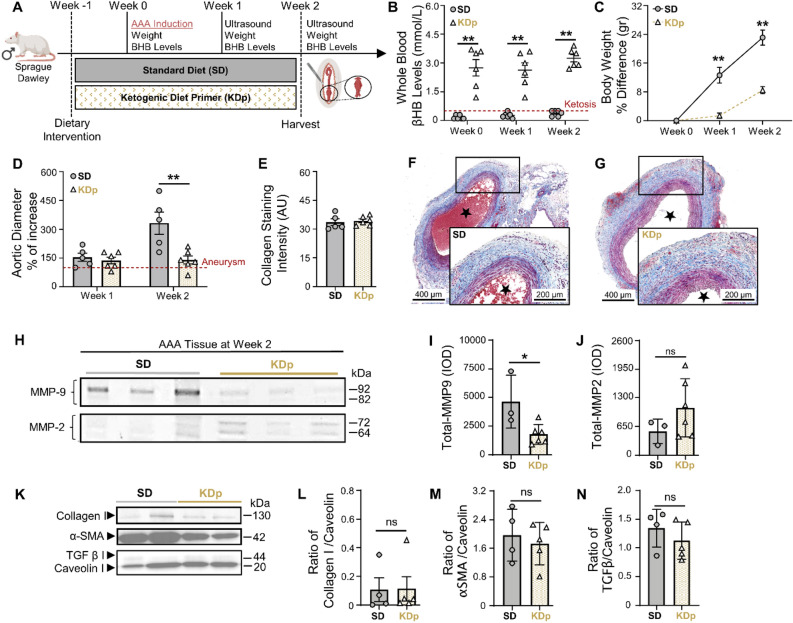
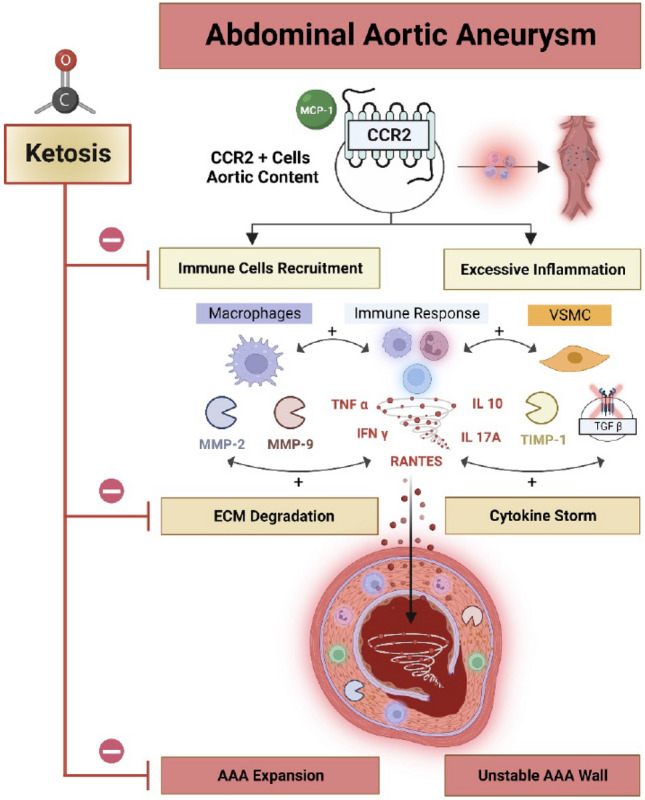
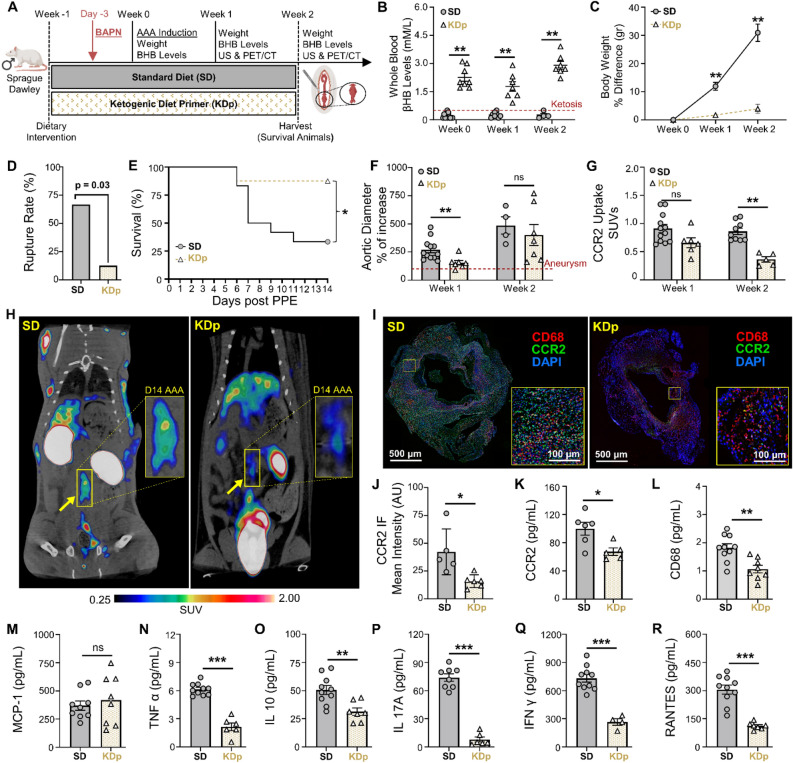
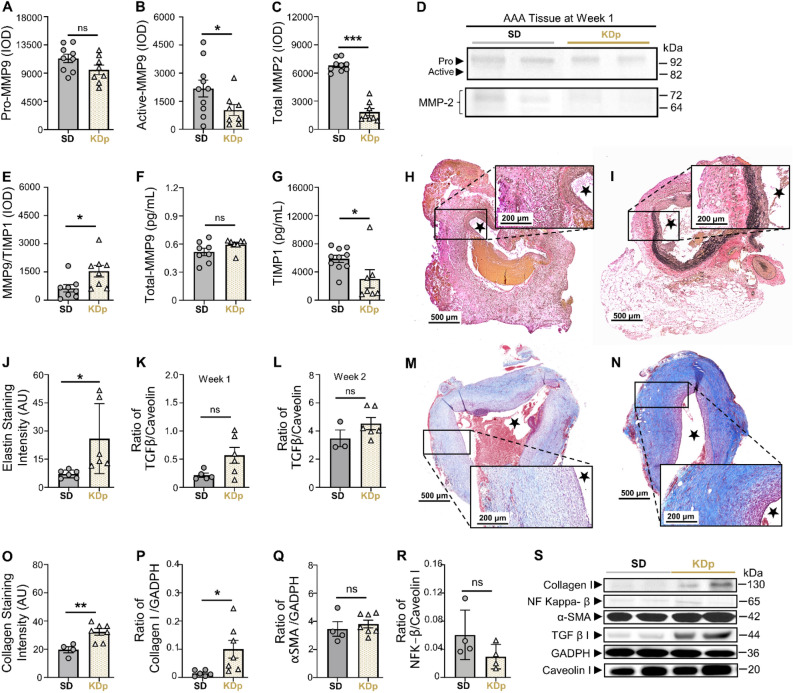
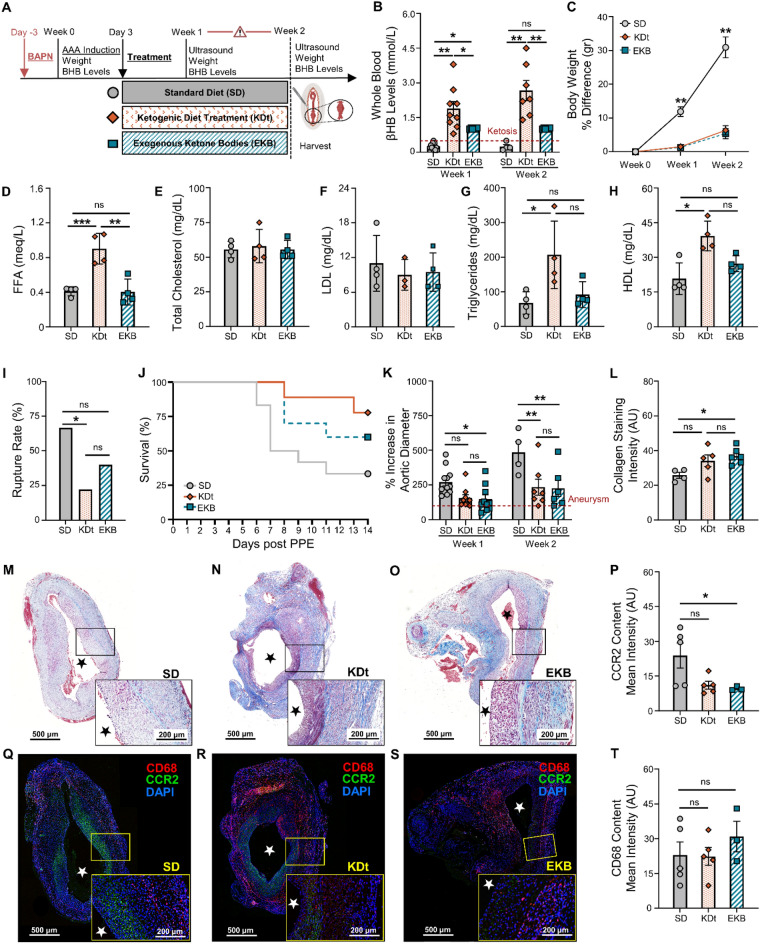
Abdominal aortic aneurysms (AAAs) are prevalent with aging, and AAA rupture is associated with increased mortality. There is currently no effective medical therapy to prevent AAA rupture. The monocyte chemoattractant protein (MCP-1)/C-C chemokine receptor type 2 (CCR2) axis critically regulates AAA inflammation, matrix-metalloproteinase (MMP) production, and extracellular matrix (ECM) stability. We therefore hypothesized that a diet intervention that can modulate CCR2 axis may therapeutically impact AAA risk of rupture. Since ketone bodies (KBs) can trigger repair mechanisms in response to inflammation, we evaluated whether systemic ketosis in vivo could reduce CCR2 and AAA progression. Male Sprague-Dawley rats underwent surgical AAA formation using porcine pancreatic elastase and received daily β-aminopropionitrile to promote AAA rupture. Rats with AAAs received either a standard diet, ketogenic diet (KD), or exogenous KBs (EKB). Rats receiving KD and EKB reached a state of ketosis and had significant reduction in AAA expansion and incidence of rupture. Ketosis also led to significantly reduced aortic CCR2 content, improved MMP balance, and reduced ECM degradation. Consistent with these findings, we also observed that Ccr2-/- mice have significantly reduced AAA expansion and rupture. In summary, this study demonstrates that CCR2 is essential for AAA expansion, and that its modulation with ketosis can reduce AAA pathology. This provides an impetus for future clinical studies that will evaluate the impact of ketosis on human AAA disease.
腹主动脉瘤(AAA)随着年龄增长而普遍存在,且AAA破裂与死亡率增加相关。目前尚无有效的药物疗法来预防AAA破裂。单核细胞趋化蛋白(MCP-1)/C-C趋化因子受体2型(CCR2)轴对AAA炎症、基质金属蛋白酶(MMP)产生及细胞外基质(ECM)稳定性起关键调节作用。因此,我们推测一种可调节CCR2轴的饮食干预可能对AAA破裂风险产生治疗影响。由于酮体(KBs)可触发炎症相关的修复机制,我们评估了体内系统性酮症是否能降低CCR2及AAA进展。雄性Sprague-Dawley大鼠使用猪胰弹性蛋白酶进行手术性AAA形成,并每日接受β-氨基丙腈以促进AAA破裂。患有AAA的大鼠分别接受标准饮食、生酮饮食(KD)或外源性KBs(EKB)。接受KD和EKB的大鼠达到酮症状态,AAA扩张及破裂发生率显著降低。酮症还导致主动脉CCR2含量显著降低、MMP平衡改善及ECM降解减少。与这些发现一致,我们还观察到Ccr2-/-小鼠的AAA扩张和破裂显著减少。总之,本研究表明CCR2对AAA扩张至关重要,且通过酮症对其进行调节可减轻AAA病变。这为未来评估酮症对人类AAA疾病影响的临床研究提供了动力。