Department of Analytical, Environmental and Forensic Sciences, School of Cancer & Pharmaceutical Sciences, King's College London, London SE1 9NH, U.K.
Department of Medicinal Chemistry, Masonic Cancer Center, University of Minnesota, Minneapolis, Minnesota 55455, United States.
Chem Res Toxicol. 2024 Feb 19;37(2):234-247. doi: 10.1021/acs.chemrestox.3c00255. Epub 2024 Jan 17.
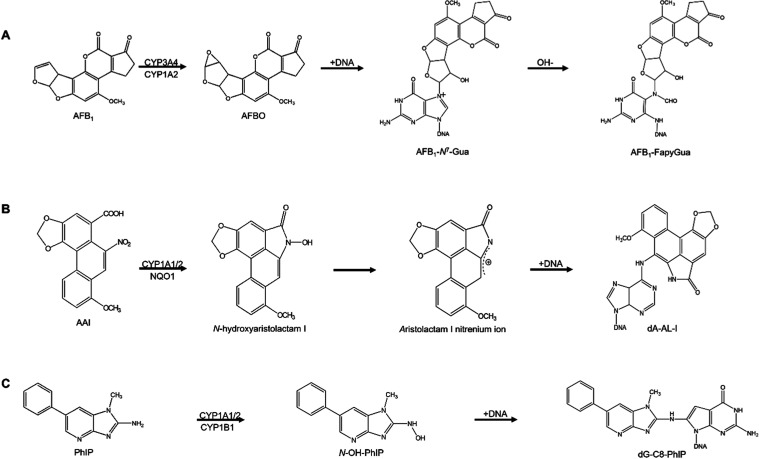
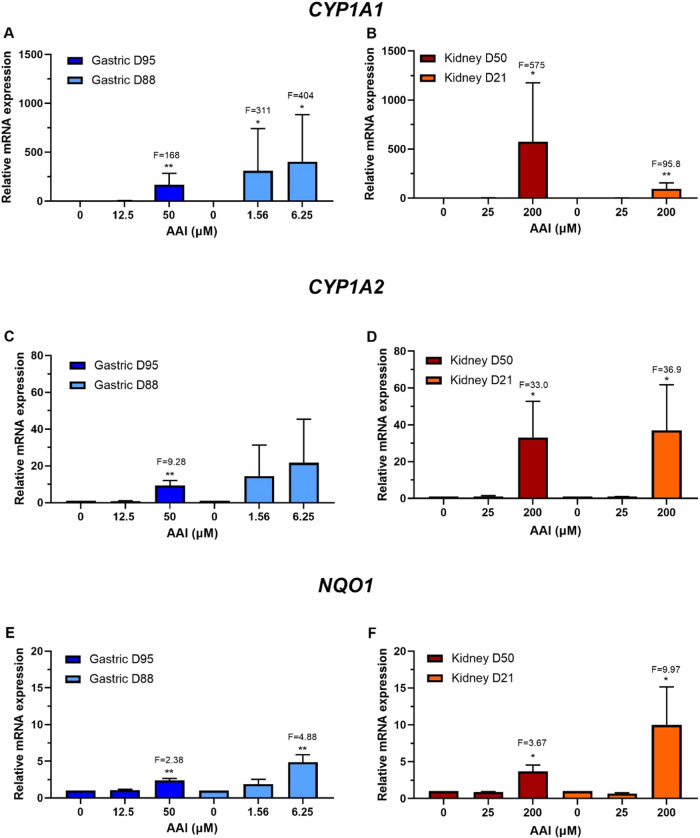
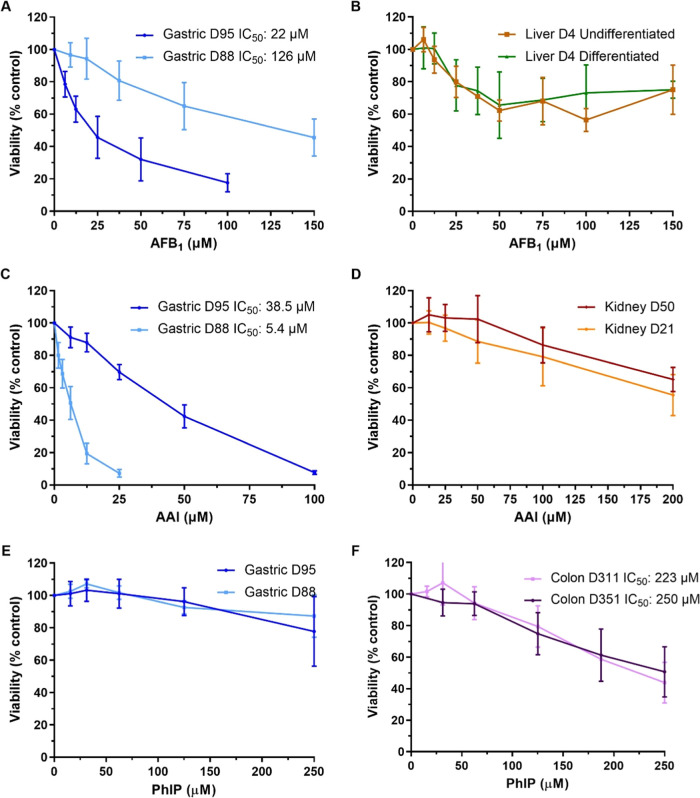
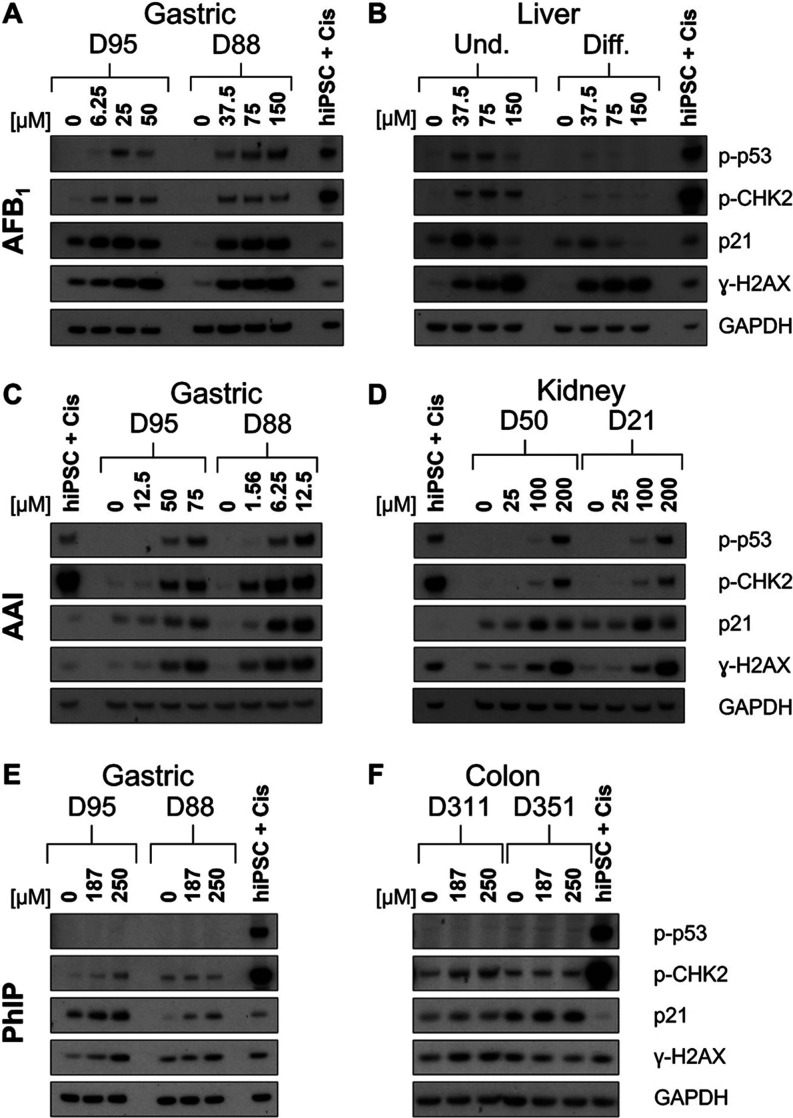
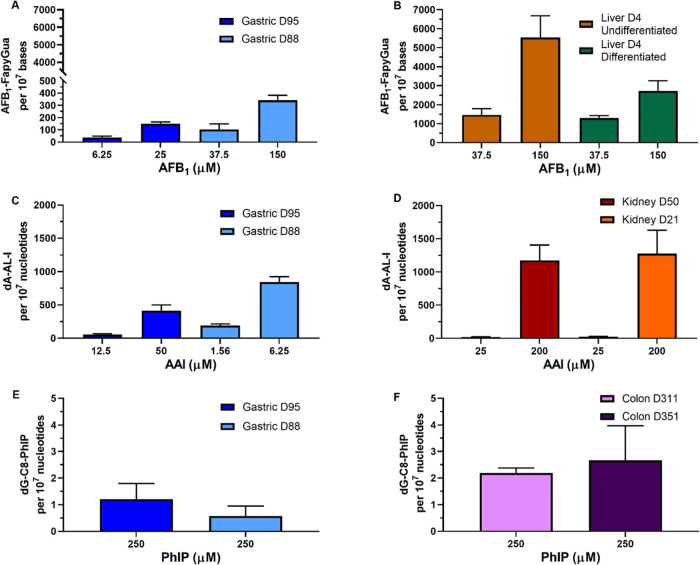
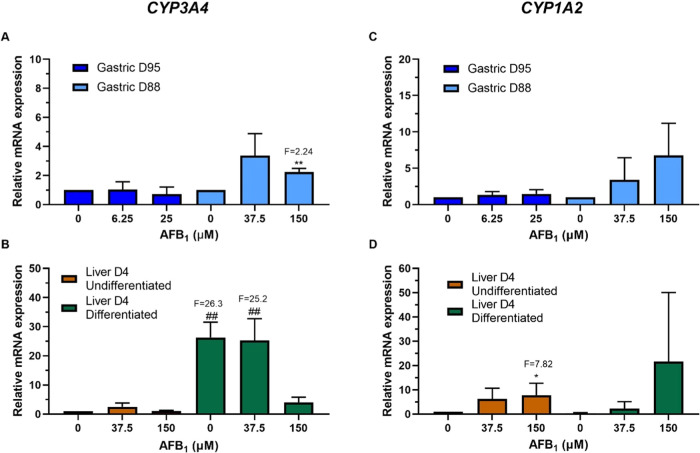
Human tissue three-dimensional (3D) organoid cultures have the potential to reproduce the physiological properties and cellular architecture of the organs from which they are derived. The ability of organoid cultures derived from human stomach, liver, kidney, and colon to metabolically activate three dietary carcinogens, aflatoxin B (AFB), aristolochic acid I (AAI), and 2-amino-1-methyl-6-phenylimidazo[4,5-]pyridine (PhIP), was investigated. In each case, the response of a target tissue (liver for AFB; kidney for AAI; colon for PhIP) was compared with that of a nontarget tissue (gastric). After treatment cell viabilities were measured, DNA damage response (DDR) was determined by Western blotting for p-p53, p21, p-CHK2, and γ-H2AX, and DNA adduct formation was quantified by mass spectrometry. Induction of the key xenobiotic-metabolizing enzymes (XMEs) CYP1A1, CYP1A2, CYP3A4, and NQO1 was assessed by qRT-PCR. We found that organoids from different tissues can activate AAI, AFB, and PhIP. In some cases, this metabolic potential varied between tissues and between different cultures of the same tissue. Similarly, variations in the levels of expression of XMEs were observed. At comparable levels of cytotoxicity, organoids derived from tissues that are considered targets for these carcinogens had higher levels of adduct formation than a nontarget tissue.
人体组织三维(3D)类器官培养物具有复制其来源器官生理特性和细胞结构的潜力。研究了源自人胃、肝、肾和结肠的类器官培养物代谢激活三种膳食致癌物的能力,即黄曲霉毒素 B(AFB)、马兜铃酸 I(AAI)和 2-氨基-1-甲基-6-苯基咪唑[4,5-]吡啶(PhIP)。在每种情况下,都比较了靶组织(肝脏用于 AFB;肾脏用于 AAI;结肠用于 PhIP)的反应与非靶组织(胃)的反应。处理后测量细胞活力,通过 Western blot 测定 DNA 损伤反应(DDR),用于 p-p53、p21、p-CHK2 和 γ-H2AX,通过质谱定量测定 DNA 加合物形成。通过 qRT-PCR 评估关键的外源物质代谢酶(XMEs)CYP1A1、CYP1A2、CYP3A4 和 NQO1 的诱导。我们发现来自不同组织的类器官可以激活 AAI、AFB 和 PhIP。在某些情况下,这种代谢潜力在组织之间和同一组织的不同培养物之间有所不同。同样,观察到 XMEs 的表达水平存在差异。在可比的细胞毒性水平下,源自被认为是这些致癌物靶组织的类器官比非靶组织具有更高水平的加合物形成。