Chychko Lizaveta, Khoramnia Ramin, Son Hyeck-Soo, Schickhardt Sonja K, Lieberwirth Ingo, Auffarth Gerd U, Yildirim Timur M
David J. Apple Center for Vision Research, Department of Ophthalmology, University of Heidelberg, Heidelberg, Germany.
Department of Physical Chemistry of Polymers, Max Planck Institute for Polymer Research, Mainz, Germany.
Ophthalmol Ther. 2024 Mar;13(3):791-800. doi: 10.1007/s40123-023-00872-0. Epub 2024 Jan 20.
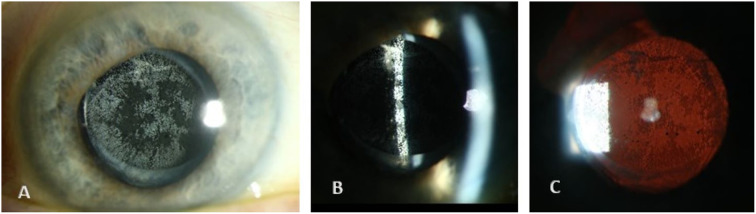
The aim of this study was to analyze posterior surface opacification in explanted silicone intraocular lenses (IOLs) with clinicopathologic correlation to asteroid hyalosis.
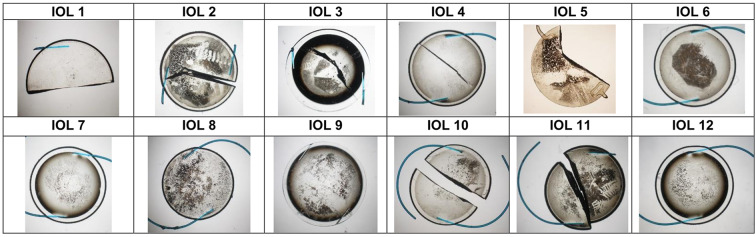
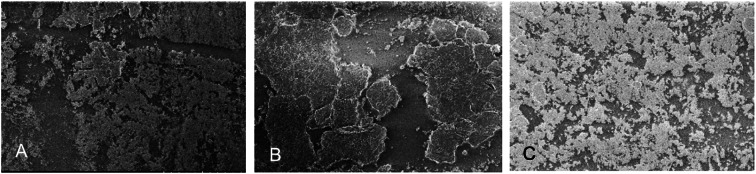
In a laboratory setup, 12 explanted silicone IOLs underwent laboratory analyses, including light microscopy, scanning electron microscopy (SEM), and energy-dispersive X-ray spectroscopy for elemental composition (EDX). Relevant clinical data were obtained for each case, including gender, age at IOL implantation, dates of implantation and explantation, as well as history of neodymium-dopped yttrium aluminum garnet (Nd:YAG) laser treatments or other opacification removal attempts. High-resolution optical coherence tomography (OCT) images were obtained in vitro with an anterior segment OCT device (Anterion, Heidelberg Engineering, Heidelberg, Germany).
Calcification located at the posterior optic surface of each lens was identified through SEM and EDX analyses, revealing deposits composed of hydroxyapatite. In all cases, IOL polishing using Nd:YAG laser had been attempted prior to IOL exchange. The clinical functional data showed that this type of IOL opacity led to increase in straylight and subjective symptoms of glare.
Silicone IOLs can develop posterior surface calcification in eyes with asteroid hyalosis. There are mechanical techniques of cleaning the IOL surface but in many cases, IOL explantation is the only sustainable way to reduce the patients' straylight levels and glare symptoms. Due to the risk of posterior surface calcification, silicone IOL implantation should be avoided in eyes with asteroid hyalosis.
本研究的目的是分析取出的硅酮人工晶状体(IOL)的后表面混浊情况,并将其与临床病理结果与星状玻璃体病变相关联。
在实验室环境中,对12枚取出的硅酮IOL进行了实验室分析,包括光学显微镜检查、扫描电子显微镜(SEM)检查以及用于元素组成分析的能量色散X射线光谱仪(EDX)检查。获取了每个病例的相关临床数据,包括性别、IOL植入时的年龄、植入和取出日期,以及钕掺杂钇铝石榴石(Nd:YAG)激光治疗史或其他去除混浊的尝试史。使用眼前节光学相干断层扫描(OCT)设备(德国海德堡工程公司的Anterion)在体外获取高分辨率OCT图像。
通过SEM和EDX分析,在每个晶状体的后光学表面发现了钙化,显示沉积物由羟基磷灰石组成。在所有病例中,在更换IOL之前均尝试使用Nd:YAG激光对IOL进行抛光。临床功能数据表明,这种类型的IOL混浊导致杂散光增加和眩光的主观症状。
硅酮IOL在患有星状玻璃体病变的眼中可发生后表面钙化。存在清洁IOL表面的机械技术,但在许多情况下,取出IOL是降低患者杂散光水平和眩光症状的唯一可持续方法。由于存在后表面钙化的风险,应避免在患有星状玻璃体病变的眼中植入硅酮IOL。