Giers Bert C, Tandogan Tamer, Auffarth Gerd U, Choi Chul Y, Auerbach Florian N, Sel Saadettin, Mayer Christian, Khoramnia Ramin
International Vision Correction Research Centre and the David J. Apple International Laboratory for Ocular Pathology, Department of Ophthalmology, University of Heidelberg, INF 400, 69120, Heidelberg, Germany.
Department of Ophthalmology, Kangbuk Samsung Hospital, Sungkyunkwan University School of Medicine, Seoul, South Korea.
BMC Ophthalmol. 2017 Aug 22;17(1):150. doi: 10.1186/s12886-017-0546-8.
Laboratory analysis and optical quality assessment of explanted hydrophilic intraocular lenses (IOLs) with clinically significant opacification after posterior lamellar keratoplasty (DMEK and DSAEK).
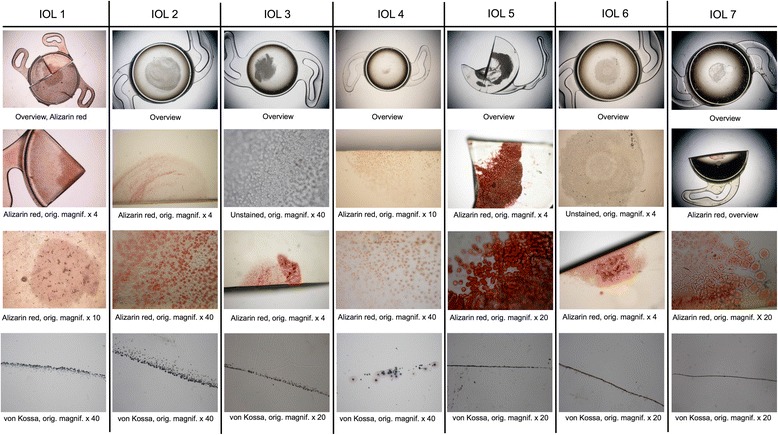
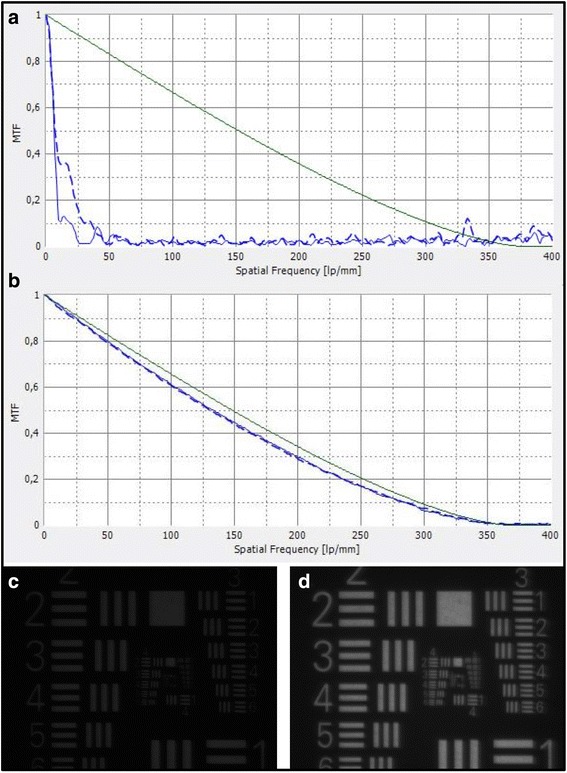
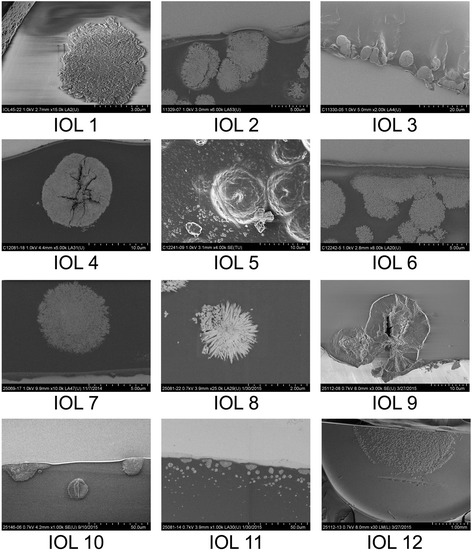
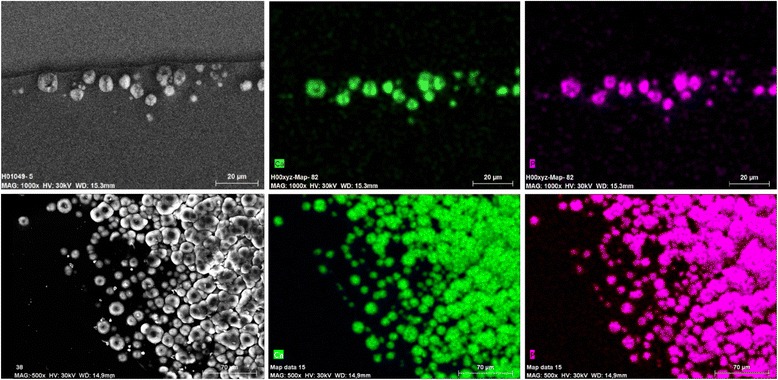
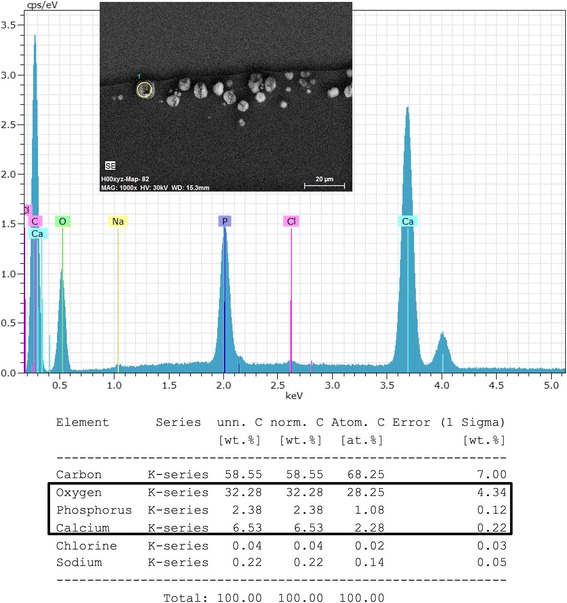
Thirteen opacified IOLs after posterior lamellar keratoplasty, 8 after descemet stripping automated endothelial keratoplasty (DSAEK), 3 after descemet membrane endothelial keratoplasty (DMEK) and 2 after both DSAEK and DMEK were analysed in our laboratory. Analyses included optical bench assessment for optical quality, light microscopy, scanning electron microscopy (SEM) and energy dispersive X-Ray spectroscopy (EDS).
In all IOLs the opacification was caused by a thin layer of calciumphosphate that had accumulated underneath the anterior optical surface of the IOLs in the area spared by the pupil/anterior capsulorhexis. The calcifications lead to a significant deterioration of the modulation transfer function across all spatial frequencies of the affected IOLs.
The instillation of exogenous material such as air or gas into the anterior chamber increases the risk for opacification of hydrophilic IOLs irrespective of the manufacturer or the exact composition of the hydrophilic lens material. It is recommended to avoid the use of hydrophilic acrylic IOLs in patients with endothelial dystrophy that will likely require procedures involving the intracameral instillation of air or gas, such as DMEK or DS(A)EK.
对后弹力层角膜移植术(DMEK和DSAEK)后出现具有临床意义混浊的亲水性人工晶状体(IOL)进行实验室分析和光学质量评估。
我们实验室分析了13枚后弹力层角膜移植术后混浊的IOL,其中8枚在剥脱性自动内皮角膜移植术(DSAEK)后混浊,3枚在Descemet膜内皮角膜移植术(DMEK)后混浊,2枚在DSAEK和DMEK术后均混浊。分析包括光学质量的光学平台评估、光学显微镜检查、扫描电子显微镜(SEM)和能量色散X射线光谱(EDS)。
在所有IOL中,混浊是由一层磷酸钙在IOL前光学表面下方瞳孔/前囊撕开所保留区域积聚所致。钙化导致受影响IOL在所有空间频率上的调制传递函数显著恶化。
向前房内注入空气或气体等外源性物质会增加亲水性IOL混浊的风险,无论制造商或亲水性晶状体材料的确切成分如何。建议在可能需要进行前房内注入空气或气体的手术(如DMEK或DS(A)EK)的内皮营养不良患者中避免使用亲水性丙烯酸IOL。