National Center for Clinical Laboratories, Institute of Geriatric Medicine, Chinese Academy of Medical Sciences, Beijing Hospital/National Center of Gerontology, Beijing, China.
Chinese Academy of Medical Sciences and Peking Union Medical College, Beijing, China.
BMC Pediatr. 2024 Jan 20;24(1):65. doi: 10.1186/s12887-024-04528-1.
To thoroughly evaluate the quality of the entire process of neonatal screening (NBS) in China.
We collected survey questionnaires from 54.4% (135/248) of NBS institutions in China and conducted on-site visits to 20 of these facilities to validate the data. The quality performance of the institutions was evaluated, and differences across various factors were analysed.
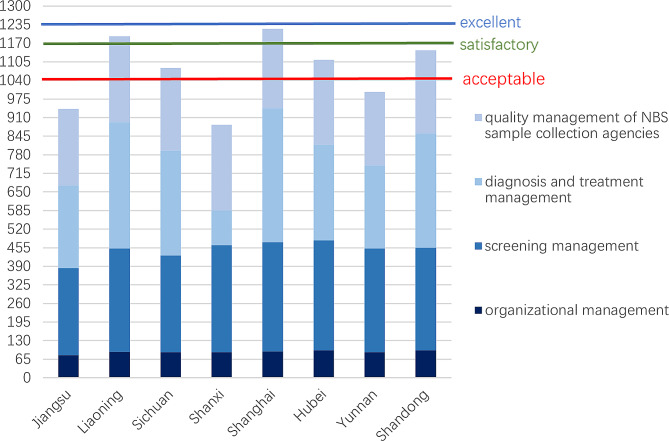
Merely 62.5% of the provinces had acceptable performance in neonatal screening. Institutions with limited staff were more prone to organizational management shortcomings. Institutions in provinces with a per capita GDP below 10,000 USD exhibited lower quality control levels than those with a per capita GDP between 10,000 and 15,000 USD. Obstetrics departments have a lower awareness of quality control compared to other blood collection facilities.
A nationwide, comprehensive quality control system for continuous enhancements in quality management, screening, diagnosis, and treatment is imperative to ensure prompt diagnosis and intervention.
全面评估中国新生儿筛查(NBS)全过程的质量。
我们收集了中国 54.4%(135/248)的 NBS 机构的调查问卷,并对其中 20 家机构进行了现场访问以验证数据。评估了机构的质量表现,并分析了不同因素之间的差异。
仅有 62.5%的省份在新生儿筛查方面表现出可接受的性能。人员有限的机构更容易出现组织管理方面的缺陷。人均 GDP 低于 10000 美元的省份的机构比人均 GDP 在 10000 至 15000 美元之间的机构的质量控制水平更低。与其他采血机构相比,妇产科部门对质量控制的认识较低。
需要建立一个全国性的、全面的质量控制系统,以不断加强质量管理、筛查、诊断和治疗,以确保及时诊断和干预。