Alshammari Sulaiman A, Almutairi Mohsen N, Alomar Mohammad O, Alsherif Ziyad M, Alsubaie Faisal H, Almezaini Abdulrahman I
Family and Community Medicine, King Saud University College of Medicine, Riyadh, SAU.
Cureus. 2023 Dec 20;15(12):e50840. doi: 10.7759/cureus.50840. eCollection 2023 Dec.
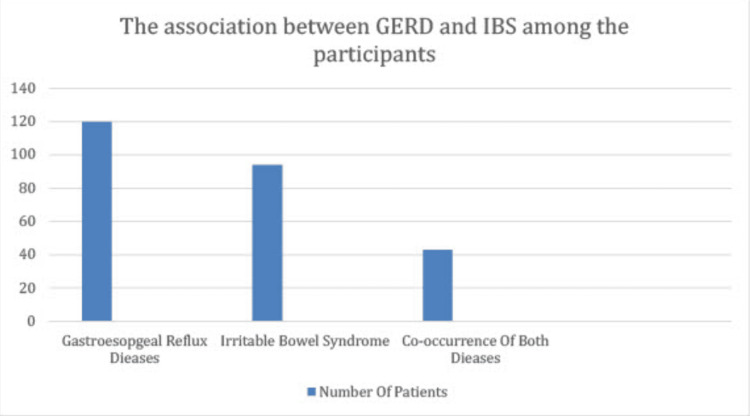
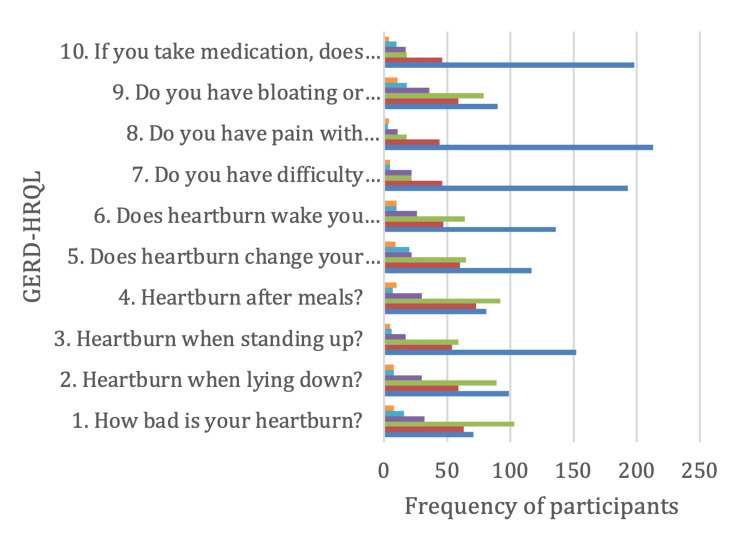
Background Gastroesophageal reflux disease (GERD) and irritable bowel syndrome (IBS) are common gastrointestinal disorders that can negatively affect quality of life and healthcare costs. The co-occurrence of these conditions can lead to more complex symptomatology and therapeutic challenges. Therefore, understanding the extent of overlap between GERD and IBS is paramount. This study aims to estimate the overlap between GERD and IBS in Saudi Arabia and its impact on quality of life. Methods Patients with GERD at primary care clinics at King Khalid University Hospital in Riyadh, Saudi Arabia, were the subjects of cross-sectional research. The patients were selected using a simple random sampling technique, and an electronic questionnaire was utilized to collect data. Symptoms of IBS were assessed based on Rome IV criteria, and quality of life was evaluated using the GERD quality of life tool. Results Of the 293 GERD patients, the prevalence of co-occurrence of IBS among GERD patients was 35.8%. The GERD health-related quality of life (GERD- HRQL) scores ranged from 0 to 50, with a median and interquartile range (IQR) of 14 (8.5-20). Those with GERD and IBS had a significantly higher GERD-HRQL score than the patients with GERD alone (11 vs. 9, p-value: 0.049). Furthermore, patients with GERD and IBS had a significantly higher GERD-HRQL score than the patients with IBS alone (15 vs. 11, p-value: 0.001). Of the total participants, 29.4% reported having abdominal pain in the last three months. The majority of the participants (55.6%) reported experiencing abdominal pain one to two times per week, while 22.2% reported experiencing it two to three days per month. Conclusion The high prevalence of IBS co-existence among GERD patients highlights the importance of considering both diseases in clinical practice to improve patient outcomes. The study also found that patients with both GERD and IBS had a significantly lower quality of life than those with GERD or IBS alone.
背景 胃食管反流病(GERD)和肠易激综合征(IBS)是常见的胃肠道疾病,会对生活质量和医疗费用产生负面影响。这些病症的共同出现会导致更复杂的症状和治疗挑战。因此,了解GERD和IBS之间的重叠程度至关重要。本研究旨在评估沙特阿拉伯GERD和IBS之间的重叠情况及其对生活质量的影响。方法 沙特阿拉伯利雅得国王哈立德大学医院初级保健诊所的GERD患者是横断面研究的对象。采用简单随机抽样技术选取患者,并使用电子问卷收集数据。根据罗马IV标准评估IBS症状,使用GERD生活质量工具评估生活质量。结果 在293例GERD患者中,GERD患者中IBS并存的患病率为35.8%。GERD健康相关生活质量(GERD-HRQL)评分范围为0至50,中位数和四分位间距(IQR)为14(8.5-20)。患有GERD和IBS的患者的GERD-HRQL评分显著高于仅患有GERD的患者(11对9,p值:0.049)。此外,患有GERD和IBS的患者的GERD-HRQL评分显著高于仅患有IBS的患者(15对11,p值:0.001)。在所有参与者中,29.4%报告在过去三个月内有腹痛。大多数参与者(55.6%)报告每周腹痛一至两次,而22.2%报告每月腹痛两至三天。结论 GERD患者中IBS并存的高患病率凸显了在临床实践中同时考虑这两种疾病以改善患者预后的重要性。研究还发现,同时患有GERD和IBS的患者的生活质量明显低于仅患有GERD或IBS的患者。