Zhu Huangtianzhi, Ronson Tanya K, Wu Kai, Nitschke Jonathan R
Yusuf Hamied Department of Chemistry, University of Cambridge, Lensfield Road, Cambridge CB2 1EW, U.K.
J Am Chem Soc. 2024 Jan 31;146(4):2370-2378. doi: 10.1021/jacs.3c09547. Epub 2024 Jan 22.
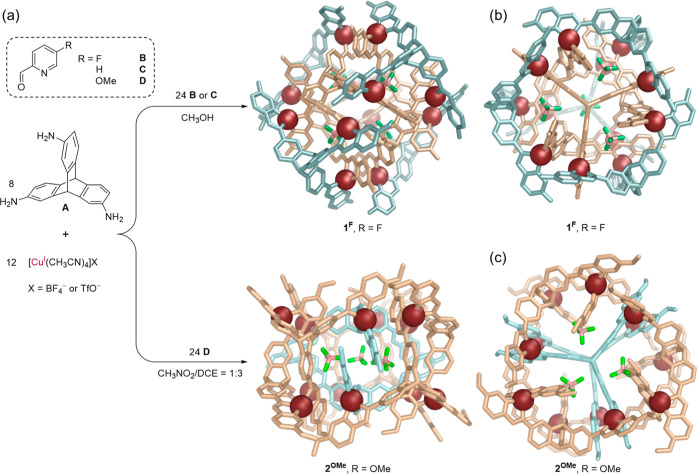
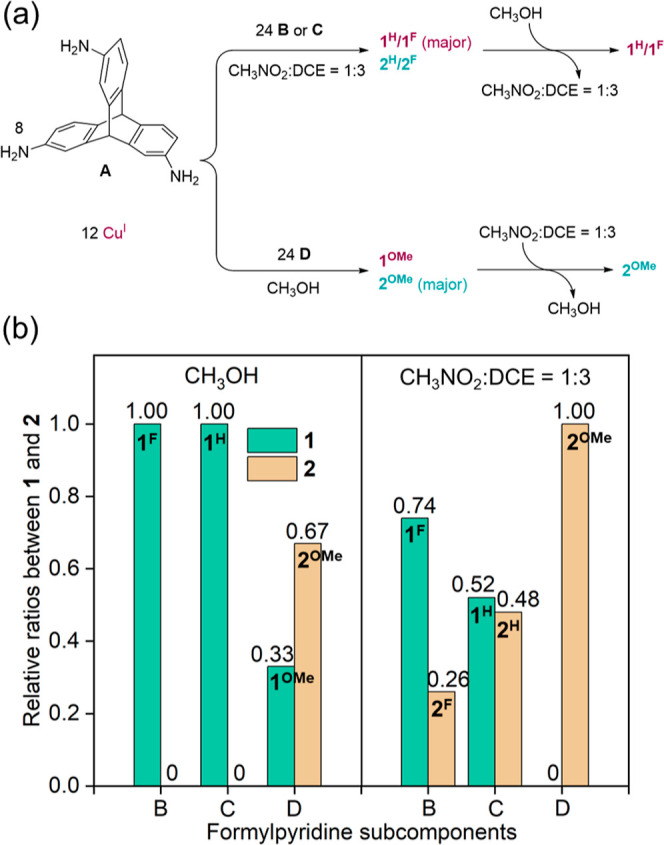
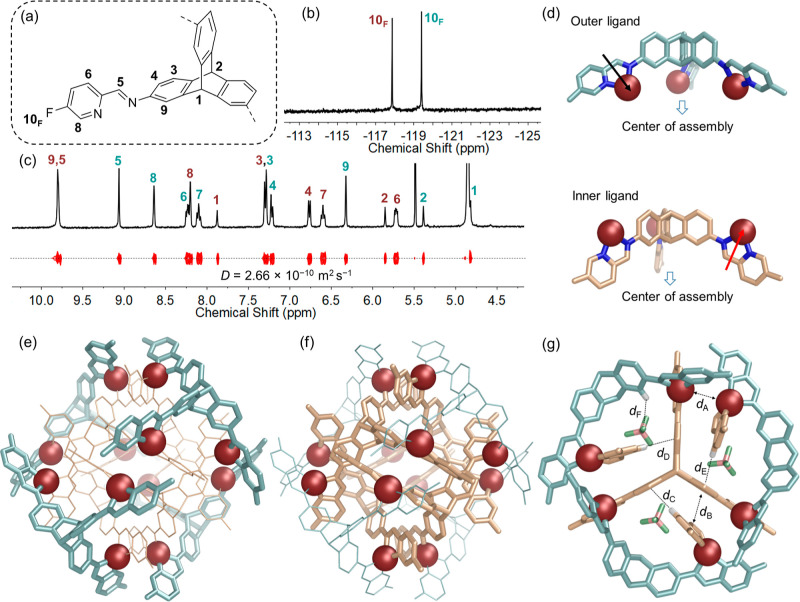
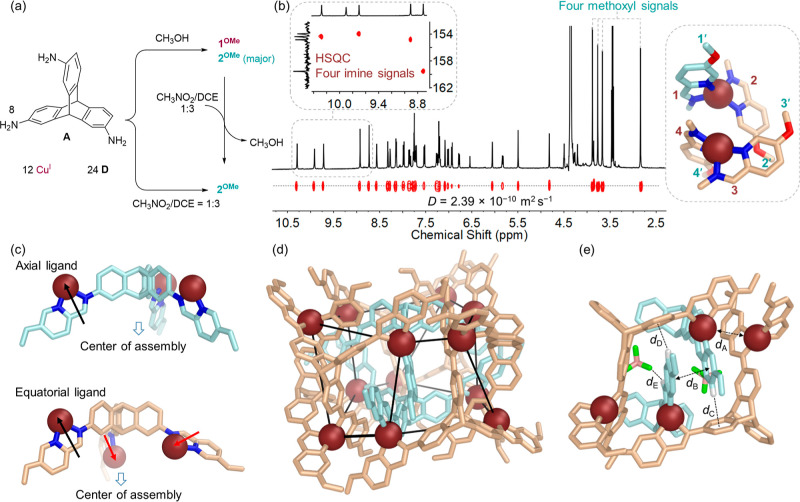
The use of copper(I) in metal-organic assemblies leads readily to the formation of simple grids and helicates, whereas higher-order structures require complex ligand designs. Here, we report the clean and selective syntheses of two complex and structurally distinct CuL frameworks, and , which assemble from the same simple triaminotriptycene subcomponent and a formylpyridine around the Cu templates. Both represent new structure types. In -symmetric , the copper(I) centers describe a pair of octahedra with a common center but whose vertices are offset from each other, whereas in -symmetric , the metal ions form a distorted hexagonal prism. The syntheses of these architectures illustrate how more intricate Cu-based complexes can be prepared via subcomponent self-assembly than has been possible to date through consideration of the interplay between the subcomponent geometry and solvent and electronic effects.
在金属有机组装体中使用一价铜很容易形成简单的网格和螺旋结构,而高阶结构则需要复杂的配体设计。在此,我们报告了两种复杂且结构不同的CuL框架 和 的纯净且选择性合成方法,它们由相同的简单三氨基三蝶烯子组件和甲酰基吡啶围绕铜模板组装而成。两者均代表新的结构类型。在对称的 中,一价铜中心描述了一对具有共同中心但其顶点相互偏移的八面体,而在对称的 中,金属离子形成一个扭曲的六棱柱。这些结构的合成说明了通过子组件自组装可以制备比迄今为止通过考虑子组件几何形状与溶剂和电子效应之间的相互作用所能制备的更为复杂的铜基配合物。