Inserm UMR1141 NeuroDiderot, Université Paris Cité, Paris, France.
Institut Cochin, Proteom'IC Facility, INSERM, CNRS, Université Paris Cité, Paris, France.
J Neuroinflammation. 2024 Jan 23;21(1):31. doi: 10.1186/s12974-024-03022-w.
The only validated treatment to prevent brain damage associated with hypoxia-ischemia (HI) encephalopathy of the newborn is controlled hypothermia with limited benefits. Additional putative neuroprotective drug candidates include sildenafil citrate, a phosphodiesterase-type 5 inhibitor. The main objective of this preclinical study is to assess its ability to reduce HI-induced neuroinflammation, in particular through its potential effect on microglial activation.
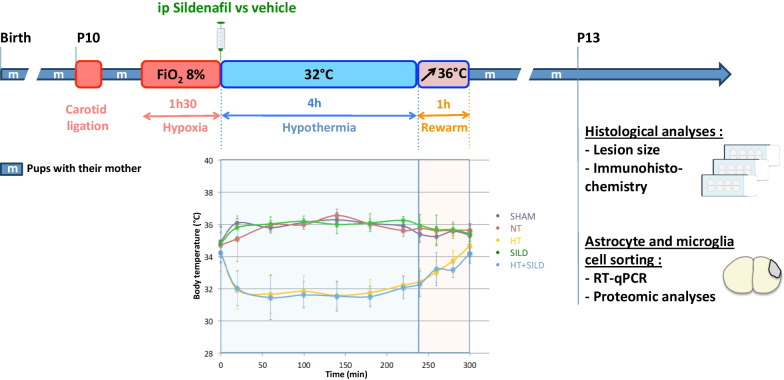
HI was induced in P10 Sprague-Dawley rats by unilateral carotid permanent artery occlusion and hypoxia (HI) and treated by either hypothermia (HT) alone, Sildenafil (Sild) alone or combined treatment (SildHT). Lesion size and glial activation were analyzed by immunohistochemistry, qRT-PCR, and proteomic analyses performed at P13.
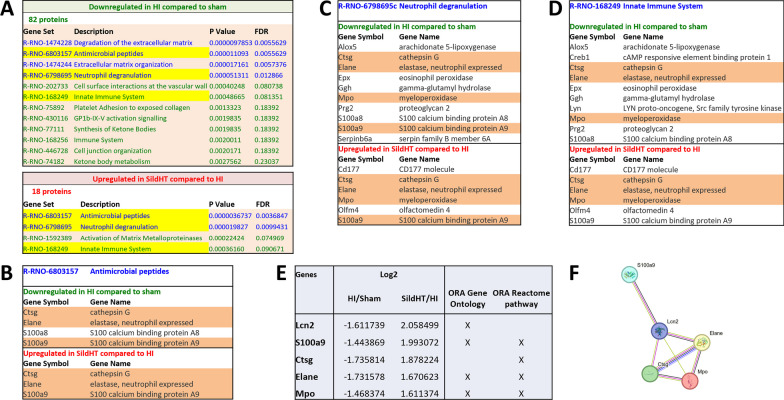
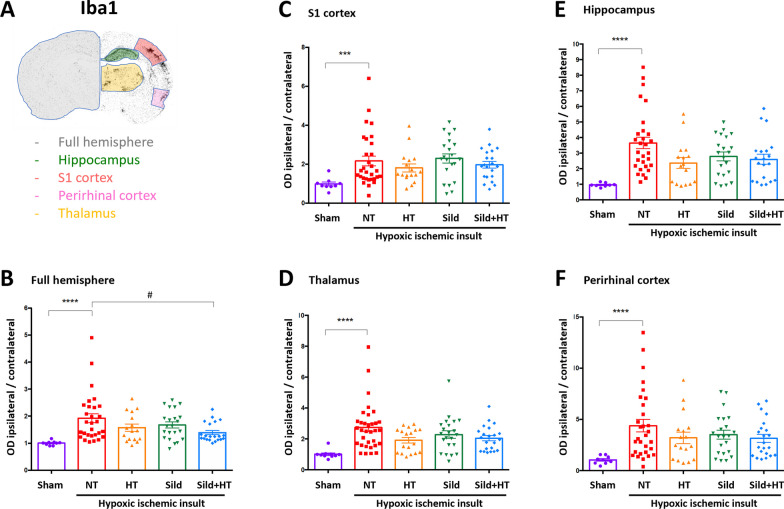
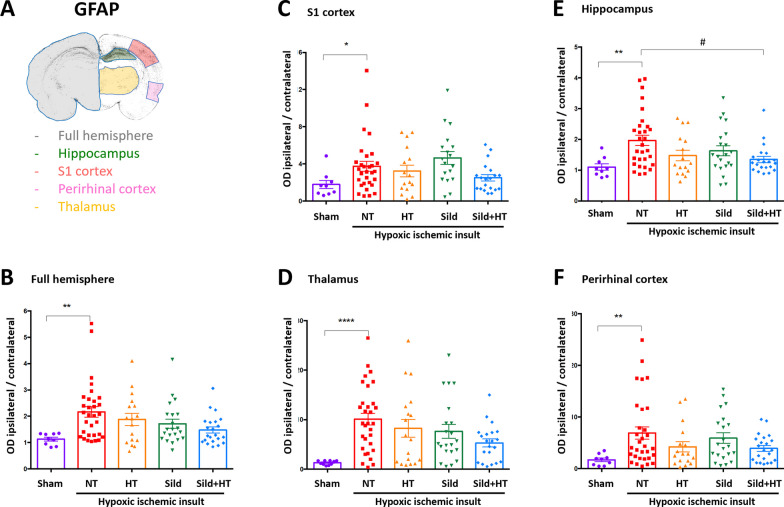
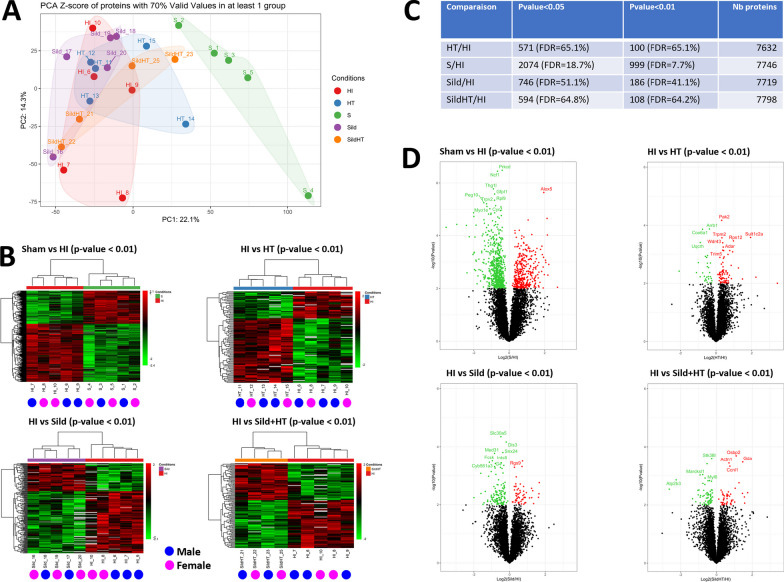
None of the treatments was associated with a significant early reduction in lesion size 72h after HI, despite significant changes in tissue loss distribution. Significant reductions in both Iba1 + (within the ipsilateral hemisphere) and GFAP + cells (within the ipsilateral hippocampus) were observed in SildHT group, but not in the other treatment groups. In microglia-sorted cells, pro-inflammatory markers, i.e. Il1b, Il6, Nos2, and CD86 were significantly downregulated in SildHT treatment group only. These changes were restricted to the ipsilateral hemisphere, were not evidenced in sorted astrocytes, and were not sex dependent. Proteomic analyses in sorted microglia refined the pro-inflammatory effect of HI and confirmed a biologically relevant impact of SildHT on specific molecular pathways including genes related to neutrophilic functions.
Our findings suggest that Sildenafil combined with controlled hypothermia produces maximum effect in mitigating microglial activation induced by HI through complex proteomic regulation. The reduction of neuroinflammation induced by Sildenafil may represent an interesting therapeutic strategy for neonatal neuroprotection.
目前唯一经过验证的可预防新生儿缺氧缺血性脑病(HI)相关脑损伤的治疗方法是控制体温降低,其疗效有限。其他潜在的神经保护候选药物包括西地那非枸橼酸盐,一种磷酸二酯酶 5 型抑制剂。本临床前研究的主要目的是评估其减轻 HI 诱导的神经炎症的能力,特别是通过其对小胶质细胞激活的潜在影响。
通过单侧颈总动脉永久结扎和缺氧(HI)诱导 P10 只斯普拉格-道利大鼠产生 HI,并分别采用单独低温治疗(HT)、西地那非(Sild)治疗或联合治疗(SildHT)进行治疗。在 P13 时通过免疫组织化学、qRT-PCR 和蛋白质组学分析评估损伤大小和神经胶质激活。
尽管组织丢失分布发生了显著变化,但 HI 后 72 小时内,三种治疗方法均未与病变体积的显著早期减少相关。在 SildHT 组中观察到同侧半球内 Iba1+(同侧半球内)和 GFAP+(同侧海马内)细胞的显著减少,但在其他治疗组中则没有。在小胶质细胞分选细胞中,仅在 SildHT 治疗组中,促炎标志物 Il1b、Il6、Nos2 和 CD86 显著下调。这些变化仅限于同侧半球,在分选星形胶质细胞中未得到证实,并且与性别无关。在分选小胶质细胞中的蛋白质组学分析细化了 HI 的促炎作用,并证实了 SildHT 对特定分子途径的生物学相关影响,包括与中性粒细胞功能相关的基因。
我们的研究结果表明,西地那非联合控制体温降低可通过复杂的蛋白质组学调节,最大程度地减轻 HI 诱导的小胶质细胞激活。西地那非诱导的神经炎症减少可能代表新生儿神经保护的一种有趣的治疗策略。