Li Gaofei, Sun Yicong, Kwok Immanuel, Yang Liting, Wen Wanying, Huang Peixian, Wu Mei, Li Jing, Huang Zhibin, Liu Zhaoyuan, He Shuai, Peng Wan, Bei Jin-Xin, Ginhoux Florent, Ng Lai Guan, Zhang Yiyue
Department of Hematology, the Second Affiliated Hospital, School of Medicine, South China University of Technology, Guangzhou, 510006, P.R. China.
Innovation Centre of Ministry of Education for Development and Diseases, School of Medicine, South China University of Technology, Guangzhou, 510006, P.R. China.
Nat Commun. 2024 Jan 27;15(1):811. doi: 10.1038/s41467-024-45029-0.
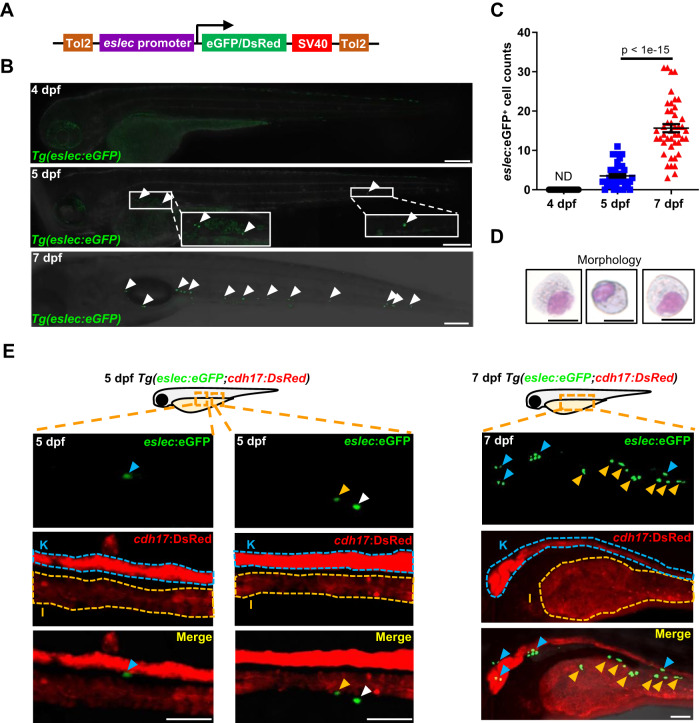
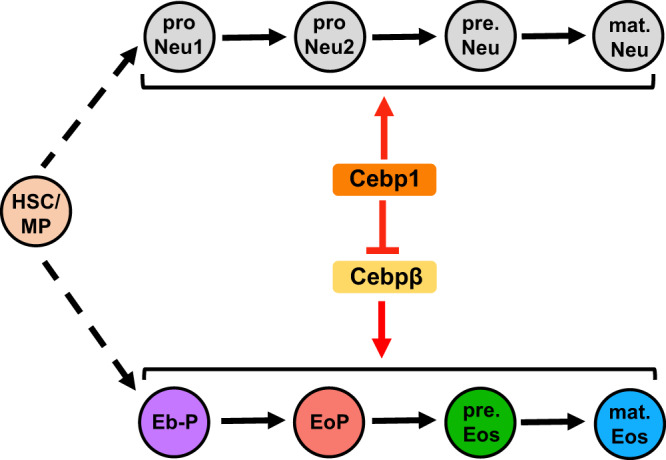
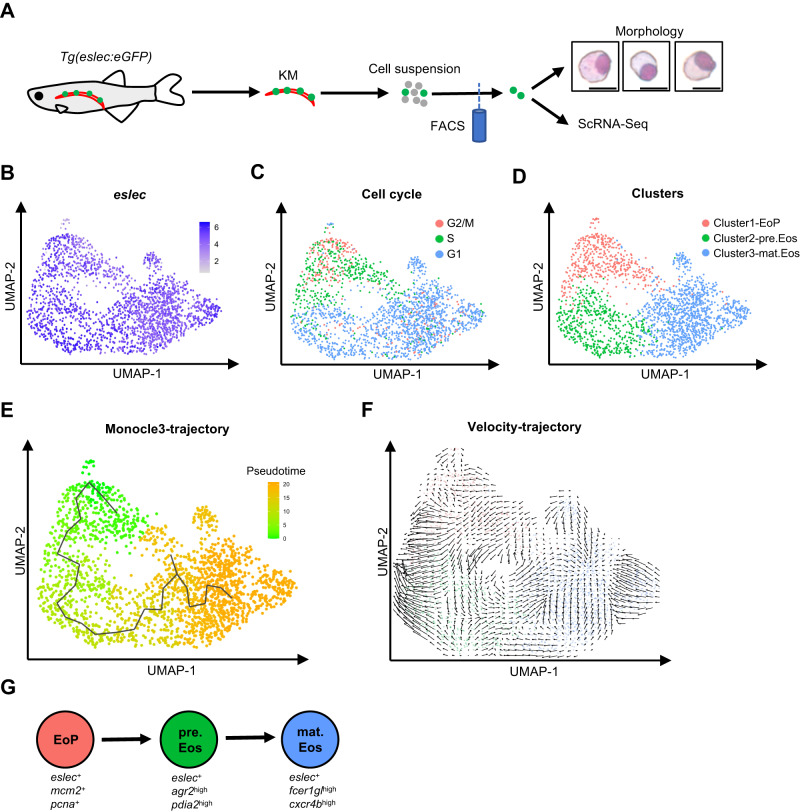
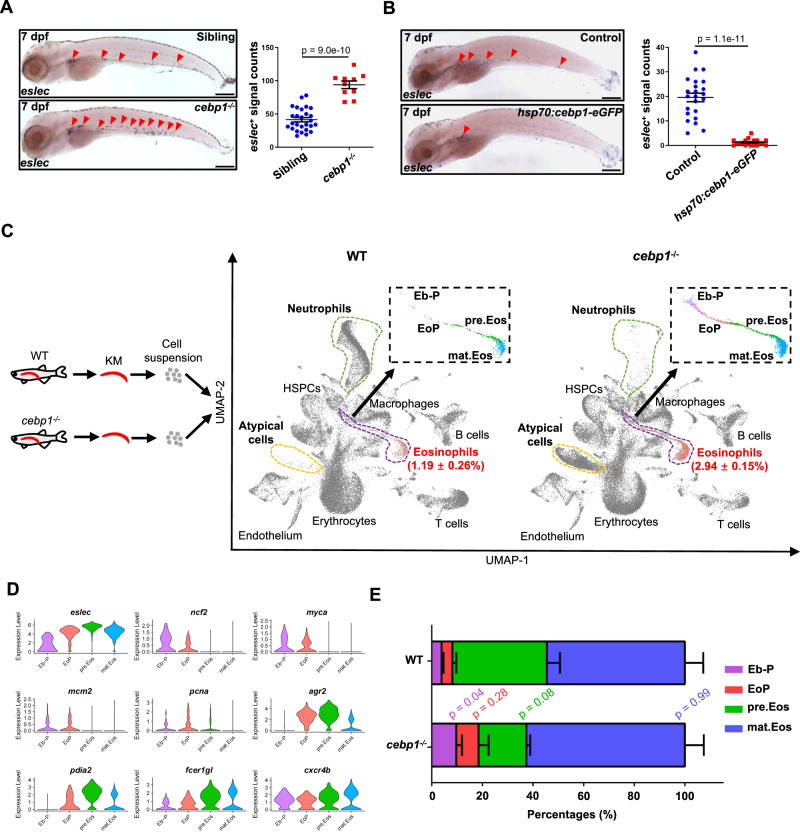
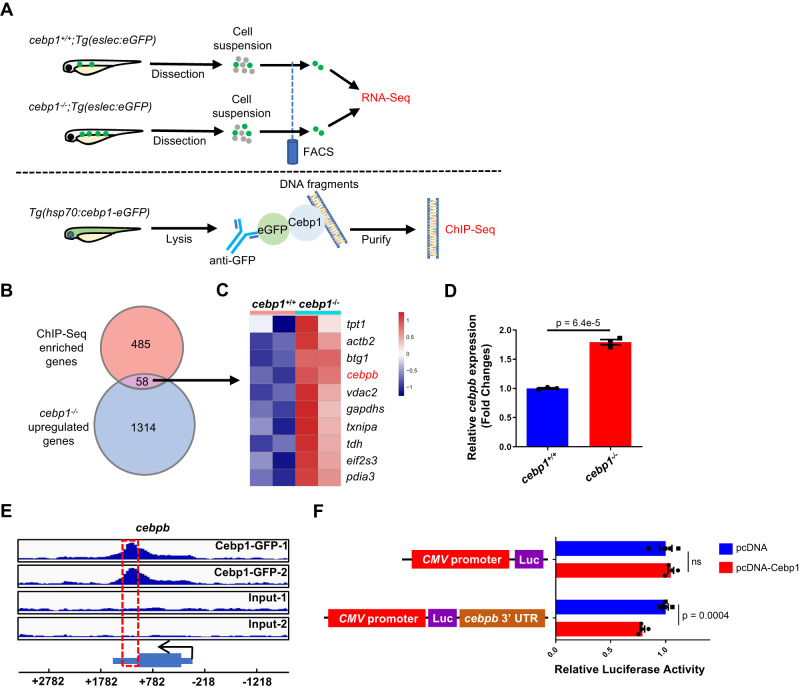
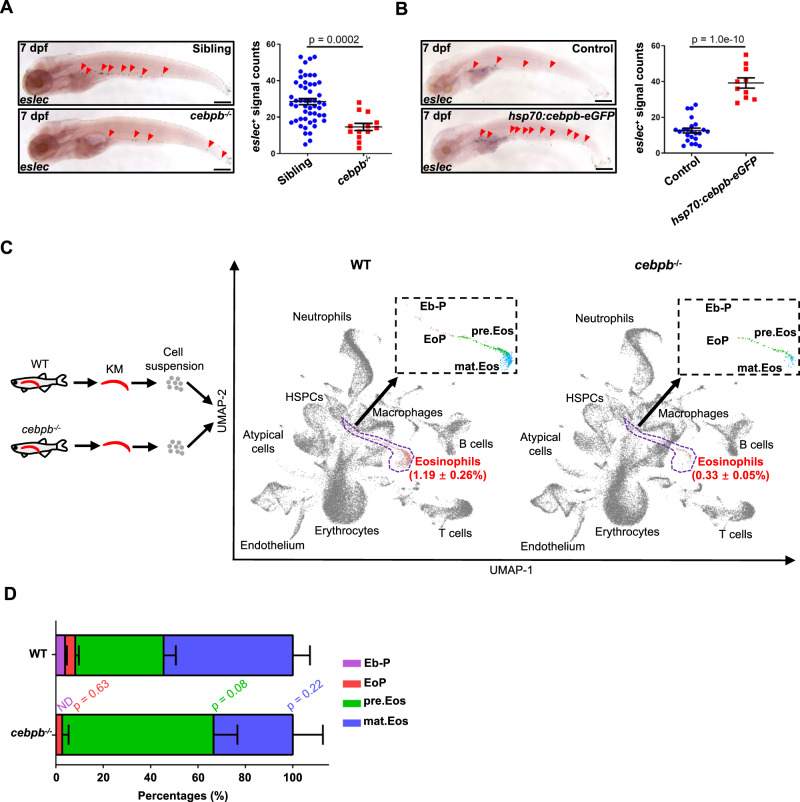
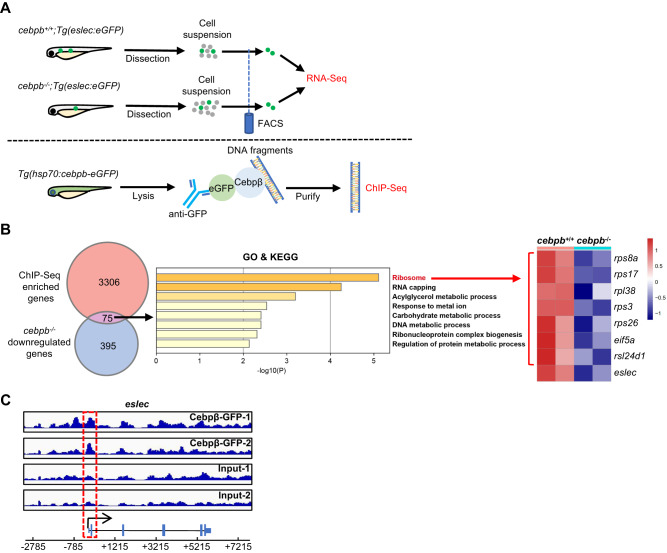
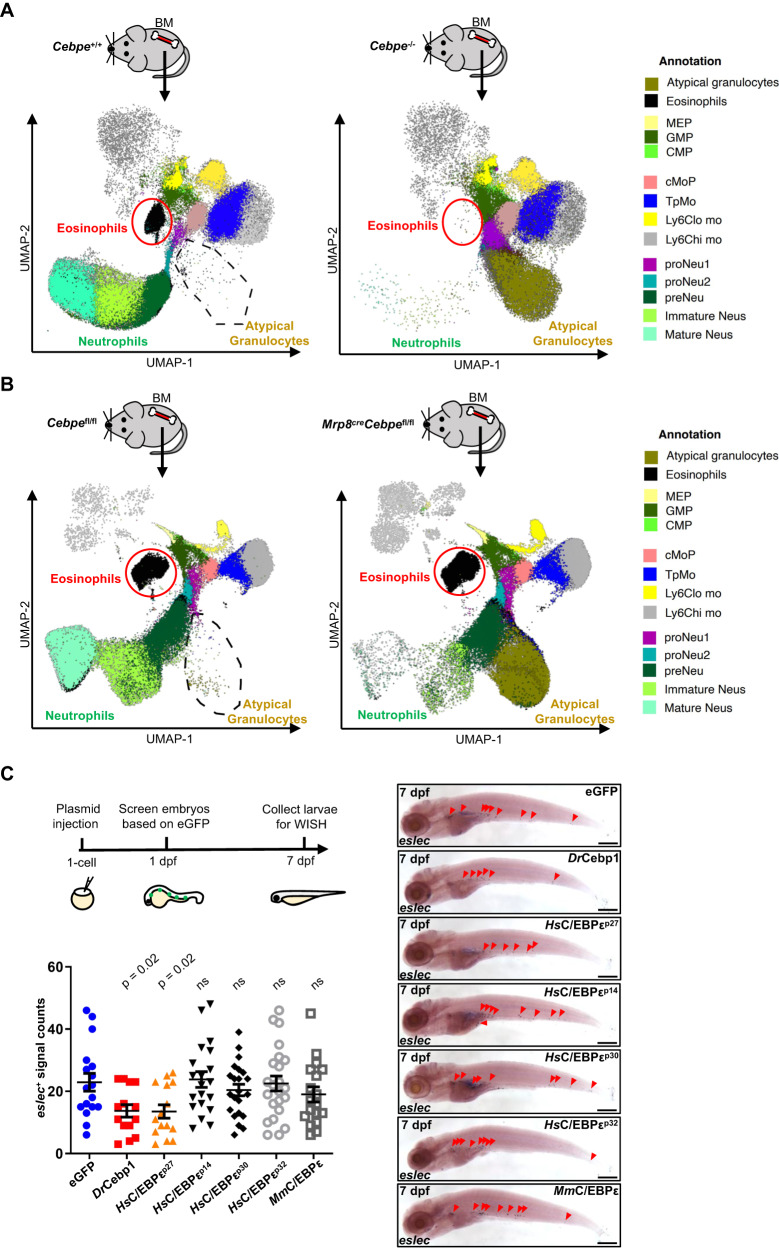
Eosinophils are a group of granulocytes well known for their capacity to protect the host from parasites and regulate immune function. Diverse biological roles for eosinophils have been increasingly identified, but the developmental pattern and regulation of the eosinophil lineage remain largely unknown. Herein, we utilize the zebrafish model to analyze eosinophilic cell differentiation, distribution, and regulation. By identifying eslec as an eosinophil lineage-specific marker, we establish a Tg(eslec:eGFP) reporter line, which specifically labeled cells of the eosinophil lineage from early life through adulthood. Spatial-temporal analysis of eslec cells demonstrates their organ distribution from larval stage to adulthood. By single-cell RNA-Seq analysis, we decipher the eosinophil lineage cells from lineage-committed progenitors to mature eosinophils. Through further genetic analysis, we demonstrate the role of Cebp1 in balancing neutrophil and eosinophil lineages, and a Cebp1-Cebpβ transcriptional axis that regulates the commitment and differentiation of the eosinophil lineage. Cross-species functional comparisons reveals that zebrafish Cebp1 is the functional orthologue of human C/EBPε in suppressing eosinophilopoiesis. Our study characterizes eosinophil development in multiple dimensions including spatial-temporal patterns, expression profiles, and genetic regulators, providing for a better understanding of eosinophilopoiesis.
嗜酸性粒细胞是一类粒细胞,以其保护宿主免受寄生虫侵害和调节免疫功能的能力而闻名。嗜酸性粒细胞的多种生物学作用已被越来越多地发现,但其发育模式和嗜酸性粒细胞谱系的调控仍很大程度上未知。在此,我们利用斑马鱼模型来分析嗜酸性粒细胞的分化、分布和调控。通过鉴定eslec作为嗜酸性粒细胞谱系特异性标志物,我们建立了Tg(eslec:eGFP)报告系,该系从生命早期到成年期特异性标记嗜酸性粒细胞谱系的细胞。对eslec细胞的时空分析显示了它们从幼虫阶段到成年期的器官分布。通过单细胞RNA测序分析,我们解析了从谱系定向祖细胞到成熟嗜酸性粒细胞的嗜酸性粒细胞谱系细胞。通过进一步的遗传分析,我们证明了Cebp1在平衡中性粒细胞和嗜酸性粒细胞谱系中的作用,以及一个调节嗜酸性粒细胞谱系定向和分化的Cebp1-Cebpβ转录轴。跨物种功能比较表明,斑马鱼Cebp1是人类C/EBPε在抑制嗜酸性粒细胞生成中的功能同源物。我们的研究从时空模式、表达谱和遗传调控因子等多个维度对嗜酸性粒细胞发育进行了表征,有助于更好地理解嗜酸性粒细胞生成。