Division of Regulatory Glycobiology, Institute of Molecular Biomembrane and Glycobiology, Tohoku Medical and Pharmaceutical University, Sendai, Miyagi, Japan.
Division of Bioanalytical Chemistry, Tohoku Medical and Pharmaceutical University, Sendai, Miyagi, Japan.
Cancer Sci. 2024 Apr;115(4):1196-1208. doi: 10.1111/cas.16090. Epub 2024 Jan 30.
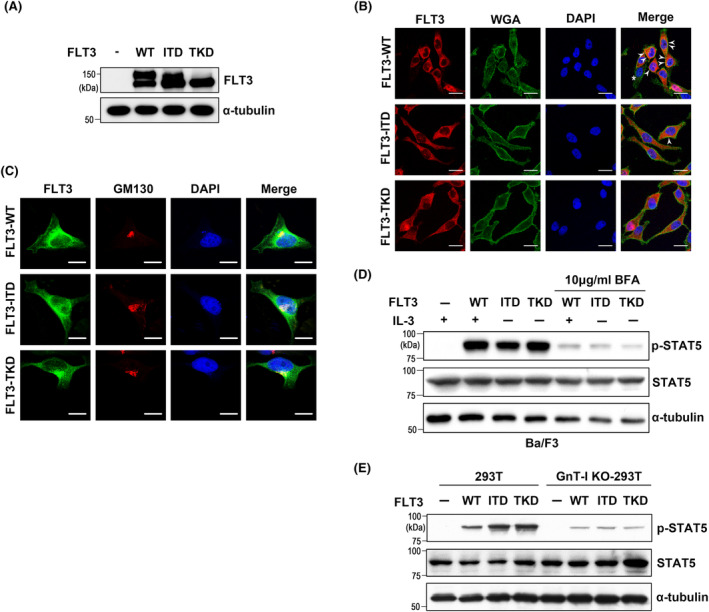
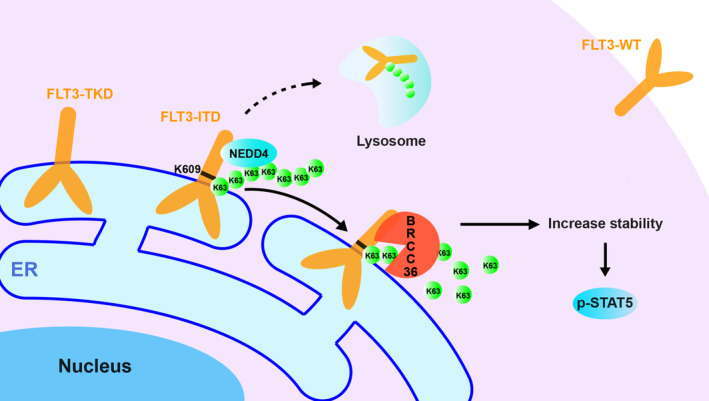
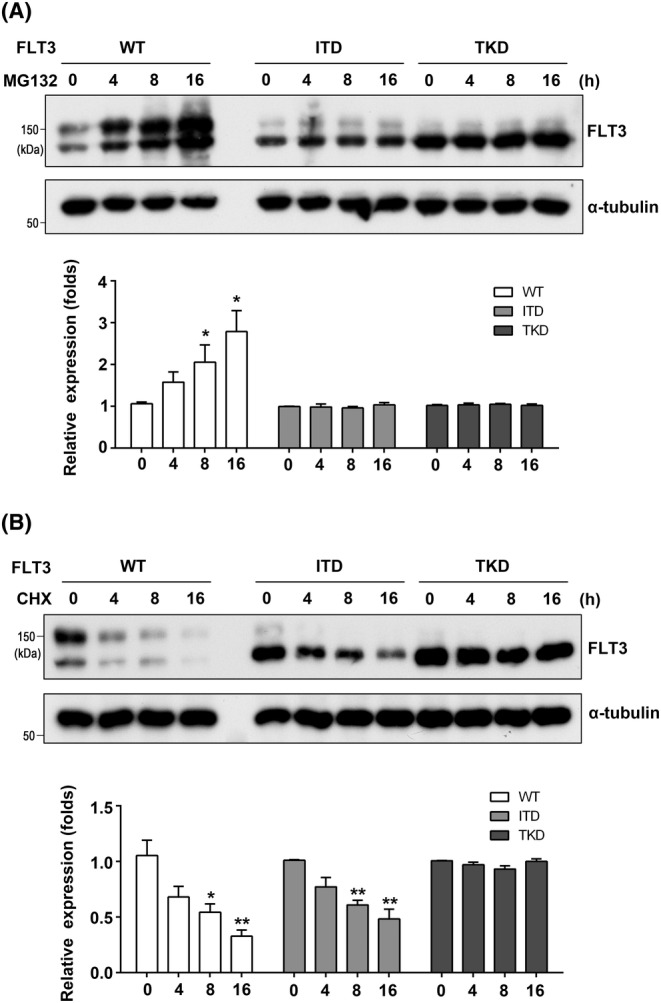
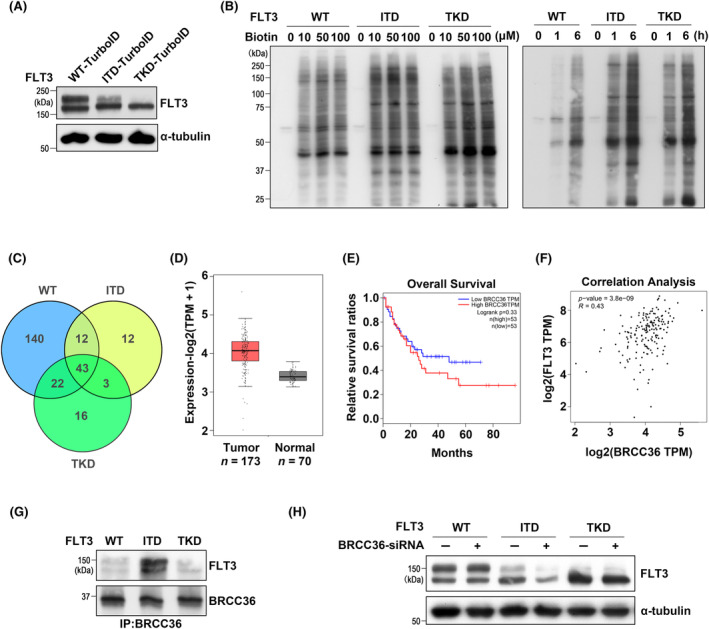
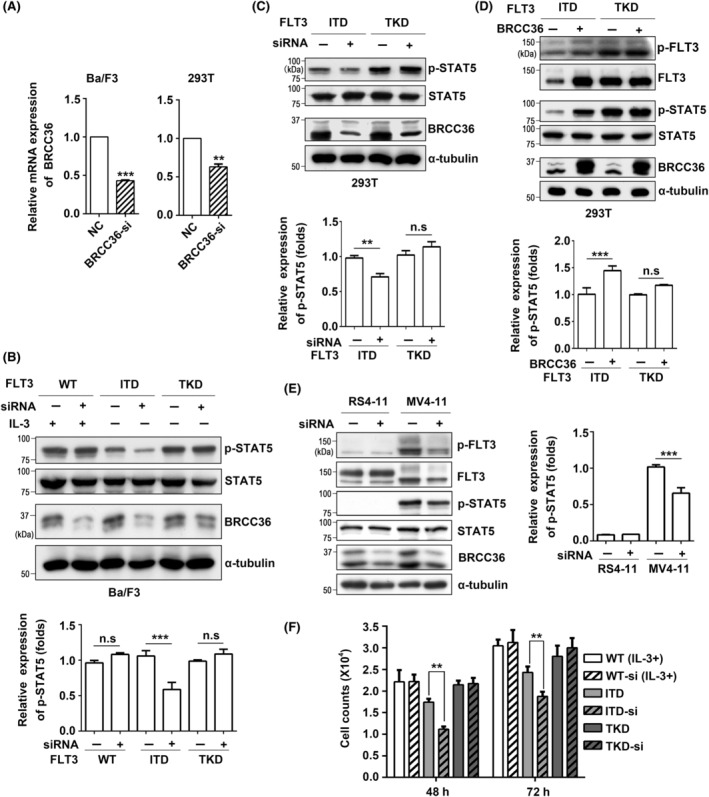
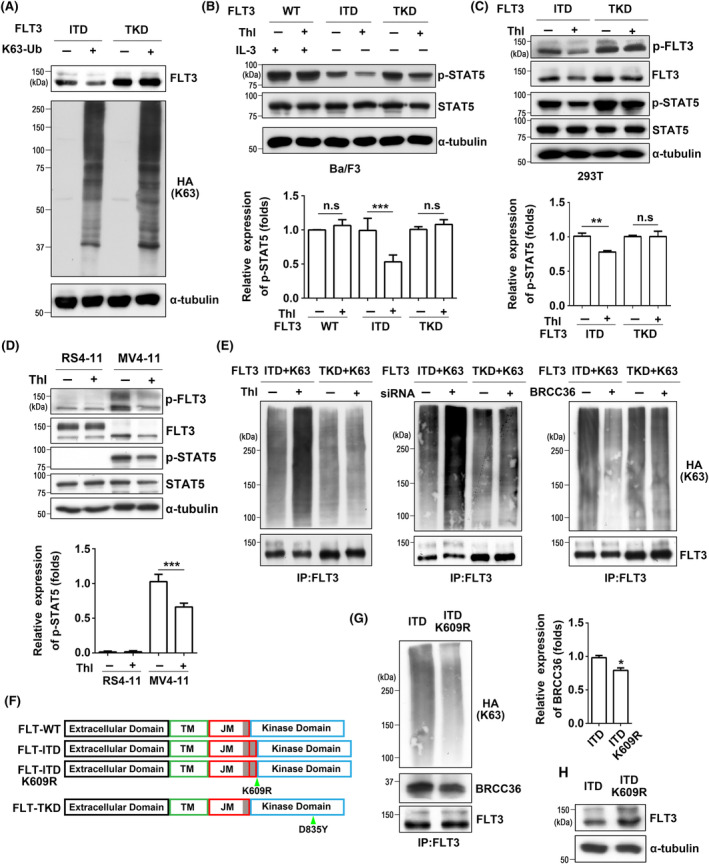
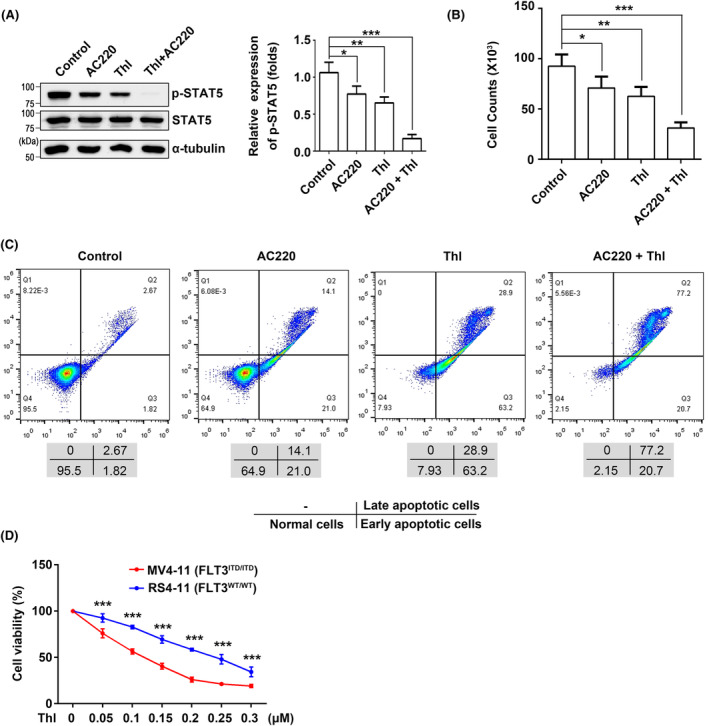
Fms-like tyrosine kinase-3 (FLT3) is a commonly mutated gene in acute myeloid leukemia (AML). The two most common mutations are the internal-tandem duplication domain (ITD) mutation and the tyrosine kinase domain (TKD) mutation. FLT3-ITD and FLT3-TKD exhibit distinct protein stability, cellular localization, and intracellular signaling. To understand the underlying mechanisms, we performed proximity labeling with TurboID to identify proteins that regulate FLT3-ITD or -TKD differently. We found that BRCA1/BRCA2-containing complex subunit 36 (BRCC36), a specific K63-linked polyubiquitin deubiquitinase, was exclusively associated with ITD, not the wild type of FLT3 and TKD. Knockdown of BRCC36 resulted in decreased signal transducers and activators of transcription 5 phosphorylation and cell proliferation in ITD cells. Consistently, treatment with thiolutin, an inhibitor of BRCC36, specifically suppressed cell proliferation and induced cell apoptosis in ITD cells. Thiolutin efficiently affected leukemia cell lines expressing FLT3-ITD cell viability and exhibited mutual synergies with quizartinib, a standard clinical medicine for AML. Furthermore, mutation of the lysine at 609 of ITD led to significant suppression of K63 polyubiquitination and decreased its stability, suggesting that K609 is a critical site for K63 ubiquitination specifically recognized by BRCC36. These data indicate that BRCC36 is a specific regulator for FLT3-ITD, which may shed light on developing a novel therapeutic approach for AML.
Fms 样酪氨酸激酶-3(FLT3)是急性髓系白血病(AML)中常见的突变基因。最常见的两种突变是内部串联重复结构域(ITD)突变和酪氨酸激酶结构域(TKD)突变。FLT3-ITD 和 FLT3-TKD 表现出不同的蛋白稳定性、细胞定位和细胞内信号转导。为了了解潜在的机制,我们使用 TurboID 进行了邻近标记,以鉴定出不同调节 FLT3-ITD 或 -TKD 的蛋白质。我们发现,BRCA1/BRCA2 包含复合物亚基 36(BRCC36),一种特异性 K63 连接多泛素连接酶,仅与 ITD 相关,而与野生型 FLT3 和 TKD 无关。BRCC36 的敲低导致 ITD 细胞中转录激活物 5 的磷酸化和细胞增殖减少。一致地,BRCC36 的抑制剂硫氧还蛋白,特异性地抑制了 ITD 细胞的增殖并诱导了细胞凋亡。硫氧还蛋白有效地影响表达 FLT3-ITD 的白血病细胞系的活力,并与 AML 的标准临床药物 quizartinib 表现出相互协同作用。此外,ITD 中赖氨酸 609 的突变导致 K63 多泛素化的显著抑制和其稳定性降低,表明 K609 是 BRCC36 特异性识别的 K63 泛素化的关键位点。这些数据表明 BRCC36 是 FLT3-ITD 的特异性调节剂,这可能为开发 AML 的新型治疗方法提供思路。