Hara Takeshi, Sakanaka Akito, Lamont Richard J, Amano Atsuo, Kuboniwa Masae
Graduate School of Pharmaceutical Sciences, Osaka University, Osaka, Japan.
Advanced Technology Institute, Mandom Corporation, Osaka, Japan.
mSystems. 2024 Feb 20;9(2):e0076423. doi: 10.1128/msystems.00764-23. Epub 2024 Jan 30.
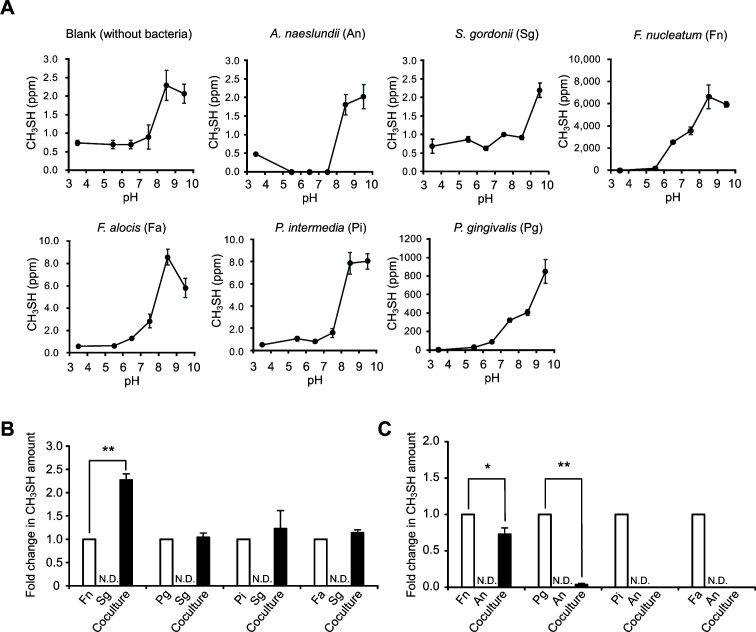
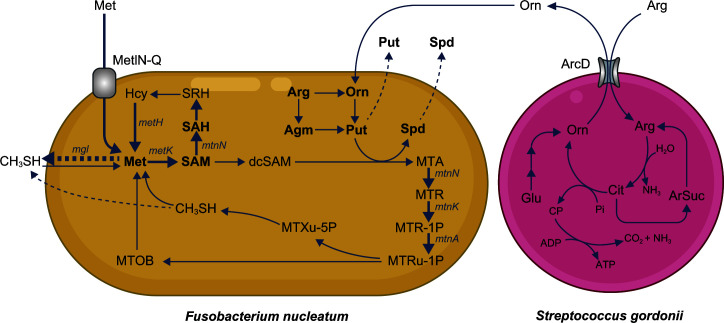
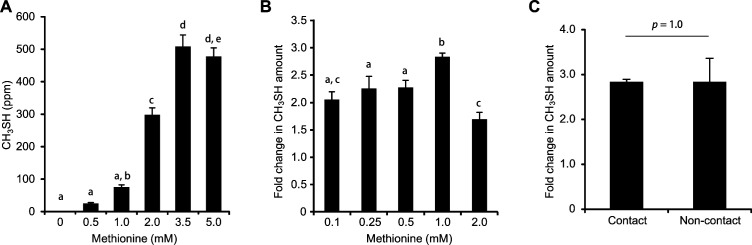
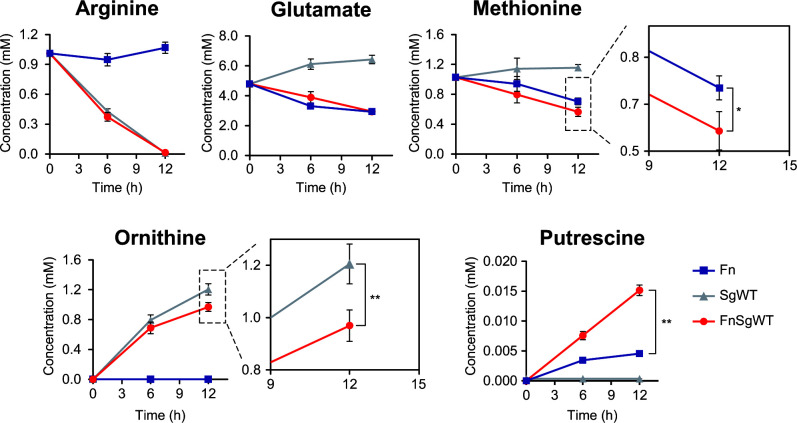
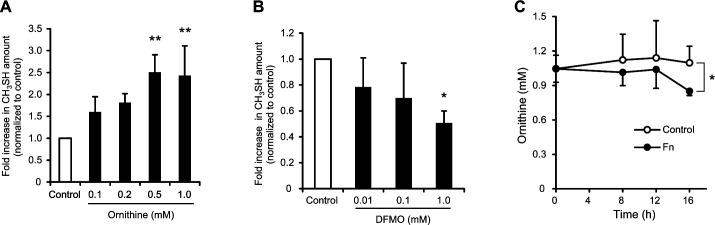
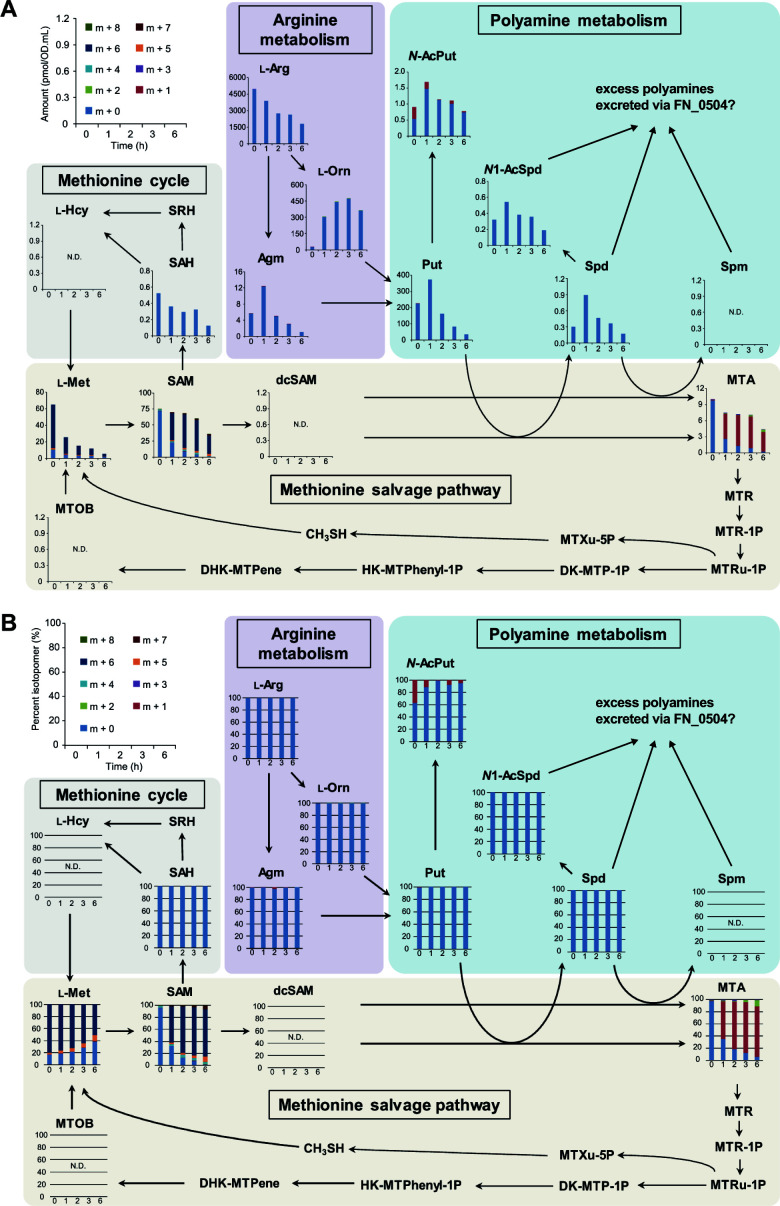
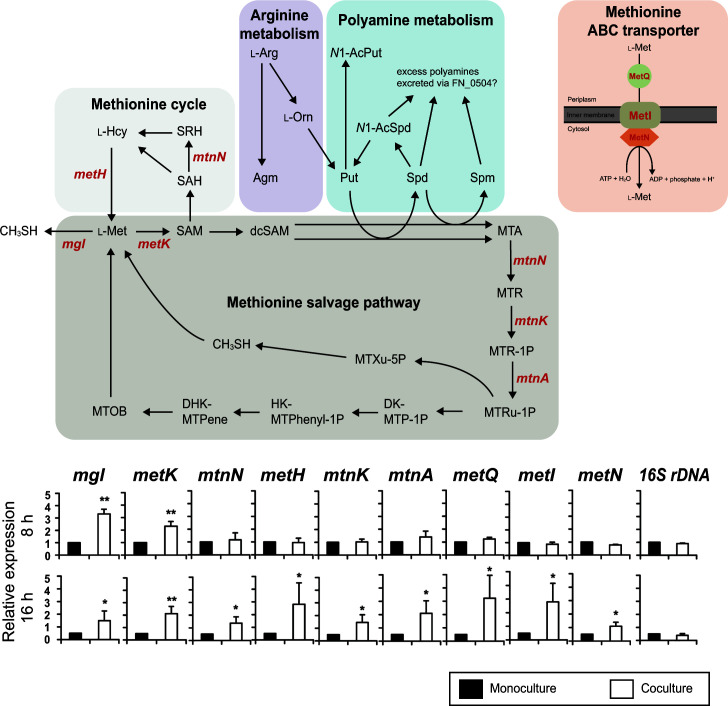
The major oral odor compound methyl mercaptan (CHSH) is strongly associated with halitosis and periodontitis. CHSH production stems from the metabolism of polymicrobial communities in periodontal pockets and on the tongue dorsum. However, understanding of CHSH-producing oral bacteria and their interactions is limited. This study aimed to investigate CHSH production by major oral bacteria and the impact of interspecies interactions on its generation. Using a newly constructed large-volume anaerobic noncontact coculture system, was found to be a potent producer of CHSH, with that production stimulated by metabolic interactions with , an early dental plaque colonizer. Furthermore, analysis of extracellular amino acids using an arginine-ornithine antiporter (ArcD) mutant demonstrated that ornithine excreted from is a key contributor to increased CHSH production by . Further study with C, N-methionine, as well as gene expression analysis, revealed that ornithine secreted by increased the demand for methionine through accelerated polyamine synthesis by , leading to elevated methionine pathway activity and CHSH production. Collectively, these findings suggest that interaction between and plays a key role in CHSH production, providing a new insight into the mechanism of CHSH generation in oral microbial communities. A better understanding of the underlying interactions among oral bacteria involved in CHSH generation can lead to the development of more appropriate prophylactic approaches to treat halitosis and periodontitis. An intervention approach like selectively disrupting this interspecies network could also offer a powerful therapeutic strategy.IMPORTANCEHalitosis can have a significant impact on the social life of affected individuals. Among oral odor compounds, CHSH has a low olfactory threshold and halitosis is a result of its production. Recently, there has been a growing interest in the collective properties of oral polymicrobial communities, regarded as important for the development of oral diseases, which are shaped by physical and metabolic interactions among community participants. However, it has yet to be investigated whether interspecies interactions have an impact on the production of volatile compounds, leading to the development of halitosis. The present findings provide mechanistic insights indicating that ornithine, a metabolite excreted by , promotes polyamine synthesis by , resulting in a compensatory increase in demand for methionine, which results in elevated methionine pathway activity and CHSH production. Elucidation of the mechanisms related to CHSH production is expected to lead to the development of new strategies for managing halitosis.
主要的口腔异味化合物甲硫醇(CH₃SH)与口臭和牙周炎密切相关。甲硫醇的产生源于牙周袋和舌背微生物群落的代谢。然而,对产生甲硫醇的口腔细菌及其相互作用的了解有限。本研究旨在调查主要口腔细菌产生甲硫醇的情况以及种间相互作用对其产生的影响。使用新构建的大容量厌氧非接触共培养系统,发现[具体细菌名称1]是甲硫醇的高效生产者,与早期牙菌斑定植菌[具体细菌名称2]的代谢相互作用刺激了其甲硫醇的产生。此外,使用精氨酸 - 鸟氨酸反向转运体(ArcD)突变体对细胞外氨基酸进行分析表明,[具体细菌名称2]分泌的鸟氨酸是[具体细菌名称1]甲硫醇产量增加的关键因素。用¹³C、N - 甲硫氨酸进行的进一步研究以及基因表达分析表明,[具体细菌名称2]分泌的鸟氨酸通过加速[具体细菌名称1]的多胺合成增加了对甲硫氨酸的需求,导致甲硫氨酸途径活性升高和甲硫醇产量增加。总体而言,这些发现表明[具体细菌名称1]和[具体细菌名称2]之间的相互作用在甲硫醇产生中起关键作用,为口腔微生物群落中甲硫醇产生机制提供了新的见解。更好地理解参与甲硫醇产生的口腔细菌之间的潜在相互作用,可导致开发更合适的预防方法来治疗口臭和牙周炎。像选择性破坏这种种间网络这样的干预方法也可能提供一种强大的治疗策略。
重要性
口臭会对受影响个体的社交生活产生重大影响。在口腔异味化合物中,甲硫醇的嗅觉阈值较低,口臭是其产生的结果。最近,人们对口腔微生物群落的集体特性越来越感兴趣,这些特性被认为对口腔疾病的发展很重要,它们是由群落参与者之间的物理和代谢相互作用形成的。然而,种间相互作用是否会影响挥发性化合物的产生从而导致口臭的发生尚未得到研究。目前的研究结果提供了机制性见解,表明[具体细菌名称2]分泌的代谢物鸟氨酸促进了[具体细菌名称1]的多胺合成,导致对甲硫氨酸的需求补偿性增加,从而导致甲硫氨酸途径活性升高和甲硫醇产量增加。阐明与甲硫醇产生相关的机制有望导致开发治疗口臭的新策略。