Deptartment of Paediatrics, University of PA Perelman School of Medicine, Philadelphia, PA, USA.
Division of Cardiology, Children's Hospital of Philadelphia, Philadelphia, PA, USA.
Ann Hum Biol. 2024 Feb;51(1):2298474. doi: 10.1080/03014460.2023.2298474. Epub 2024 Jan 22.
Lack of paediatric reference data limits the utility of handgrip strength as a measure of fitness and well-being.
To develop paediatric handgrip reference curves and evaluate associations with body size and composition and race/ethnicity group.
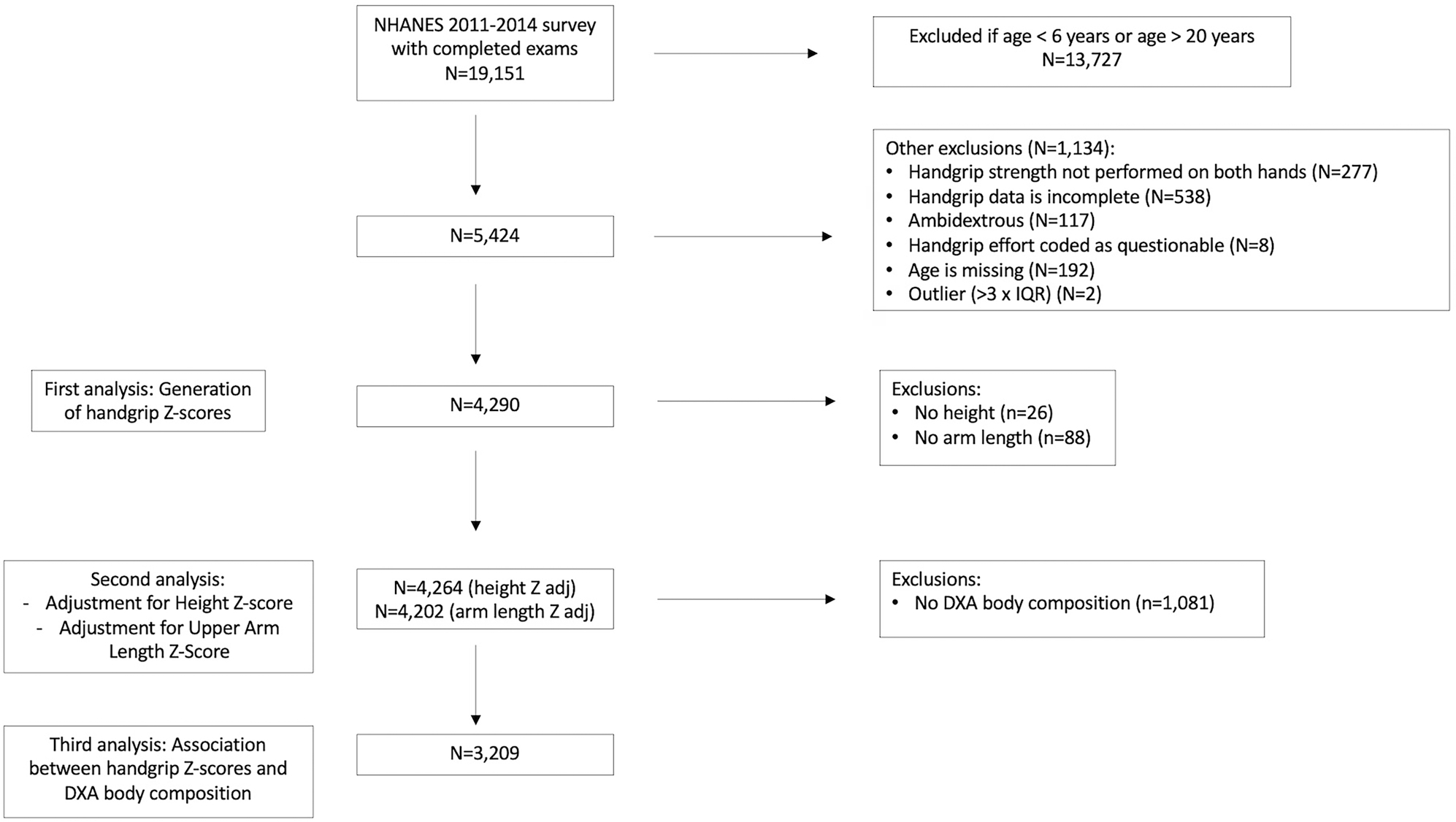
Handgrip, body size and composition data were obtained from National Health and Nutrition Examination Survey 2011-2014 participants aged 6-20 years. Densitometry-derived fat and appendicular lean soft tissue mass index Z-scores (FMIZ, ALSTMIZ) were generated in participants >8 years. Dominant and non-dominant handgrip reference curves were created using the LMS method. Analyses included sample weights to produce nationally representative estimates.
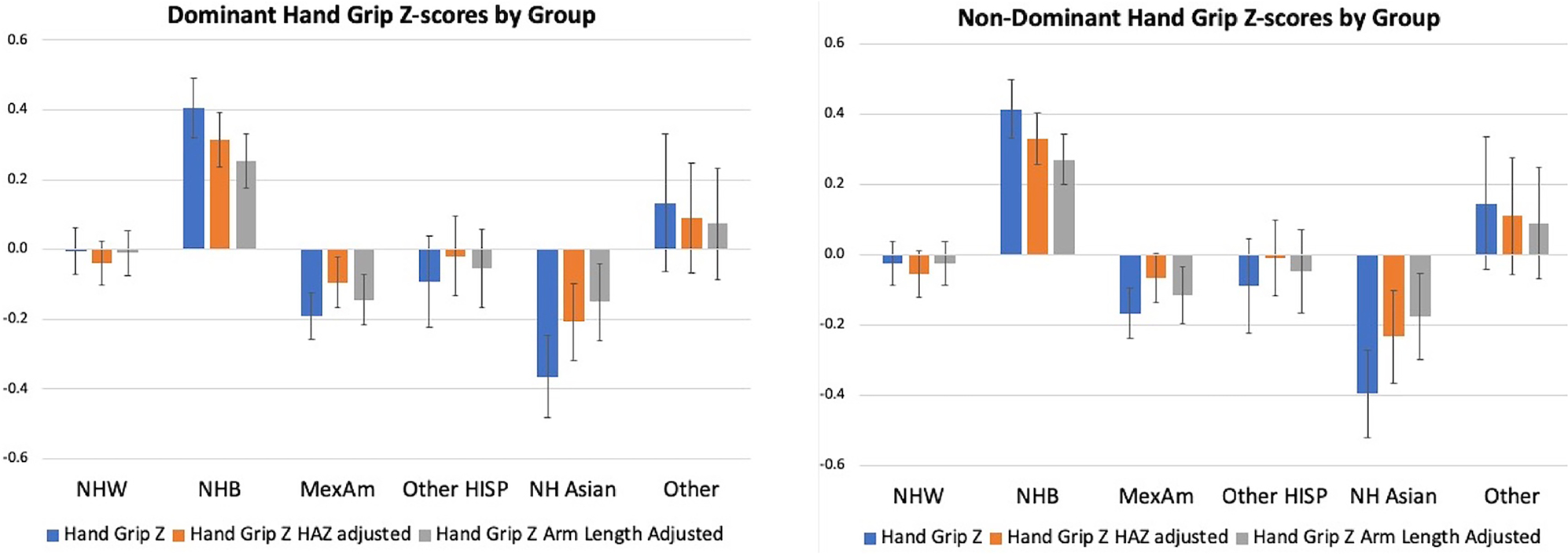
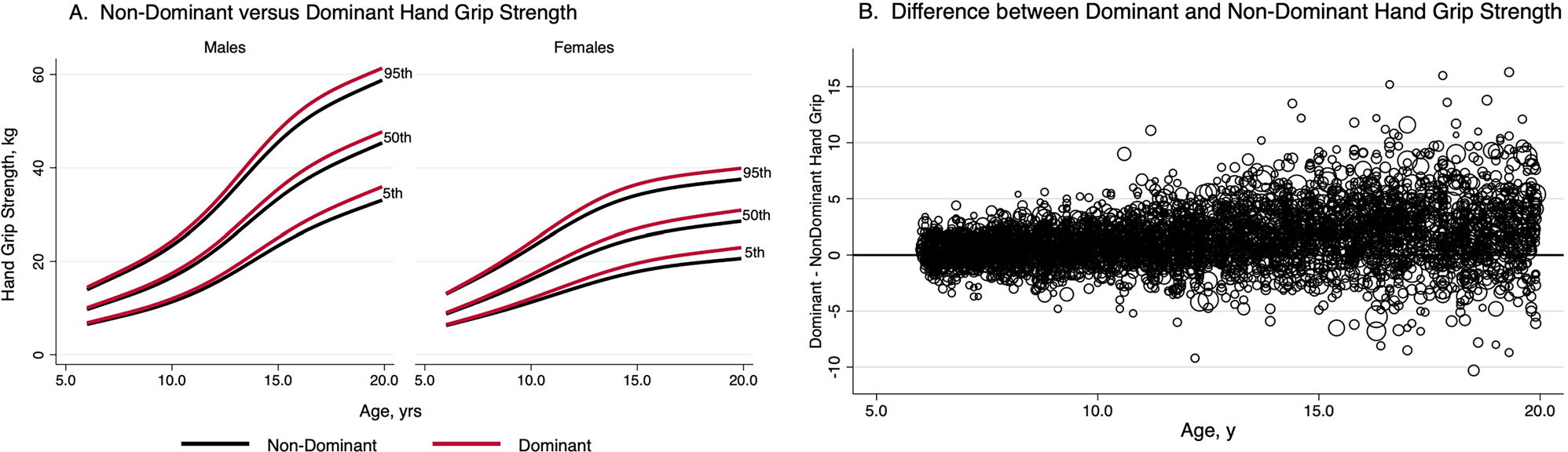
Differences in handgrip strength according to hand dominance increased with age. Handgrip strength was associated with height and arm length Z-scores ( = 0.42 to 0.47) and ALSTMIZ ( = 0.54). Handgrip strength was higher in the non-Hispanic Black group and lower in the Mexican American compared to non-Hispanic White group. Group differences were attenuated when adjusted for height, arm length or ALSTMIZ.
Paediatric handgrip reference curves were generated from which individual Z-scores can be calculated separately for dominant versus non-dominant hand and adjusted for body size. Association with ALSTMIZ suggests handgrip Z-score may be used as a measure of functional body composition.
缺乏儿科参考数据限制了握力作为衡量健康和幸福感的指标的实用性。
制定儿科握力参考曲线,并评估其与体型和组成以及种族/民族群体的关系。
从 2011-2014 年全国健康和营养调查中获取 6-20 岁参与者的握力、体型和组成数据。在年龄>8 岁的参与者中生成基于密度仪的脂肪和四肢瘦软组织质量指数 Z 分数(FMIZ、ALSTMIZ)。使用 LMS 方法创建优势手和非优势手的握力参考曲线。分析包括样本权重,以产生具有全国代表性的估计值。
根据手优势的不同,握力强度的差异随着年龄的增长而增加。握力与身高和臂长 Z 分数(=0.42 至 0.47)和 ALSTMIZ(=0.54)相关。非西班牙裔黑人组的握力高于非西班牙裔白人群体,而墨西哥裔美国人组的握力低于非西班牙裔白人群体。当调整身高、臂长或 ALSTMIZ 时,组间差异减弱。
从儿科握力参考曲线中可以计算出优势手和非优势手的个体 Z 分数,并可以根据体型进行调整。与 ALSTMIZ 的关联表明,握力 Z 分数可用作功能性身体成分的衡量标准。