Yale School of Medicine, New Haven, CT.
Joslin Diabetes Center, Harvard Medical School, Boston, MA.
Diabetes Care. 2024 Jun 1;47(6):941-947. doi: 10.2337/dc23-1765.
To determine how diabetes technologies, including continuous glucose monitoring (CGM) and automated insulin delivery (AID) systems, impact glycemic metrics, prevalence of severe hypoglycemic events (SHEs), and impaired awareness of hypoglycemia (IAH) in people with type 1 diabetes in a real-world setting within the U.S.
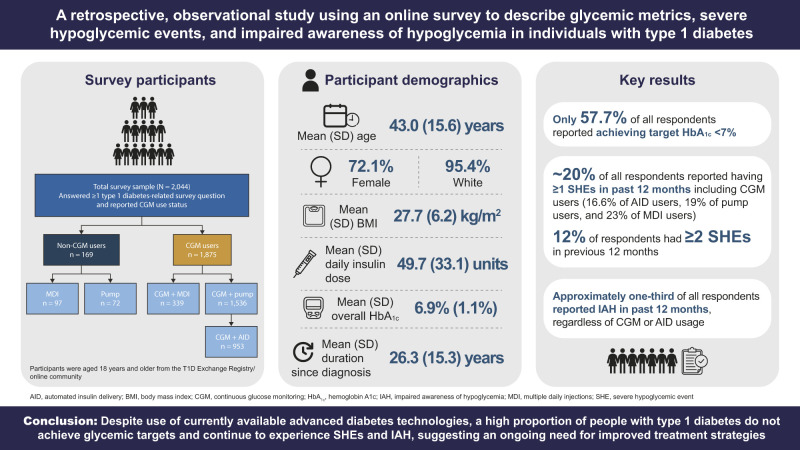
In this retrospective, observational study with cross-sectional elements, participants aged ≥18 years were enrolled from the T1D Exchange Registry/online community. Participants completed a one-time online survey describing glycemic metrics, SHEs, and IAH. The primary objective was to determine the proportions of participants who reported achieving glycemic targets (assessed according to self-reported hemoglobin A1c) and had SHEs and/or IAH. We performed additional subgroup analyses focusing on the impact of CGM and insulin delivery modality.
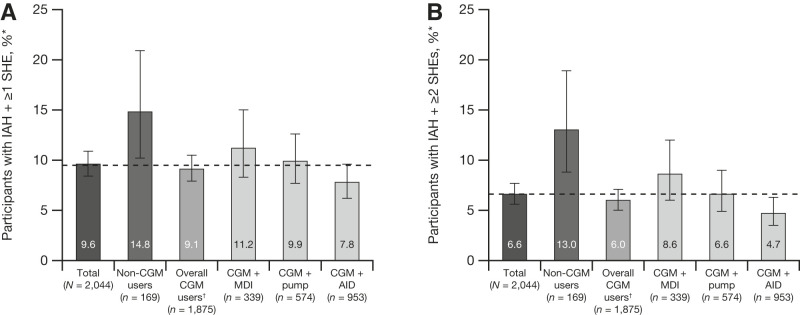
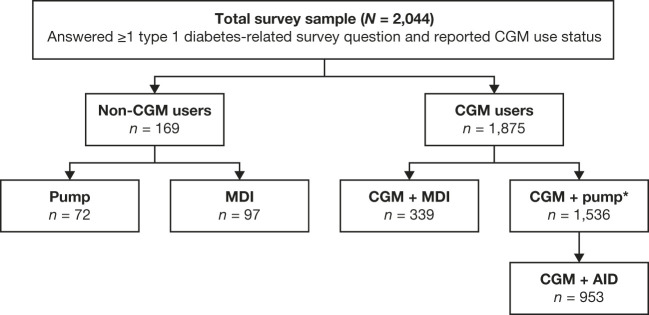
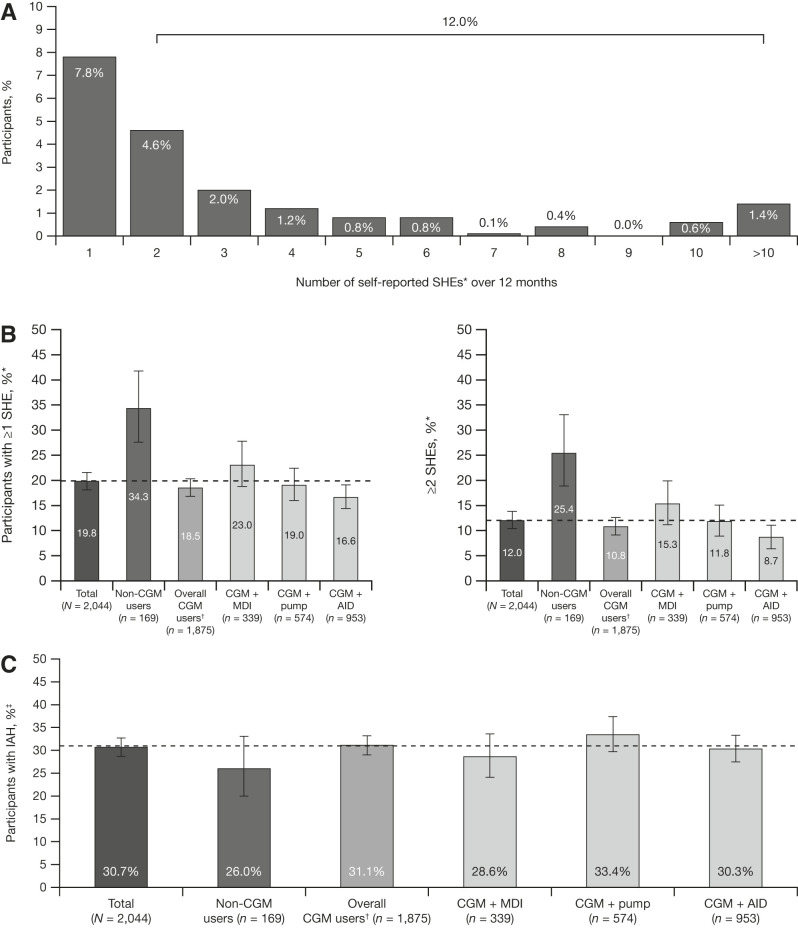
A total of 2,074 individuals with type 1 diabetes were enrolled (mean ± SD age 43.0 ± 15.6 years and duration of type 1 diabetes 26.3 ± 15.3 years). The majority of participants (91.7%) were using CGM, with one-half (50.8%) incorporating AID. Despite high use of diabetes technologies, only 57.7% reported achieving glycemic targets (hemoglobin A1c <7%). SHEs and IAH still occurred, with ∼20% of respondents experiencing at least one SHE within the prior 12 months and 30.7% (95% CI 28.7, 32.7) reporting IAH, regardless of CGM or AID use.
Despite use of advanced diabetes technologies, a high proportion of people with type 1 diabetes do not achieve glycemic targets and continue to experience SHEs and IAH, suggesting an ongoing need for improved treatment strategies.
在美国的真实环境中,确定糖尿病技术(包括连续血糖监测[CGM]和自动胰岛素输送[AID]系统)如何影响 1 型糖尿病患者的血糖指标、严重低血糖事件[SHE]的发生率和低血糖意识受损[IAH]。
在这项具有横断面元素的回顾性观察性研究中,从 T1D 交换注册中心/在线社区招募年龄≥18 岁的参与者。参与者完成了一次在线调查,描述了血糖指标、SHE 和 IAH。主要目的是确定报告达到血糖目标(根据自我报告的血红蛋白 A1c 评估)和发生 SHE 和/或 IAH 的参与者比例。我们进行了额外的亚组分析,重点关注 CGM 和胰岛素输送方式的影响。
共纳入 2074 名 1 型糖尿病患者(平均±标准差年龄 43.0±15.6 岁,1 型糖尿病病程 26.3±15.3 年)。大多数参与者(91.7%)正在使用 CGM,其中一半(50.8%)合并使用 AID。尽管糖尿病技术的使用率很高,但只有 57.7%的患者报告达到了血糖目标(血红蛋白 A1c<7%)。SHE 和 IAH 仍在发生,约 20%的受访者在过去 12 个月内至少经历过一次 SHE,30.7%(95%CI 28.7,32.7)报告 IAH,无论是否使用 CGM 或 AID。
尽管使用了先进的糖尿病技术,但仍有相当一部分 1 型糖尿病患者无法达到血糖目标,并且仍会发生 SHE 和 IAH,这表明需要改进治疗策略。