Health Administration and Education, University of Education, Winneba, Winneba, Central, Ghana
Health Administration and Education, University of Education, Winneba, Winneba, Central, Ghana.
BMJ Open. 2024 Jan 30;14(1):e073190. doi: 10.1136/bmjopen-2023-073190.
Globally, one of the measures of high performing healthcare facilities is the compliance of patient safety culture, which encompasses the ability of health institutions to avoid or drastically reduce patient harm or risks. These risks or harm is linked with numerous adverse patient outcomes such as medication error, infections, unsafe surgery and diagnosis error.
The general objective of this study was to investigate into the impact of patient safety culture practices experienced on patient satisfaction among patients who attend the Kwesimintsim Government Hospital in the Takoradi municipality.
This study was a descriptive cross-sectional study and a consecutive sampling technique was used to select 336 respondents for the study. Data was collected using a structured questionnaire and processed using Statistical Package for Social Sciences, V.21. Both descriptive and inferential statistics were carried out and result were presented using figures and tables.
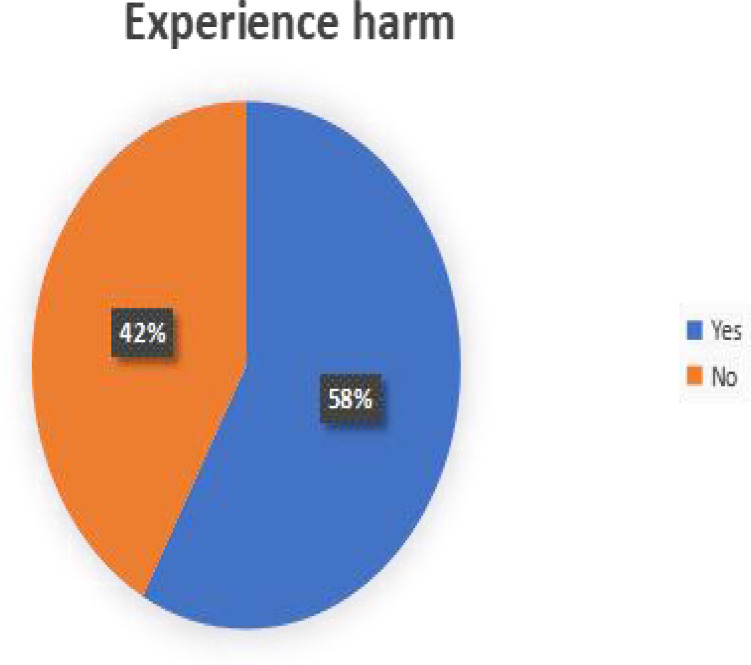
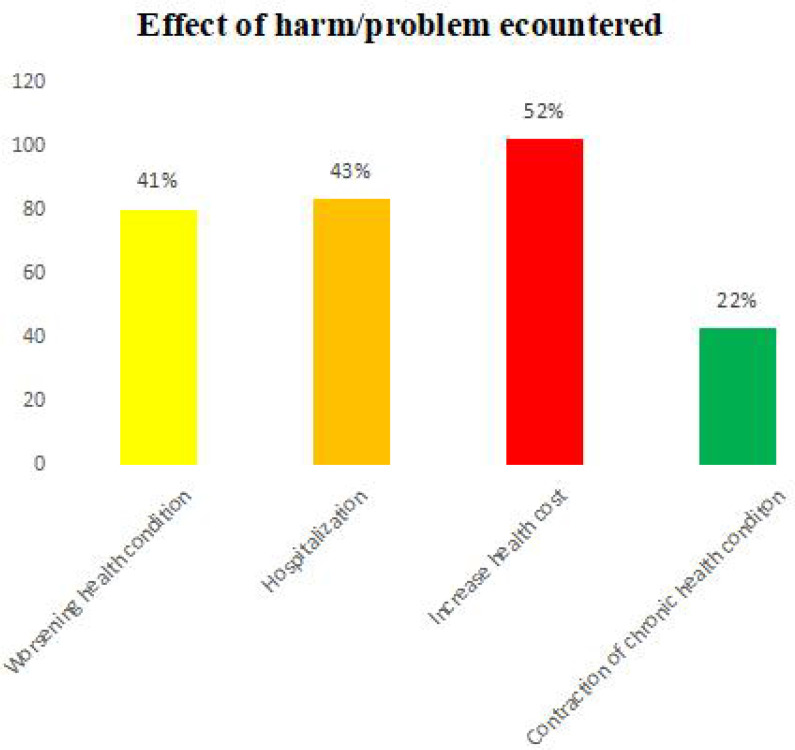
The study found that the overall patient safety compliance level observed by the respondents was poor (29.2%). The prevalence of adverse events experienced among the respondents was high (58%). The leading adverse events mentioned were medication errors, followed by wrong prescriptions and infections. The consequences of these adverse events encountered by the respondents were mentioned as increased healthcare costs (52%), followed by hospitalisation (43%), worsening of health conditions (41%) and contraction of chronic health conditions (22%). Patient safety cultural practices such as teamwork (β=0.17, p=0.03), response to error (β=0.16, p=0.005), communication openness (β=0.17, p=0.003) and handoffs and information exchange (β=0.17, p=0.002) were found to positively influence patient satisfaction.
The poor general compliance of the patient safety culture in the facility is unfortunate, and this can affect healthcare outcomes significantly. The study therefore entreats facility managers and various stakeholders to see patient safety care as an imperative approach to delivering quality essential healthcare and to act accordingly to create an environment that supports it.
在全球范围内,衡量医疗保健机构绩效的标准之一是患者安全文化的合规性,这包括医疗机构避免或大幅降低患者伤害或风险的能力。这些风险或伤害与许多不良患者结局有关,如用药错误、感染、不安全手术和诊断错误。
本研究的总体目的是调查在塔克拉迪市夸西明蒂姆政府医院就诊的患者中,患者安全文化实践经验对患者满意度的影响。
本研究为描述性横断面研究,采用连续抽样技术选择 336 名受访者进行研究。使用结构化问卷收集数据,并使用统计软件包 V.21 进行处理。采用描述性和推断性统计方法,结果以数字和图表形式呈现。
研究发现,受访者观察到的整体患者安全合规水平较差(29.2%)。受访者中不良事件的发生率较高(58%)。提到的主要不良事件是用药错误,其次是错误的处方和感染。受访者遇到的这些不良事件的后果被提及为增加医疗保健成本(52%),其次是住院治疗(43%)、健康状况恶化(41%)和慢性健康状况恶化(22%)。患者安全文化实践,如团队合作(β=0.17,p=0.03)、对错误的反应(β=0.16,p=0.005)、沟通开放性(β=0.17,p=0.003)和交接和信息交换(β=0.17,p=0.002),被发现对患者满意度有积极影响。
该设施患者安全文化的总体合规性较差,这可能会对医疗保健结果产生重大影响。因此,研究恳请医疗机构管理者和各利益相关者将患者安全护理视为提供优质基本医疗保健的必要方法,并相应采取行动,营造支持安全护理的环境。