Roche Pharma Research and Early Development (pRED), Roche Innovation Center Basel, F. Hoffmann-La Roche Ltd, Grenzacherstrasse 124, 4070, Basel, Switzerland.
Roche Pharma Research and Early Development (pRED), Roche Innovation Center Welwyn, Roche Products Ltd, Hexagon Place, 6 Falcon Way, Welwyn Garden City, AL7 1TW, UK.
J Pharmacokinet Pharmacodyn. 2024 Jun;51(3):227-242. doi: 10.1007/s10928-023-09898-0. Epub 2024 Feb 3.
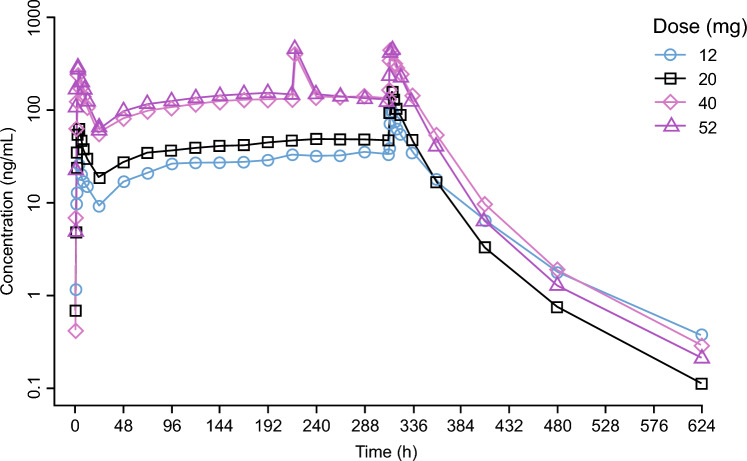
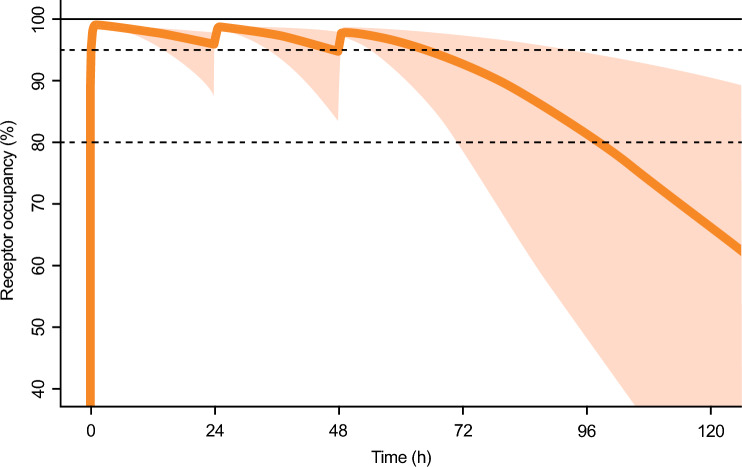
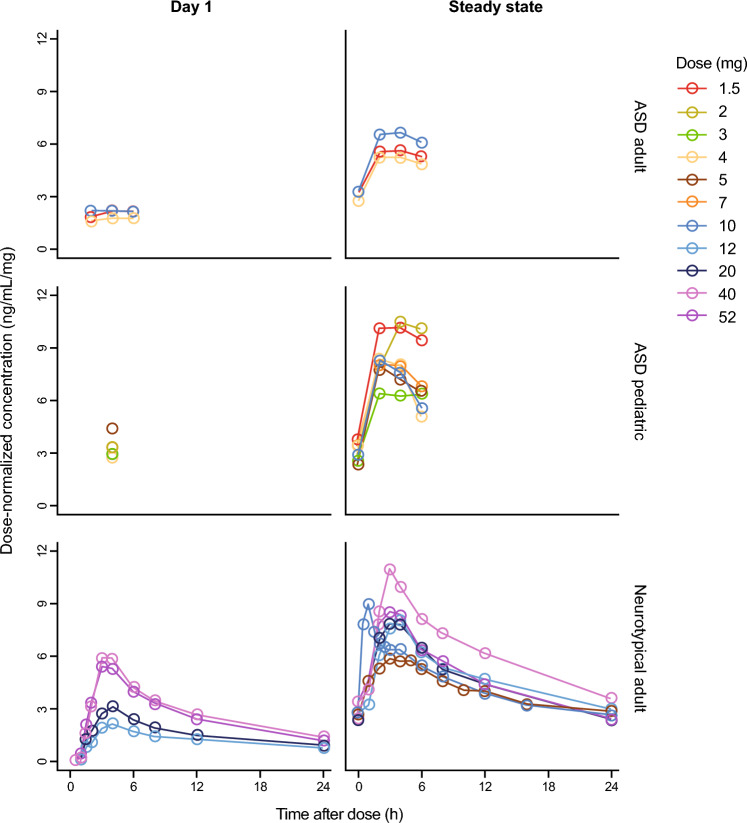
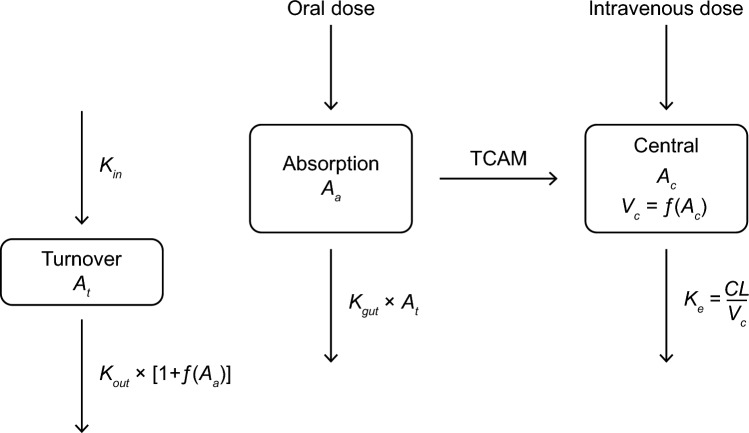
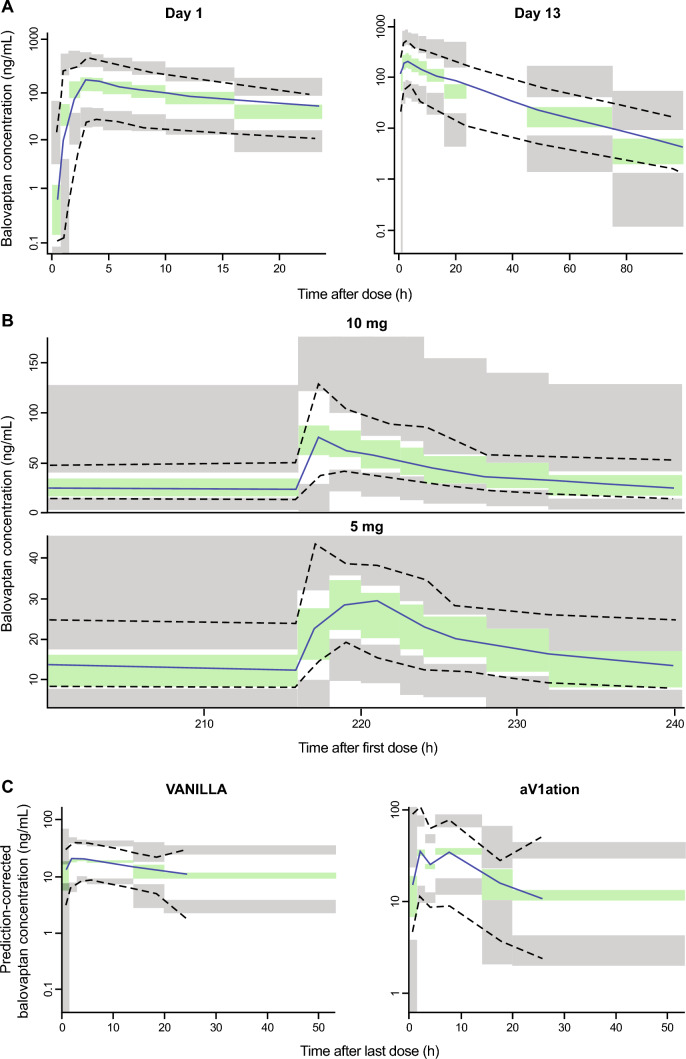
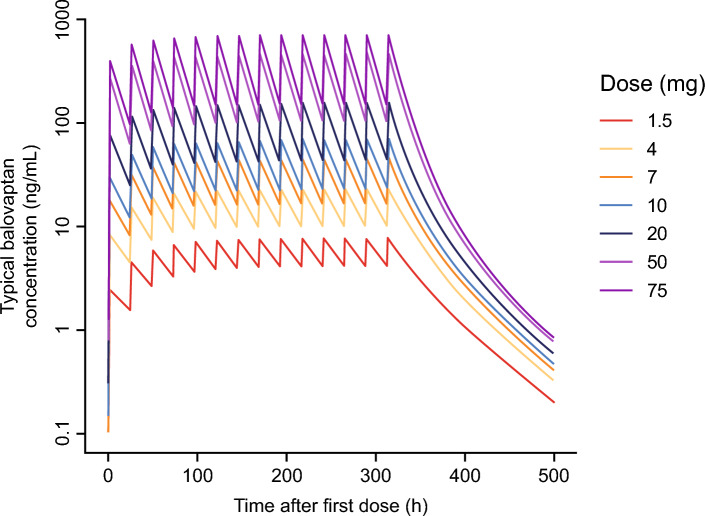
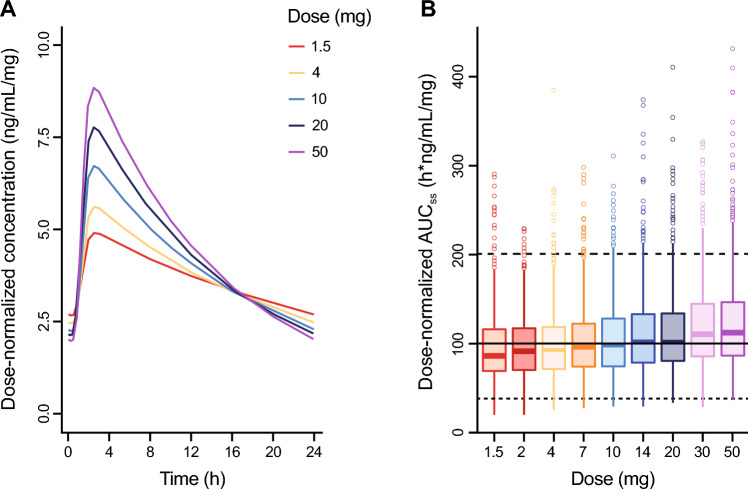
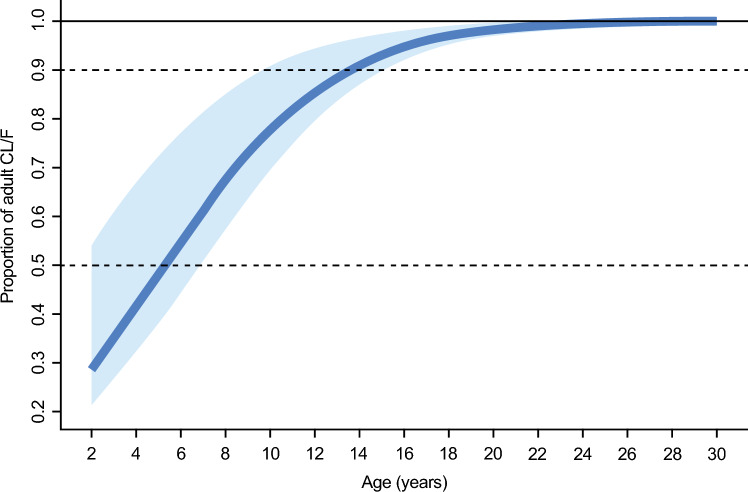
Balovaptan is a brain-penetrating vasopressin receptor 1a antagonist previously investigated for the core symptoms of autism spectrum disorder (ASD). A population pharmacokinetic (PK) model of balovaptan was developed, initially to assist clinical dosing for adult and pediatric ASD studies and subsequently for new clinical indications including malignant cerebral edema (MCE) and post-traumatic stress disorder. The final model incorporates one-compartment disposition and describes time- and dose-dependent non-linear PK through empirical drug binding and a gut extraction component with turnover. An age effect on clearance observed in children was modeled by an asymptotic function that predicts adult-equivalent exposures at 40% of the adult dose for children aged 2-4 years, 70% for 5-9 years, and at the full adult dose for ≥ 10 years. The model was adapted for intravenous (IV) balovaptan dosing and combined with in vitro and ex vivo pharmacodynamic data to simulate brain receptor occupancy as a guide for dosing in a phase II trial of MCE prophylaxis after acute ischemic stroke. A sequence of three stepped-dose daily infusions of 50, 25 and 15 mg over 30 or 60 min was predicted to achieve a target occupancy of ≥ 80% in ≥ 95% of patients over a 3-day period. This model predicts both oral and IV balovaptan exposure across a wide age range and will be a valuable tool to analyze and predict its PK in new indications and target populations, including pediatric patients.
巴洛沙肽是一种穿透血脑屏障的血管加压素受体 1a 拮抗剂,此前曾用于研究自闭症谱系障碍(ASD)的核心症状。开发了巴洛沙肽的群体药代动力学(PK)模型,最初用于协助成人和儿科 ASD 研究的临床给药,随后用于包括恶性脑水肿(MCE)和创伤后应激障碍在内的新的临床适应症。最终模型纳入了一室分布,并通过经验药物结合和具有周转率的肠道提取成分来描述时间和剂量依赖性的非线性 PK。在儿童中观察到的清除率的年龄效应通过渐近函数进行建模,该函数预测 2-4 岁儿童的成人等效暴露量为成人剂量的 40%,5-9 岁儿童的 70%,10 岁以上儿童的全成人剂量。该模型适用于静脉内(IV)巴洛沙肽给药,并与体外和离体药效学数据相结合,模拟脑受体占有率,为急性缺血性中风后 MCE 预防的 II 期试验中的给药提供指导。预测每日三次逐步递增剂量的 50、25 和 15mg,持续 30 或 60 分钟,可在 3 天内使目标占有率在 95%以上的患者中达到≥80%。该模型预测了口服和 IV 巴洛沙肽在广泛年龄范围内的暴露情况,将成为分析和预测其在新适应症和目标人群(包括儿科患者)中的 PK 的有价值工具。