Caccavano Adam P, Vlachos Anna, McLean Nadiya, Kimmel Sarah, Kim June Hoan, Vargish Geoffrey, Mahadevan Vivek, Hewitt Lauren, Rossi Anthony M, Spineux Ilona, Wu Sherry Jingjing, Furlanis Elisabetta, Dai Min, Garcia Brenda Leyva, Wang Yating, Chittajallu Ramesh, London Edra, Yuan Xiaoqing, Hunt Steven, Abebe Daniel, Eldridge Mark A G, Cummins Alex C, Hines Brendan E, Plotnikova Anya, Mohanty Arya, Averbeck Bruno B, Zaghloul Kareem, Dimidschstein Jordane, Fishell Gord, Pelkey Kenneth A, McBain Chris J
Eunice Kennedy Shriver National Institute of Child Health and Human Development (NICHD), Section on Cellular and Synaptic Physiology, National Institutes of Health (NIH), Bethesda, MD 20892, USA.
Harvard Medical School, Blavatnik Institute, Department of Neurobiology, Boston, MA 02115, USA.
bioRxiv. 2025 Jan 23:2024.01.20.576455. doi: 10.1101/2024.01.20.576455.
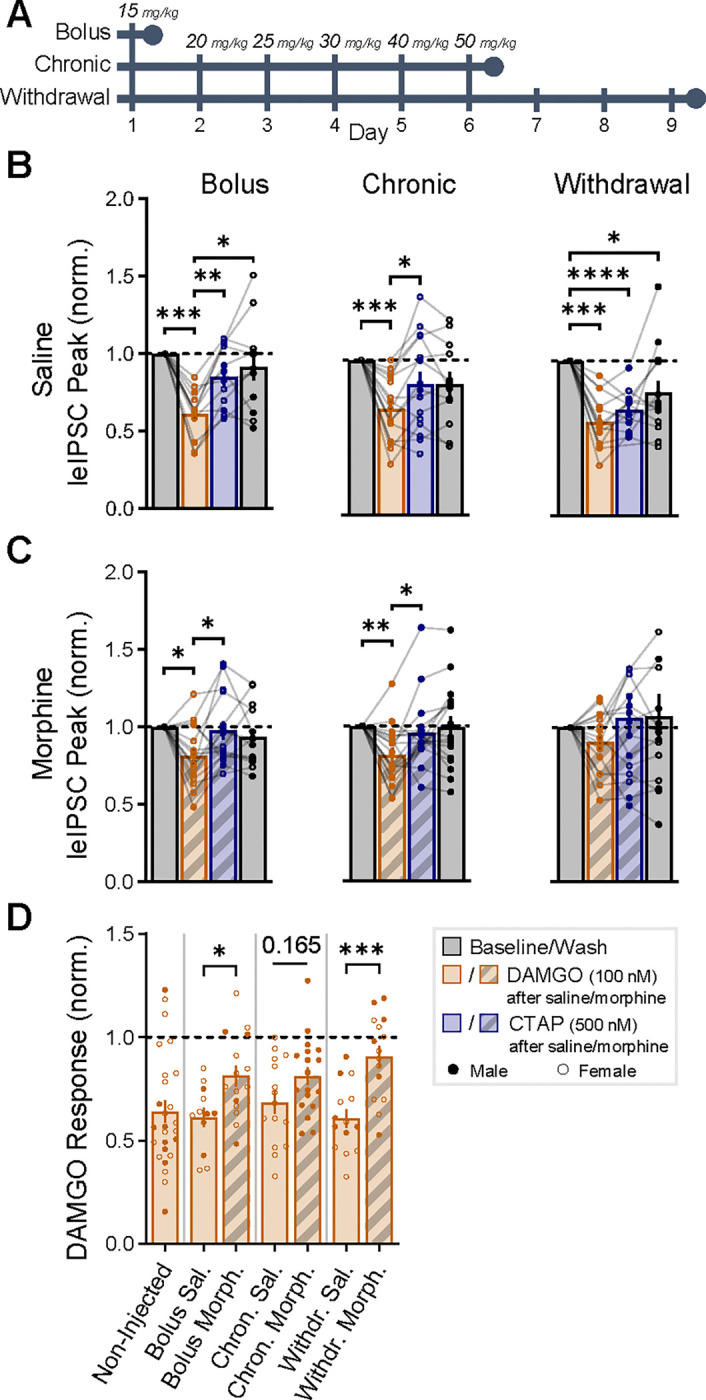
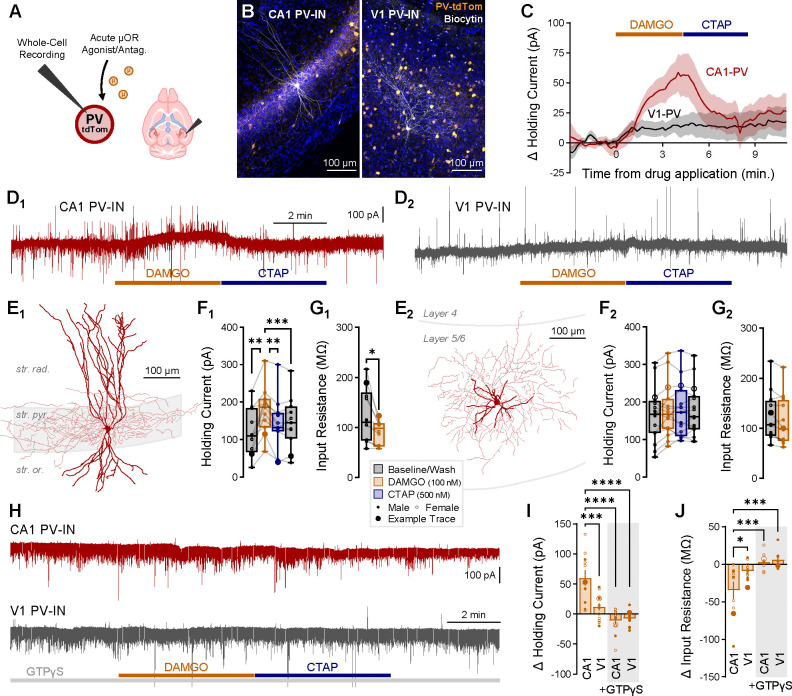
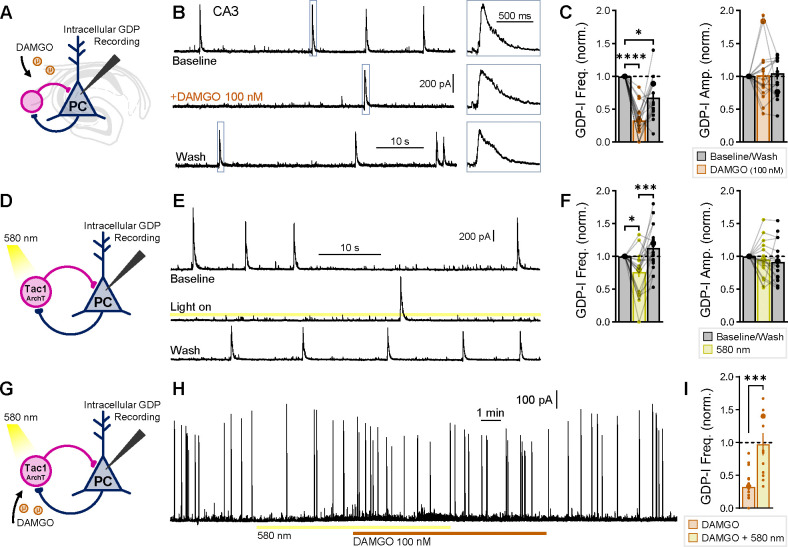
Within the adult rodent hippocampus, opioids suppress inhibitory parvalbumin-expressing interneurons (PV-INs), thus disinhibiting local micro-circuits. However, it is unknown if this disinhibitory motif is conserved in other cortical regions, species, or across development. We observed that PV-IN mediated inhibition is robustly suppressed by opioids in hippocampus proper but not primary neocortex in mice and nonhuman primates, with spontaneous inhibitory tone in resected human tissue also following a consistent dichotomy. This hippocampal disinhibitory motif was established in early development when PV-INs and opioids were found to regulate early population activity. Acute opioid-mediated modulation was partially occluded with morphine pretreatment, with implications for the effects of opioids on hippocampal network activity important for learning and memory. Together, these findings demonstrate that PV-INs exhibit a divergence in opioid sensitivity across brain regions that is remarkably conserved across evolution and highlights the underappreciated role of opioids acting through immature PV-INs in shaping hippocampal development.
在成年啮齿动物海马体中,阿片类物质会抑制表达小白蛋白的抑制性中间神经元(PV-INs),从而解除对局部微回路的抑制。然而,这种去抑制模式在其他皮质区域、物种或整个发育过程中是否保守尚不清楚。我们观察到,在小鼠和非人灵长类动物中,阿片类物质能强烈抑制海马体本身由PV-IN介导的抑制作用,但对初级新皮质则无此作用,切除的人体组织中的自发抑制性活动也呈现出一致的二分法。当发现PV-INs和阿片类物质调节早期群体活动时,这种海马体去抑制模式在早期发育中就已确立。吗啡预处理会部分阻断急性阿片类物质介导的调节作用,这对阿片类物质对海马体网络活动(对学习和记忆很重要)的影响具有启示意义。总之,这些发现表明,PV-INs在不同脑区对阿片类物质的敏感性存在差异,这种差异在进化过程中显著保守,并突出了通过未成熟的PV-INs起作用的阿片类物质在塑造海马体发育中未被充分认识的作用。