PATH, Seattle, Washington, USA.
Harvard School of Public Health, Boston, Massachusetts, USA.
Matern Child Nutr. 2024 Jun;20 Suppl 4(Suppl 4):e13592. doi: 10.1111/mcn.13592. Epub 2024 Feb 6.
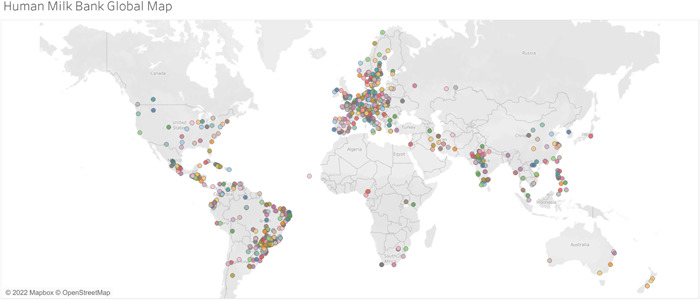
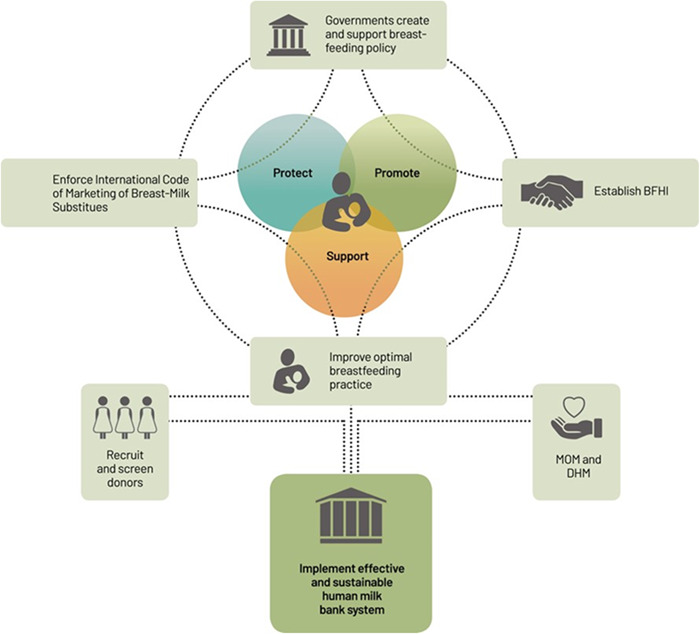
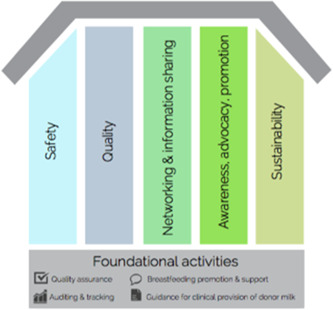
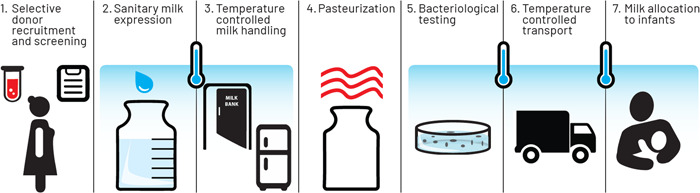
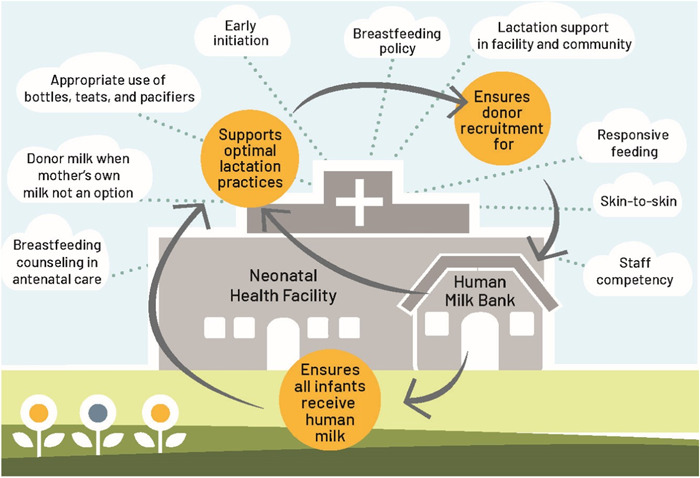
Human milk provides essential nutrition for infants and holds many health benefits for infants and mothers. When a mother's own milk is not available for her infant, the World Health Organization recommends feeding donor human milk (DHM) from a human milk banking facility. DHM is human milk produced, collected then donated to a human milk bank (HMB). HMBs serve many vital functions, including screening donor mothers, then collecting, processing, storing, and allocating DHM to recipients. The first HMB opened in 1909, and today there are more than 700 HMBs globally. Unfortunately, HMB facilities are not present in all locales, with notable gaps in South Asia and Africa. Additionally, there are no global standards to guide HMB operational procedures. Even though most HMBs attempt to employ quality control systems to provide safe DHM, differences in community needs, resource availability, and a range of methods and policies to execute processes result in significant variations in DHM quality and HMB operations. Robust and collaborative systems that ensure safe and equitable access to DHM are needed. In this paper, we present a global snapshot of current human milk banking practices; review an interdisciplinary framework to guide and support HMB activities as an integrated part of health and newborn care systems; discuss factors that contribute to HMB sustainability; outline barriers to scaling HMBs worldwide; and highlight knowledge, policy, and research gaps. Developing global HMB guidance and rigorous, adaptable standards would strengthen efforts to improve newborn health.
人乳为婴儿提供了必需的营养,并对婴儿和母亲都有许多健康益处。当母亲自身无法为婴儿提供母乳时,世界卫生组织建议使用人乳库(HMB)提供的捐赠人乳(DHM)。DHM 是人乳的一种,由捐赠者生产、收集并捐赠给 HMB。HMB 有许多重要的功能,包括对捐赠者母亲进行筛查,然后收集、处理、储存和分配 DHM 给接受者。第一个 HMB 于 1909 年开业,如今全球有超过 700 个 HMB。不幸的是,并非所有地区都有人乳库设施,南亚和非洲地区尤为缺乏。此外,也没有全球标准来指导 HMB 的运营程序。尽管大多数 HMB 试图采用质量控制系统来提供安全的 DHM,但由于社区需求、资源可用性以及执行流程的各种方法和政策的差异,DHM 的质量和 HMB 的运营存在显著差异。需要建立强大的合作系统,以确保安全和公平地获取 DHM。本文介绍了当前人乳库实践的全球概况;审查了一个跨学科框架,以指导和支持 HMB 活动,将其作为健康和新生儿护理系统的一个组成部分;讨论了有助于 HMB 可持续性的因素;概述了全球范围内扩大 HMB 的障碍;并强调了知识、政策和研究方面的差距。制定全球 HMB 指导和严格、适应性强的标准将加强改善新生儿健康的努力。