Wennemann Sophie, Mudarshiru Bbuye, Zawedde-Muyanja Stella, Siddharthan Trishul, Jackson Peter D
Virginia Commonwealth University School of Medicine, Richmond, Virginia, United States of America.
Makerere University Lung Institute, Kampala, Uganda.
PLOS Glob Public Health. 2024 Feb 8;4(2):e0002892. doi: 10.1371/journal.pgph.0002892. eCollection 2024.
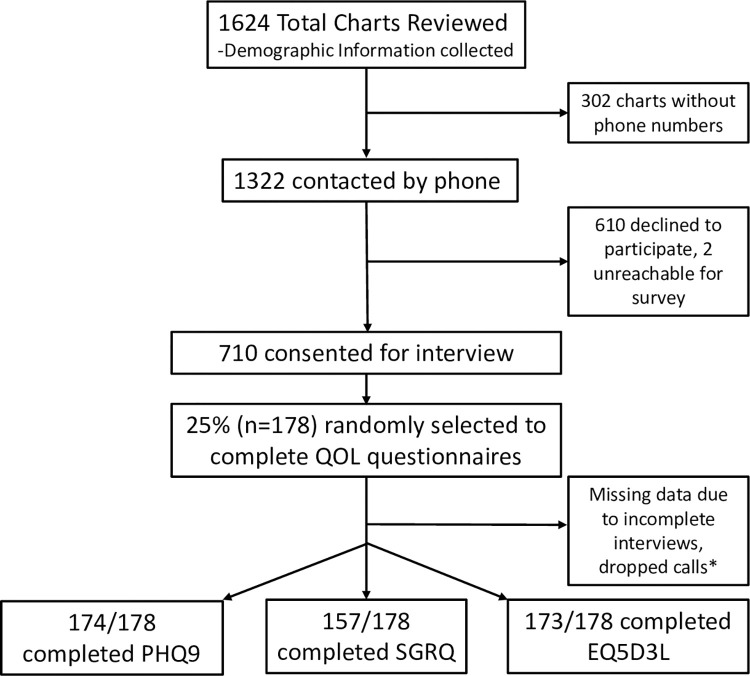
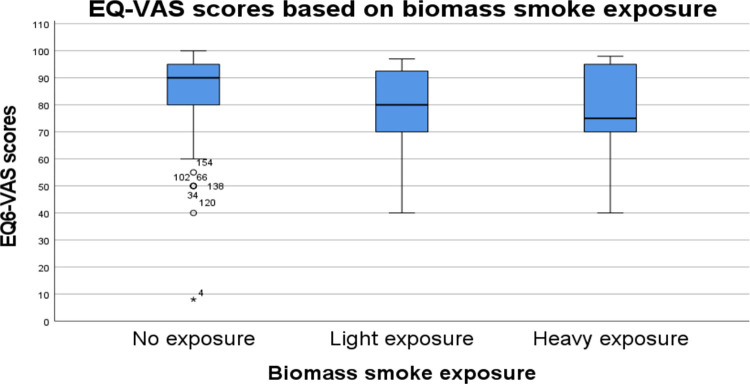
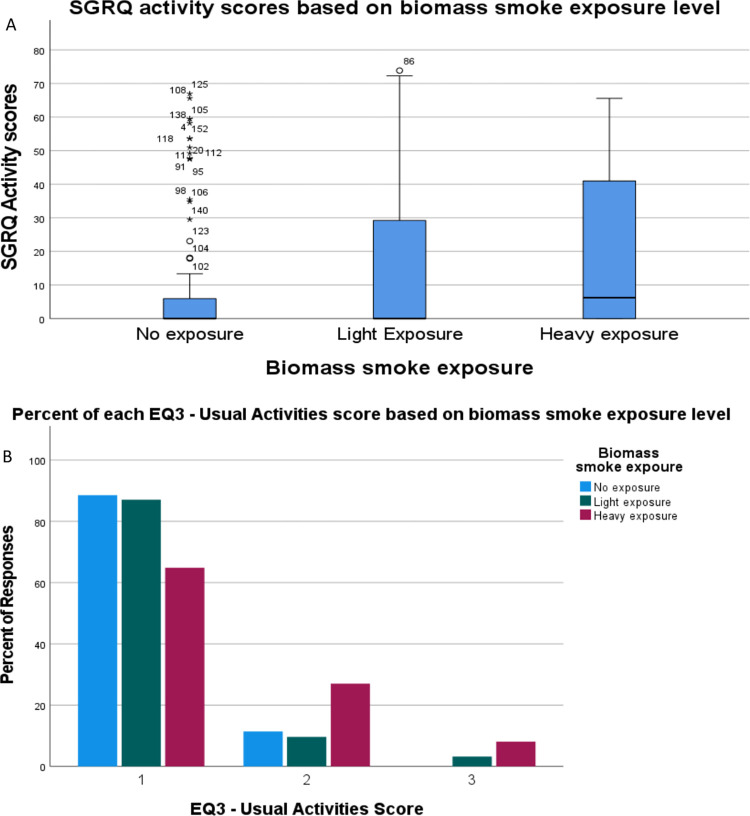
More than half the global population burns biomass fuels for cooking and home heating, especially in low-middle income countries. This practice is a prominent source of indoor air pollution and has been linked to the development of a variety of cardiopulmonary diseases, including Tuberculosis (TB). The purpose of this cross-sectional study was to investigate the association between current biomass smoke exposure and self-reported quality of life scores in a cohort of previous TB patients in Uganda. We reviewed medical records from six TB clinics from 9/2019-9/2020 and conducted phone interviews to obtain information about biomass smoke exposure. A random sample of these patients were asked to complete three validated quality-of-life surveys including the St. Georges Respiratory Questionnaire (SGRQ), the EuroQol 5 Dimension 3 Level system (EQ-5D-3L) which includes the EuroQol Visual Analog Scale (EQ-VAS), and the Patient Health Questionnaire 9 (PHQ-9). The cohort was divided up into 3 levels based on years of smoke exposure-no-reported smoke exposure (0 years), light exposure (1-19 years), and heavy exposure (20+ years), and independent-samples-Kruskal-Wallis testing was performed with post-hoc pairwise comparison and the Bonferroni correction. The results of this testing indicated significant increases in survey scores for patients with current biomass exposure and a heavy smoke exposure history (20+ years) compared to no reported smoke exposure in the SGRQ activity scores (adj. p = 0.018) and EQ-5D-3L usual activity scores (adj. p = 0.002), indicating worse activity related symptoms. There was a decrease in EQ-VAS scores for heavy (adj. p = 0.007) and light (adj. p = 0.017) exposure groups compared to no reported exposure, indicating lower perceptions of overall health. These results may suggest worse outcomes or baseline health for TB patients exposed to biomass smoke at the time of treatment and recovery, however further research is needed to characterize the effect of indoor air pollution on TB treatment outcomes.
全球超过一半的人口燃烧生物质燃料用于烹饪和家庭取暖,尤其是在中低收入国家。这种做法是室内空气污染的一个主要来源,并与包括肺结核(TB)在内的多种心肺疾病的发展有关。这项横断面研究的目的是调查乌干达一组既往结核病患者当前生物质烟雾暴露与自我报告的生活质量得分之间的关联。我们回顾了2019年9月至2020年9月期间六个结核病诊所的病历,并进行了电话访谈以获取有关生物质烟雾暴露的信息。随机抽取这些患者完成三项经过验证的生活质量调查,包括圣乔治呼吸问卷(SGRQ)、欧洲五维健康量表3级系统(EQ-5D-3L,其中包括欧洲五维视觉模拟量表(EQ-VAS))以及患者健康问卷9(PHQ-9)。根据烟雾暴露年限,该队列分为三个级别——无报告烟雾暴露(0年)、轻度暴露(1 - 19年)和重度暴露(20年以上),并进行独立样本克鲁斯卡尔 - 沃利斯检验,随后进行两两比较和邦费罗尼校正。该检验结果表明,与无报告烟雾暴露相比,当前有生物质暴露且有重度烟雾暴露史(20年以上)的患者在SGRQ活动得分(校正p = 0.018)和EQ-5D-3L日常活动得分(校正p = 0.002)方面调查得分显著增加,表明活动相关症状更严重。与无报告暴露相比,重度(校正p = 0.007)和轻度(校正p = 0.017)暴露组的EQ-VAS得分降低,表明对总体健康的认知较低。这些结果可能表明,在治疗和康复时暴露于生物质烟雾的结核病患者预后或基线健康状况较差,然而需要进一步研究来确定室内空气污染对结核病治疗结果的影响。