Department of Geriatrics, First Hospital of Jilin University, Changchun, 130021, China.
Department of Critical Care Medicine, Shandong First Medical University Affiliated Province Hospital, Jinan, 250023, China.
Sci Rep. 2024 Feb 9;14(1):3335. doi: 10.1038/s41598-024-53976-3.
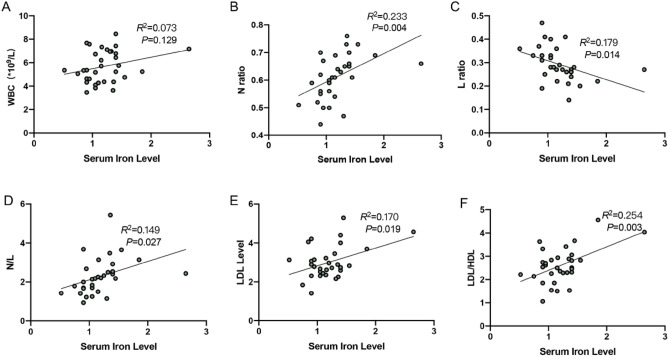
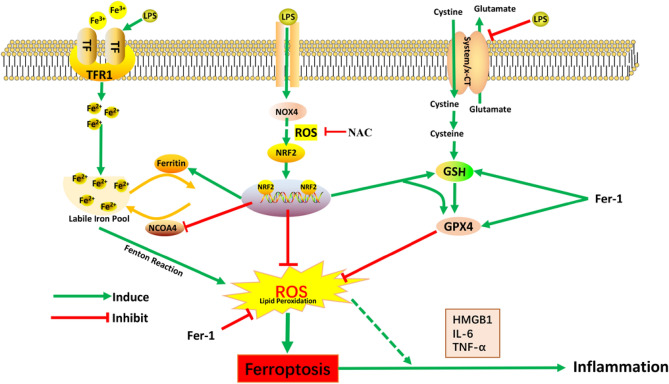
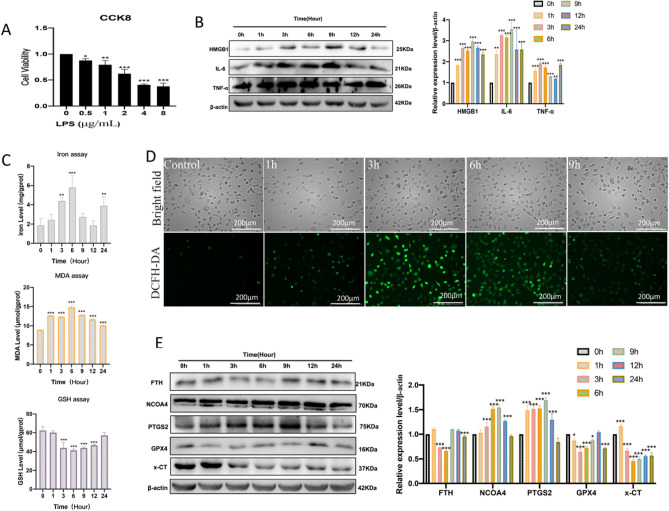
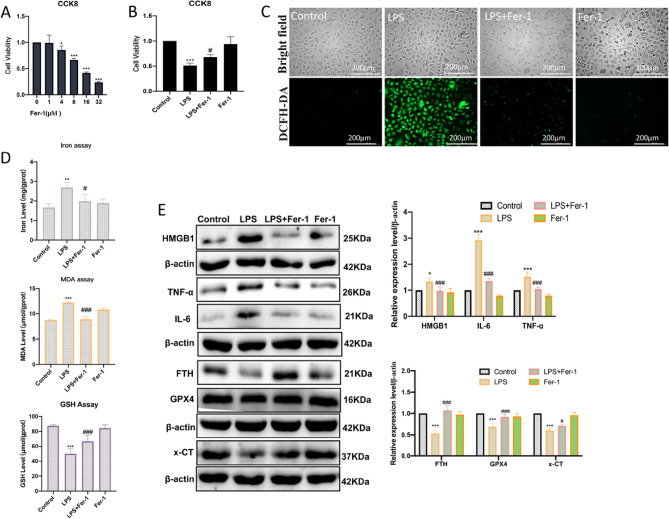
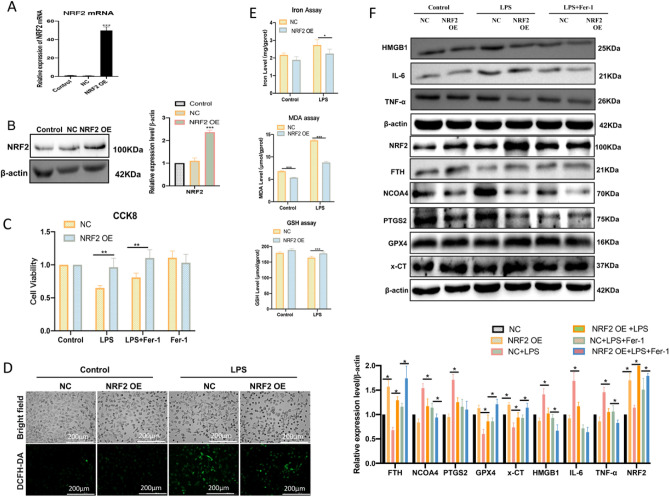
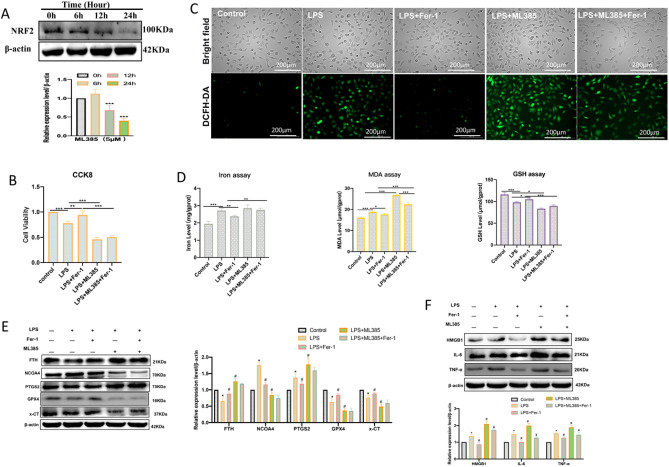
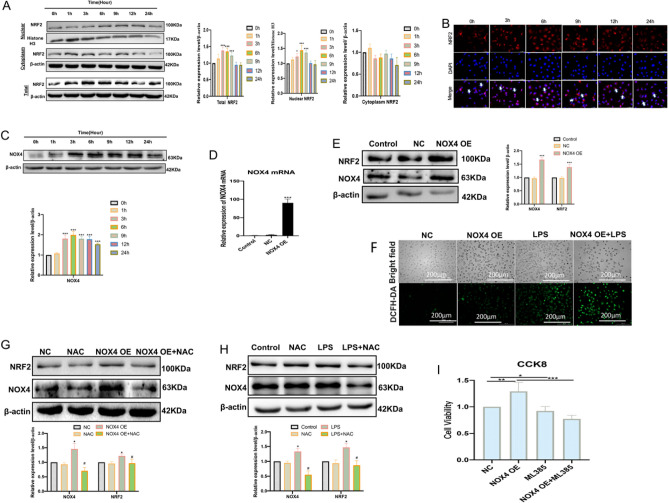
Ferroptosis plays an important role in inflammation and oxidative stress. Whether ferroptosis is involved in the inflammation of vascular endothelial cells and its regulation mechanism remains unclear. We estimated the correlation between serum iron ion levels and the inflammation index of 33 patients with arteriosclerosis. In vitro, HUVECs with or without ferrostatin-1 were exposed to Lipopolysaccharide. Corresponding cell models to verify the target signaling pathway. The results showed that serum iron ion levels had a significant positive correlation with N ratio, N/L, LDL level, and LDL/HDL (P < 0.05), and a negative correlation with L ratio (P < 0.05) in the arteriosclerosis patients. In vitro, ferroptosis is involved in HUVECs inflammation. Ferrostatin-1 can rescue LPS-induced HUVECs inflammation by decreasing HMGB1/IL-6/TNF-α expression. Nrf2 high expression could protect HUVECs against ferroptosis by activating the GPX4/GSH system, inhibiting ferritinophagy, and alleviating inflammation in HUVECs by inhibiting HMGB1/IL-6/TNF-α expression. It also found that Nrf2 is a key adaptive regulatory factor in the oxidative damage of HUVECs induced by NOX4 activation. These findings indicated that ferroptosis contributed to the pathogenesis of vascular endothelial cell damage by mediating endothelial cell inflammation. Nrf2-mediated redox balance in vascular inflammation may be a therapeutic strategy in vascular diseases.
铁死亡在炎症和氧化应激中发挥重要作用。铁死亡是否参与血管内皮细胞的炎症及其调控机制尚不清楚。我们评估了 33 例动脉硬化患者血清铁离子水平与炎症指标的相关性。体外,用或不用 ferrostatin-1 处理 HUVEC 细胞,以暴露于脂多糖。用相应的细胞模型来验证靶信号通路。结果表明,在动脉硬化患者中,血清铁离子水平与 N 比、N/L、LDL 水平和 LDL/HDL 呈显著正相关(P<0.05),与 L 比呈负相关(P<0.05)。在体外,铁死亡参与 HUVEC 炎症。Ferrostatin-1 可以通过降低 HMGB1/IL-6/TNF-α 的表达来挽救 LPS 诱导的 HUVEC 炎症。Nrf2 高表达可以通过激活 GPX4/GSH 系统、抑制铁蛋白自噬、抑制 HMGB1/IL-6/TNF-α 的表达来保护 HUVECs 免受铁死亡,从而抑制 HUVECs 的炎症。还发现,Nrf2 是 NOX4 激活诱导的 HUVEC 氧化损伤的关键适应性调节因子。这些发现表明,铁死亡通过介导内皮细胞炎症参与血管内皮细胞损伤的发病机制。Nrf2 介导的血管炎症中的氧化还原平衡可能是血管疾病的一种治疗策略。