Huang Su-Wen, Weng Shao-Jen, Chiou Shyue-Yow, Nguyen Thi-Duong, Chen Chih-Hao, Liu Shih-Chia, Tsai Yao-Te
Department of General Affairs, Taichung Veterans General Hospital, Taichung 40705, Taiwan.
Department of Information Management, Chaoyang University of Technology, Taichung 41349, Taiwan.
Healthcare (Basel). 2024 Feb 4;12(3):405. doi: 10.3390/healthcare12030405.
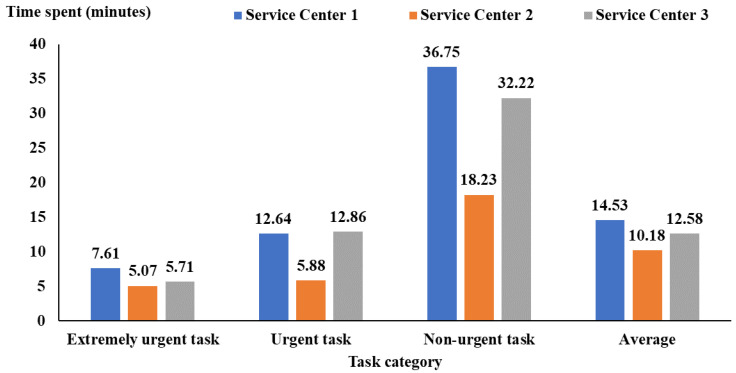
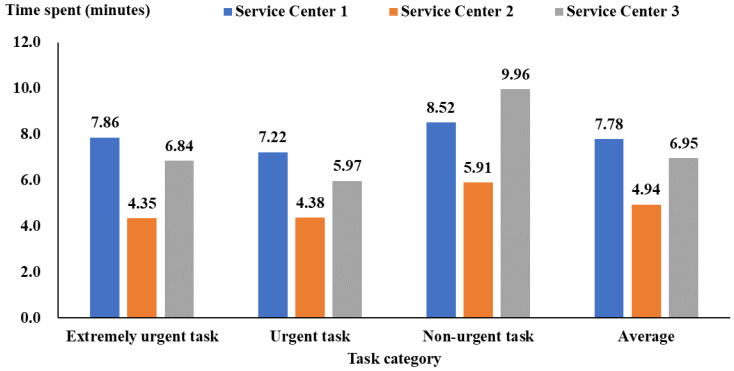
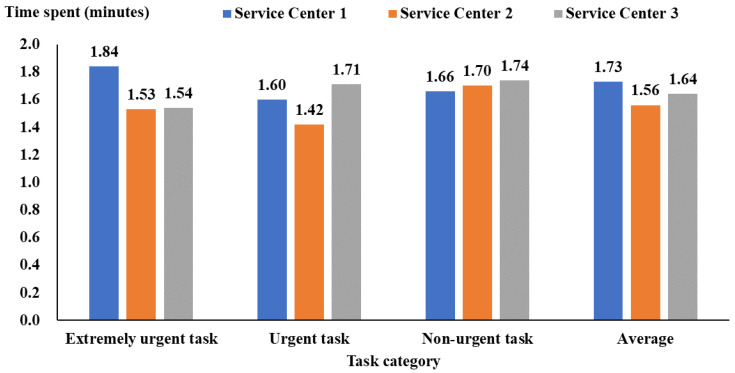
The provision of efficient healthcare services is essential, driven by the increasing demand for healthcare resources and the need to optimize hospital operations. In this context, the motivation to innovate and improve services while addressing urgent concerns is critical. Hospitals face challenges in managing internal dispatch services efficiently. Outsourcing such services can alleviate the burden on hospital staff, reduce costs, and introduce professional expertise. However, the pressing motivation lies in enhancing service quality, minimizing costs, and exploring innovative approaches. With the rising demand for healthcare services, there is an immediate need to streamline hospital operations. Delays in internal transportation services can have far-reaching implications for patient care, necessitating a prompt and effective solution. Drawing upon dispatch data from a healthcare center in Taiwan, this study constructed a decision-making model to optimize the allocation of hospital service resources. Employing simulation techniques, we closely examine how hospital services are currently organized and how they work. In our research, we utilized dispatch data gathered from a healthcare center in Taichung, Taiwan, spanning from January 2020 to December 2020. Our findings underscore the potential of an intelligent dispatch strategy combined with deployment restricted to the nearest available workers. Our study demonstrates that for cases requiring urgent attention, delay rates that previously ranged from 5% to 34% can be notably reduced to a much-improved 3% to 18%. However, it is important to recognize that the realm of worker dispatch remains subject to a multifaceted array of influencing factors. It becomes evident that a comprehensive dispatching mechanism must be established as part of a broader drive to enhance the efficiency of hospital service operations.
随着对医疗资源需求的不断增加以及优化医院运营的必要性,提供高效的医疗服务至关重要。在这种背景下,在解决紧迫问题的同时创新和改进服务的动力至关重要。医院在有效管理内部调度服务方面面临挑战。将此类服务外包可以减轻医院工作人员的负担、降低成本并引入专业知识。然而,紧迫的动力在于提高服务质量、降低成本并探索创新方法。随着对医疗服务需求的不断增加,迫切需要简化医院运营。内部运输服务的延迟可能对患者护理产生深远影响,因此需要迅速有效的解决方案。本研究借鉴台湾一家医疗中心的调度数据,构建了一个决策模型以优化医院服务资源的分配。采用模拟技术,我们仔细研究了医院服务目前的组织方式及其运作方式。在我们的研究中,我们利用了从台湾台中一家医疗中心收集的2020年1月至2020年12月的调度数据。我们的研究结果强调了智能调度策略与仅部署最近的可用工作人员相结合的潜力。我们的研究表明,对于需要紧急关注的病例,之前5%至34%的延迟率可以显著降低至大幅改善后的3%至18%。然而,必须认识到,工作人员调度领域仍然受到多方面的影响因素。显然,必须建立一个全面的调度机制,作为提高医院服务运营效率更广泛努力的一部分。