Zhang Xiange
Department of Health Care Management, Institute of Public Health and Nursing Research, Health sciences, University of Bremen, Grazer Str. 2a, 28359, Bremen, Germany.
BMC Health Serv Res. 2018 Sep 4;18(1):687. doi: 10.1186/s12913-018-3456-4.
The objective was to explore the current advances and extent of DES (Discrete Event Simulation) applied to assisting with health decision making, as well as to categorize the wide spectrum of health-related topics where DES was applied.
A systematic review was conducted of the literature published over the last two decades. Original research articles were included and reviewed if they concentrated on the topic of DES technique applied to health care management with model frameworks explicitly demonstrated. No restriction regarding the settings of DES application was applied.
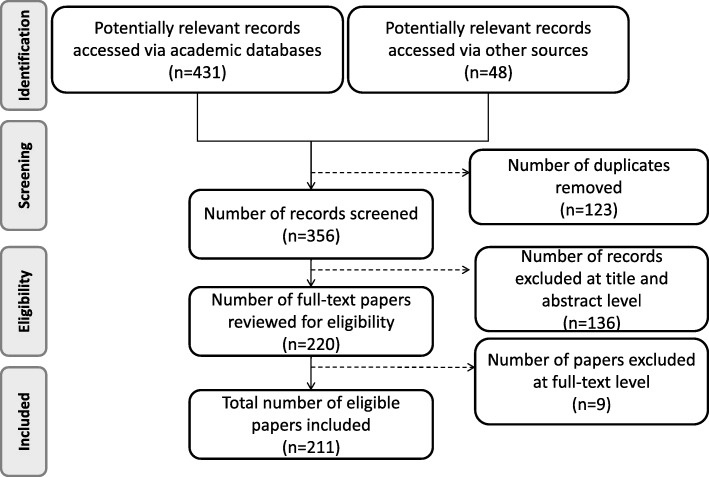
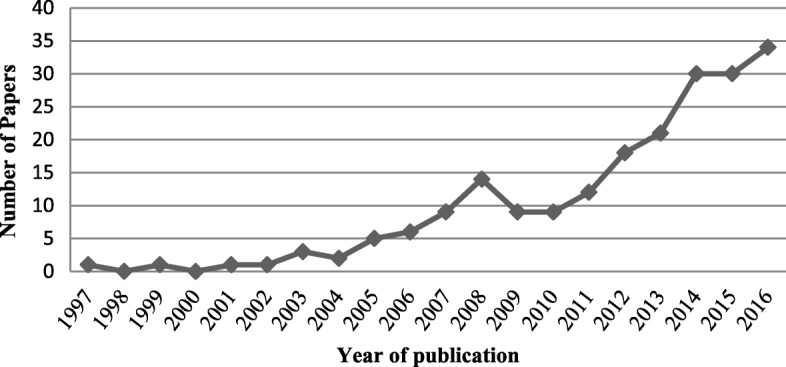
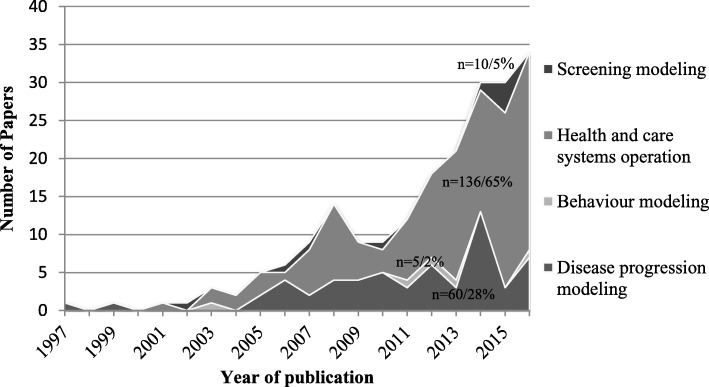
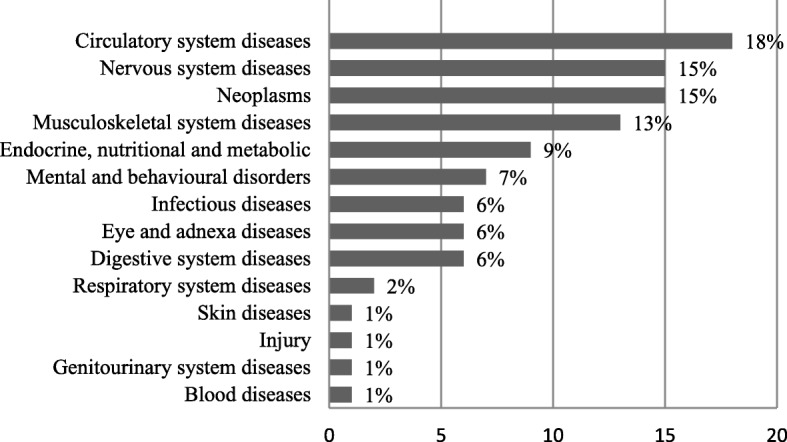
A total of 211 papers met the predefined inclusion criteria. The number of publications included increased significantly especially after 2010.101 papers (48%) stated explicitly disease areas targeted, the most frequently modeled of which are related to circulatory system, nervous system and Neoplasm. The DES applications were distributed unevenly into 4 major classes: health and care systems operation (HCSO) (65%), disease progression modeling (DPM) (28%), screening modeling (SM) (5%) and health behavior modeling (HBM) (2%). More than 68% of HCSO by DES were focused on specific problems in individual units. However, more attempts at modeling highly integrated health service systems as well as some new trends were identified.
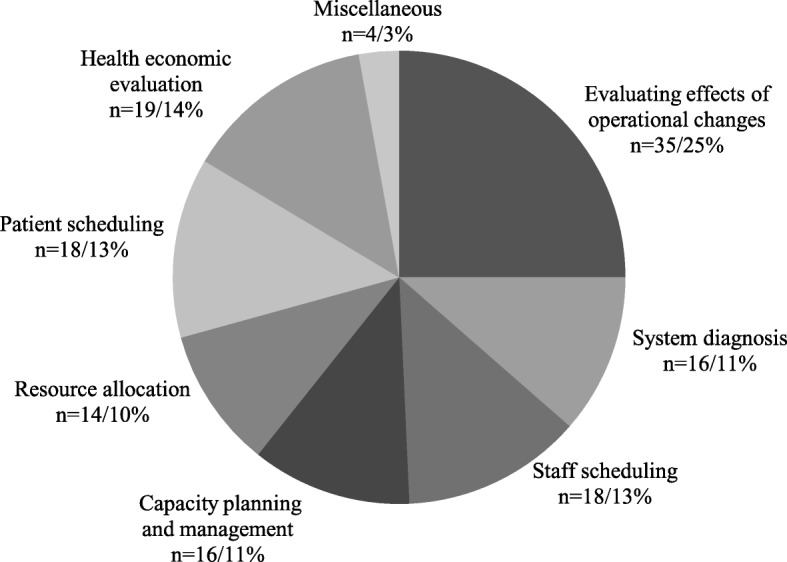
DES technique has been an effective tool to approach a wide variety of health care issues. Among all DES applications in health care, health system operations research occupied the most considerable proportion and increased most significantly. Health Economic Evaluation (HEE) was the second most common topic for DES in health care, but with stable rather than increasing numbers of publications.
目的是探讨离散事件模拟(DES)应用于辅助健康决策的当前进展和程度,并对应用DES的广泛健康相关主题进行分类。
对过去二十年发表的文献进行系统综述。如果原始研究文章专注于应用于医疗保健管理的DES技术主题且明确展示了模型框架,则将其纳入并进行综述。对DES应用的设置不设限制。
共有211篇论文符合预定义的纳入标准。纳入的出版物数量显著增加,特别是在2010年之后。101篇论文(48%)明确指出了目标疾病领域,其中建模最频繁的与循环系统、神经系统和肿瘤有关。DES应用不均衡地分布在4个主要类别中:卫生和护理系统运营(HCSO)(65%)、疾病进展建模(DPM)(28%)、筛查建模(SM)(5%)和健康行为建模(HBM)(2%)。DES在HCSO中的应用超过68%集中在各个单位的特定问题上。然而,也发现了更多对高度整合的卫生服务系统进行建模的尝试以及一些新趋势。
DES技术一直是解决各种医疗保健问题的有效工具。在医疗保健领域的所有DES应用中,卫生系统运筹学占比最大且增长最为显著。健康经济评估(HEE)是医疗保健领域DES的第二大常见主题,但出版物数量稳定而非增加。