
虚拟现实为基础的训练计划和游戏对改善认知障碍患者的效果:系统评价和荟萃分析。
Efficacy of virtual reality-based training programs and games on the improvement of cognitive disorders in patients: a systematic review and meta-analysis.
机构信息
Department of Health Information Technology, Faculty of Paramedical, Ilam University of Medical Sciences, Ilam, Iran.
HIV/STI Surveillance Research Center, and WHO Collaborating Center for HIV Surveillance, Institute for Futures Studies in Health, Kerman University of Medical Sciences, Kerman, Iran.
出版信息
BMC Psychiatry. 2024 Feb 12;24(1):116. doi: 10.1186/s12888-024-05563-z.
INTRODUCTION
Cognitive impairments present challenges for patients, impacting memory, attention, and problem-solving abilities. Virtual reality (VR) offers innovative ways to enhance cognitive function and well-being. This study explores the effects of VR-based training programs and games on improving cognitive disorders.
METHODS
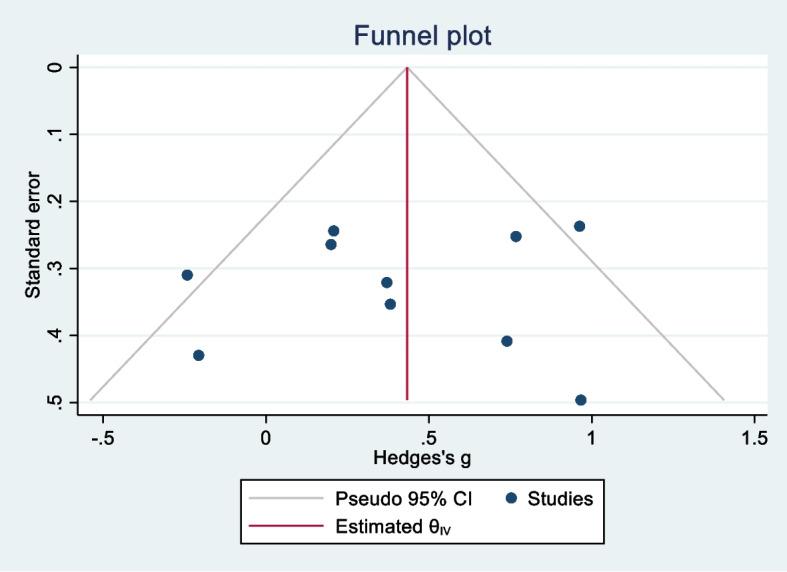
PubMed, Scopus, and Web of Science were systematically searched until May 20, 2023. Two researchers selected and extracted data based on inclusion and exclusion criteria, resolving disagreements through consultation with two other authors. Inclusion criteria required studies of individuals with any cognitive disorder engaged in at least one VR-based training session, reporting cognitive impairment data via scales like the MMSE. Only English-published RCTs were considered, while exclusion criteria included materials not primarily focused on the intersection of VR and cognitive disorders. The risk of bias in the included studies was assessed using the MMAT tool. Publication bias was assessed using funnel plots and Egger's test. The collected data were utilized to calculate the standardized mean differences (Hedges's g) between the treatment and control groups. The heterogeneity variance was estimated using the Q test and I2 statistic. The analysis was conducted using Stata version 17.0.
RESULTS
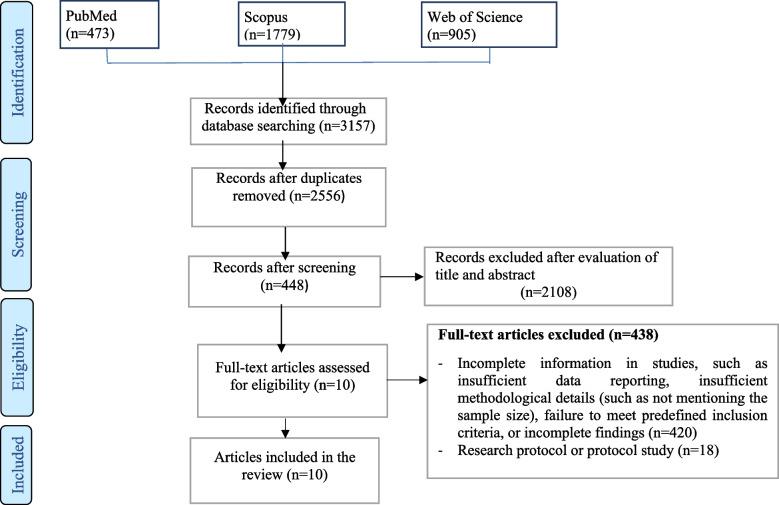
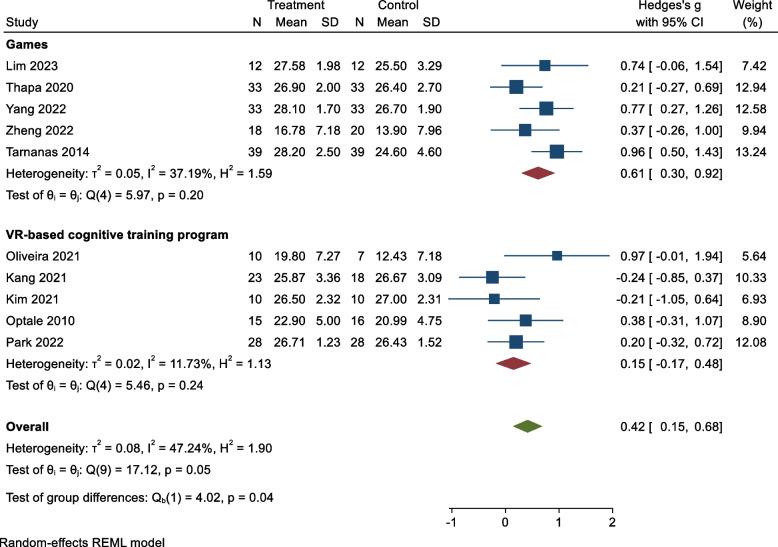
Ten studies were included in the analysis out of a total of 3,157 retrieved articles. VR had a statistically significant improvement in cognitive impairments among patients (Hedges's g = 0.42, 95% CI: 0.15, 0.68; p_value = 0.05). games (Hedges's g = 0.61, 95% CI: 0.30, 0.39; p_value = 0.20) had a more significant impact on cognitive impairment improvement compared to cognitive training programs (Hedges's g = 0.29, 95% CI: -0.11, 0.69; p_value = 0.24). The type of VR intervention was a significant moderator of the heterogeneity between studies.
CONCLUSION
VR-based interventions have demonstrated promise in enhancing cognitive function and addressing cognitive impairment, highlighting their potential as valuable tools in improving care for individuals with cognitive disorders. The findings underscore the relevance of incorporating virtual reality into therapeutic approaches for cognitive disorders.
简介
认知障碍给患者带来挑战,影响记忆、注意力和解决问题的能力。虚拟现实 (VR) 提供了增强认知功能和幸福感的创新方法。本研究探讨了基于 VR 的培训计划和游戏对改善认知障碍的影响。
方法
系统检索了 PubMed、Scopus 和 Web of Science,截至 2023 年 5 月 20 日。两位研究人员根据纳入和排除标准选择和提取数据,通过与另外两位作者协商解决分歧。纳入标准要求研究对象为任何认知障碍患者,至少进行一次基于 VR 的培训,通过 MMSE 等量表报告认知障碍数据。仅考虑英语发表的 RCT,排除标准包括主要不关注 VR 和认知障碍交集的材料。使用 MMAT 工具评估纳入研究的偏倚风险。使用漏斗图和 Egger 检验评估发表偏倚。使用 Stata 版本 17.0 分析收集的数据,计算治疗组和对照组之间的标准化均数差异 (Hedges 的 g)。使用 Q 检验和 I2 统计量估计异质性方差。
结果
从总共检索到的 3157 篇文章中,有 10 篇研究被纳入分析。VR 对患者的认知障碍有统计学显著改善(Hedges 的 g=0.42,95%CI:0.15,0.68;p_value=0.05)。与认知训练计划相比,游戏(Hedges 的 g=0.61,95%CI:0.30,0.39;p_value=0.20)对认知障碍改善的影响更为显著。VR 干预类型是研究之间异质性的一个显著调节因素。
结论
基于 VR 的干预措施已证明在增强认知功能和解决认知障碍方面具有潜力,凸显了它们作为改善认知障碍患者护理的有价值工具的潜力。研究结果强调了将虚拟现实纳入认知障碍治疗方法的重要性。
 Zotero 插件