Nickels Cooper, Keyes Christy, Astemborski Caroline, Fulton Haley
Prisma Health Upstate, Department of Emergency Medicine, Greenville, South Carolina.
University of South Carolina School of Medicine Greenville (USCSOMG), Greenville, South Carolina.
J Educ Teach Emerg Med. 2024 Jan 31;9(1):V1-V8. doi: 10.21980/J8DP9M. eCollection 2024 Jan.
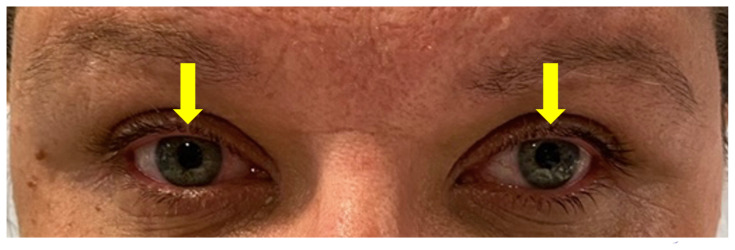
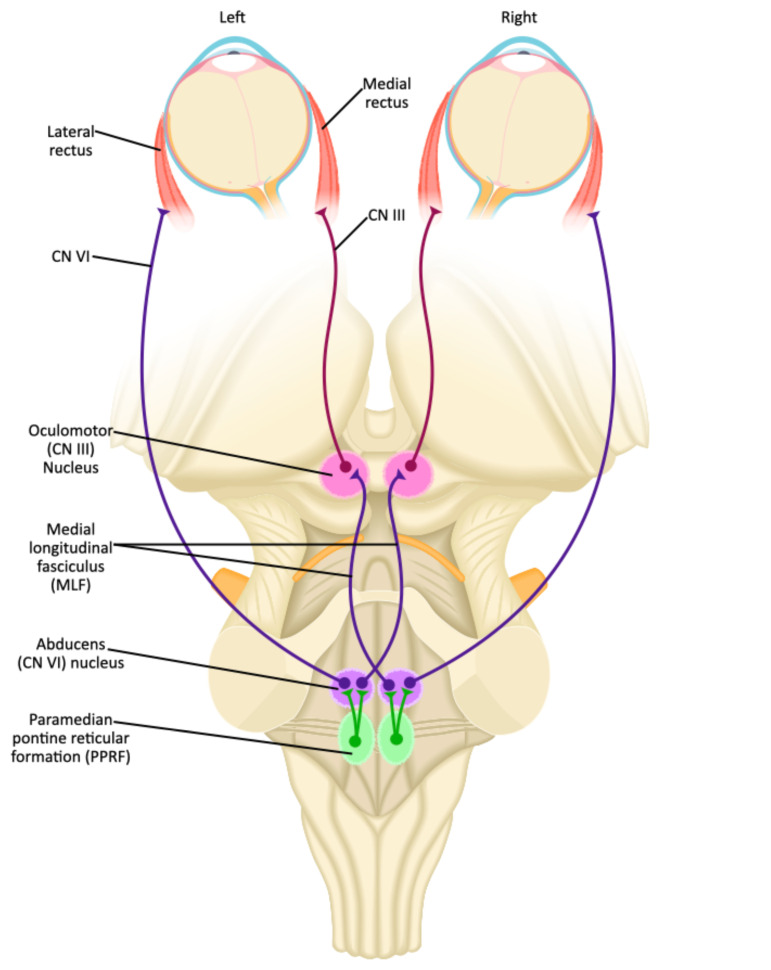
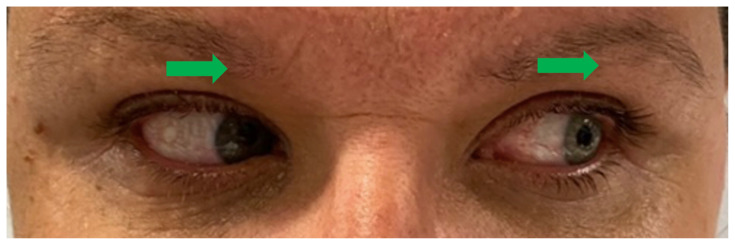
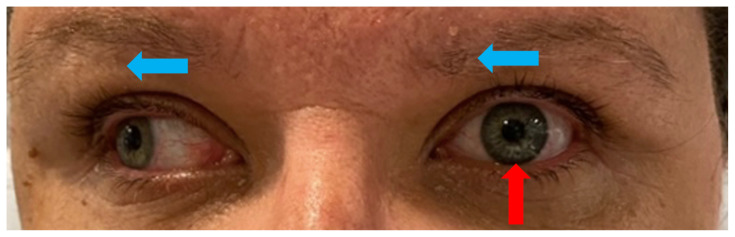
The chief complaint of vertiginous symptoms can be daunting, and the differential is quite long. Approximately 15% of patients presenting to the emergency department (ED) with dizziness have a dangerous underlying cause.1 We present a case of a 40-year-old female with a sudden onset of what she describes as vertigo, in the setting of intermittent diplopia. The patient was found to have a left medial rectus palsy consistent with a left internuclear ophthalmoplegia. Internuclear ophthalmoplegia (INO) is an abnormal gaze that is characterized by the weakness or inability to adduct the affected eye. This occurs secondary to a lesion in the brain affecting the medial longitudinal fasciculus (MLF) most commonly in the pons; however, this pathway can also be affected in the midbrain.2 The diagnosis in our patient was confirmed after an MRI revealed an acute infarct of the left dorsal pons involving the medial longitudinal fasciculus, resulting in the observed left INO. The patient was admitted to the hospitalist service with neurology consultation for further stroke workup. Ultimately, the stroke was deemed cryptogenic in etiology with hyperlipidemia and obesity as the patient's risk factors. She was discharged home after three days in the hospital on daily aspirin and high-intensity statin. Upon six-month follow up she had near resolution of her symptoms.
Internuclear Ophthalmoplegia, INO, Vertigo, Stroke, Neurology.
眩晕症状的主要诉求可能令人畏惧,鉴别诊断范围相当广泛。约15%因头晕前往急诊科(ED)就诊的患者存在危险的潜在病因。我们报告一例40岁女性病例,她突然出现自述为眩晕的症状,并伴有间歇性复视。该患者被发现存在左侧内直肌麻痹,符合左侧核间性眼肌麻痹。核间性眼肌麻痹(INO)是一种异常注视,其特征为患侧眼球内收无力或不能内收。这是由于脑部病变影响内侧纵束(MLF)所致,最常见于脑桥;然而,中脑的这一传导通路也可能受到影响。在MRI显示左侧脑桥背侧急性梗死累及内侧纵束,导致观察到的左侧INO后,我们患者的诊断得以确诊。患者入住内科病房并接受神经科会诊,以进行进一步的卒中检查。最终,该卒中病因被认为是隐源性的,高脂血症和肥胖是患者的危险因素。患者住院三天后出院,回家服用每日一次的阿司匹林和高强度他汀类药物。六个月随访时,她的症状几乎完全缓解。
核间性眼肌麻痹、INO、眩晕、卒中、神经病学。